

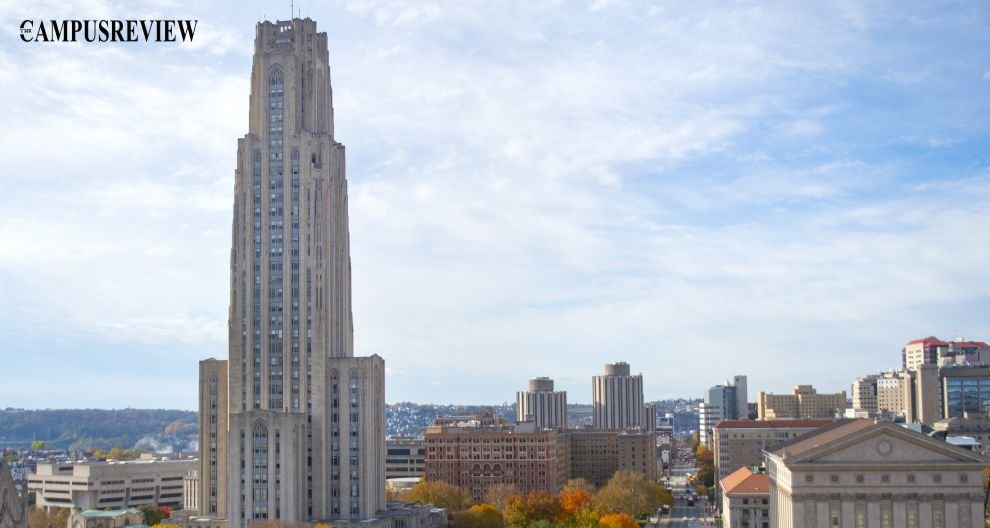
Pittsburgh is a city built on the sturdy, unambiguous logic of steel and coal, a geography of bridges and junctions where three rivers converge. It is a place where industry was king, and where the work was defined by concrete output. It is perhaps fitting, then, that the University of Pittsburgh School of Nursing—Pitt Nursing, as it is known—has evolved into a factory of a different kind: one that manufactures human competence at the highest level. They produce not steel girders, but certainty.
The School of Nursing began its independent life in 1939, separating itself from the medical school. This separation was, in retrospect, a declaration of intent. It was an institutional insistence that nursing was not merely the practical application of a physician’s orders, but a science unto itself, deserving of its own rigor and its own intellectual architecture.
To visit the campus is to be immediately immersed in this philosophy. The mission statement is not a dusty plaque in a lobby; it is the rhythm of the place. They do not merely train “bedside nurses.” Their goal is to advance the very science and practice of nursing, to educate a class of professionals capable of providing compassionate care and contributing to policy, innovation, and leadership. Their values—academic excellence, collaboration, inclusion, and service to society—form a comprehensive map of the perfect, modern caregiver.
The person who graduates from Pitt Nursing is meant to be a kind of hybrid: a “nurse-scientist and leader.” They take the traditional ethical compassion of nursing and fuse it with the scientific precision of a major research institution. It is a demanding, high-stakes transformation.
The Convert and the Continuum
Pitt Nursing offers a full continuum of education, a pathway for nearly every stage of professional ambition, from the fresh high-school graduate to the mid-career specialist.
Consider the student who arrives through the Accelerated 2nd-Degree BSN (ABSN). These are the fascinating converts—the former English majors, the disgruntled engineers, the people who spent five years in marketing before waking up one morning with a sudden, irrefutable need to be proximate to the essential questions of life and death. The ABSN is their fast track, a grueling, condensed process designed to instill the necessary clinical competence at high speed. They are not merely changing careers; they are changing their fundamental relationship with the world.
Then there is the internal commitment to intellectual excellence: the BSN-Honors Program. This track is for the student who can’t wait. They are the ones who, while still navigating their first clinical rotations, are also being drawn into the research lab, mentored through apprenticeships, and exposed to the evidence-based practice that will eventually change the hospital protocols they are learning. They are learning to care, but also learning to question how that care is delivered. They earn a BSN and Honors from the University’s Honors College—a dual designation of compassion and intellect.
The School offers degrees all the way up to the highest levels: the Master of Science in Nursing (MSN) for advanced practice, the Doctor of Nursing Practice (DNP) for high-level clinical leadership, and the Doctor of Philosophy (PhD) in Nursing for those who want to dedicate their lives to the generation of new knowledge. This full spectrum ensures that a nurse can enter the system at one end and, if their ambition holds, exit the other as a pioneer.
The Currency of Research
The defining characteristic that elevates Pitt Nursing from a highly competent school to a truly elite institution is the sheer volume of its research. This is where the numbers cease to be statistics and become instruments of change.
The School of Nursing consistently secures substantial external funding. In a recent period, they secured nearly $5.7 million from the National Institutes of Health (NIH). This money is the lifeblood of innovation. It doesn’t buy new student lounges; it buys the capacity to study the most difficult, intractable problems of human health: chronic disease management, the role of genomics in care, behavioral interventions, and how to redesign complex health systems.
When a DNP student studies at Pitt, they are not just reading textbooks on system-level thinking; they are embedded in an environment where faculty are actively securing millions of dollars to rethink the system itself. They are being trained not only to implement best practices, but to invent them. The research orientation ensures that every graduate, whether in a PhD program or an Accelerated BSN, understands that “evidence-based practice” is a living, changing concept—not a fixed instruction manual.
The Uncompromising Standard
In an occupation where errors are measured not in dollars but in human lives, quality control is paramount. Pitt Nursing is meticulously accredited. The BSN, MSN, DNP, and Post-graduate APRN certificates are all greenlit by the Commission on Collegiate Nursing Education (CCNE).
But the real dedication to rigor is seen in the specialized, demanding tracks. The Nurse-Midwife DNP program has its own separate stamp of approval from the Accreditation Commission for Midwifery Education (ACME). The Nurse Anesthesia programs are accredited by their specialized council. This obsessive attention to external validation ensures that a Pitt degree is not just prestigious, but recognized. It means the graduate can move from Pittsburgh to any high-stakes clinical environment in the world and their competence is unquestioned.
The End Product
Ultimately, the University of Pittsburgh School of Nursing is not selling an education; it is selling a future. It is a place that understands that the most profound challenges of healthcare—from chronic disease to global health disparities—will not be solved by practitioners who only follow instructions.
It is educating the person who can comfort a patient in distress, and then write the successful grant proposal to study the underlying systemic reason for that distress. They are preparing the professional who knows the body intimately, but understands that the body is inseparable from the policy, the science, and the society that surrounds it.
The Pitt Nursing graduate is the new elite—the person who can stand at the bedside with compassion, and then stand in the boardroom or the laboratory with the quiet, authoritative fury of a scientist determined to make things better. They are the architects of the unseen future of care.
Also Read : The Elite Nursing Institutions of 2025

