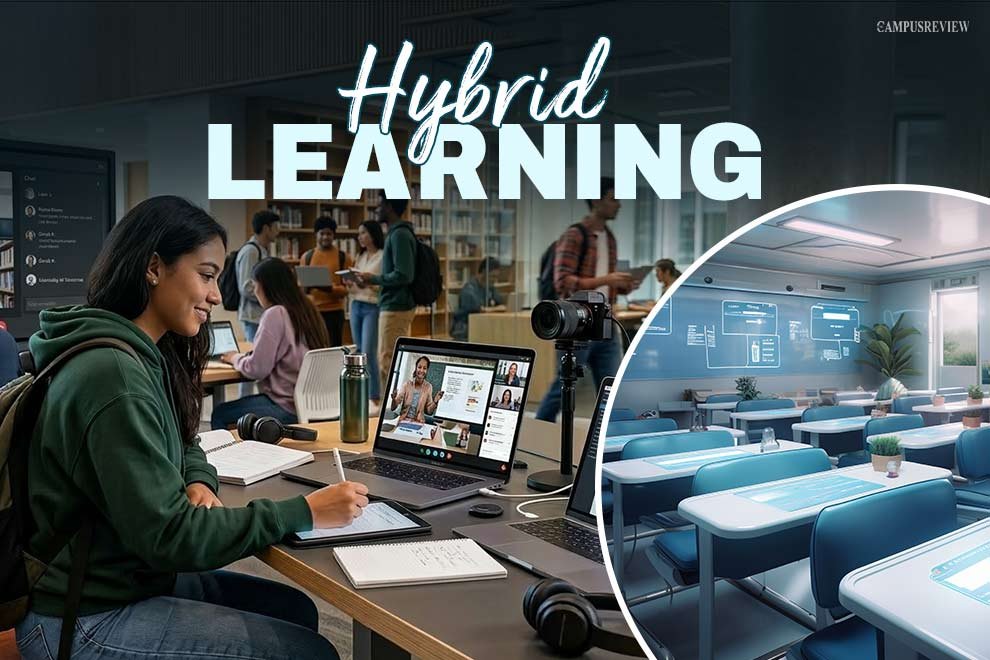
Universities no longer treat digital classrooms as temporary solutions. Instead, institutions now design long-term systems that combine flexibility with strong engagement. This shift defines the modern rise of hybrid learning in higher education.
Students want flexible schedules. However, faculty still demand deep classroom interaction. Therefore, universities now invest in structured hybrid education environments that balance both needs.
A properly executed hybrid learning model now works as a competitive advantage. Institutions attract diverse learners, improve accessibility, and modernize teaching systems.
Research supports this transformation. A 2025 analysis from McKinsey & Company explains that organizations worldwide redesign learning systems to prepare people for rapid technological disruption and digital skill demands.
This guide explains the full picture. It explores classroom design, teaching strategies, and institutional scaling. It also shows how universities build effective hybrid learning systems for the future.
Defining the Hybrid Learning Model
Modern universities often use the term hybrid learning loosely. However, educators must understand the precise meaning before implementation.
What is hybrid learning?
A hybrid learning model delivers the same live class to two groups simultaneously.
- One group attends physically inside the classroom
- Another group joins remotely through digital platforms
Both groups participate at the same time.
This structure differs from blended learning.
Hybrid learning vs blended learning
Blended learning combines online modules with in-person sessions. However, blended formats usually rely on asynchronous learning.
Hybrid learning operates differently.
Key differences include:
Blended learning
- Often asynchronous
- Students switch between formats
- Online modules dominate
Hybrid learning
- Real-time teaching
- Remote and in-person students join together
- Interaction occurs simultaneously
Therefore, hybrid education focuses heavily on live engagement.
Why universities adopt hybrid learning
Universities now face three structural pressures:
- Demand for flexible study schedules
- Global competition for students
- Rapid technological change
Because of these pressures, universities redesign teaching models. The shift toward hybrid learning supports accessibility and innovation.
Global policy also supports this transformation. According to UNESCO education initiatives in 2025, digital technologies expand access to quality education while modernizing learning systems worldwide.
However, definition alone does not guarantee success. The next challenge involves designing the right hybrid classroom infrastructure.
The Anatomy of a High Performance Hybrid Classroom
A well designed hybrid classroom creates equal learning opportunities for remote and in person students.
Many institutions fail because they treat hybrid setups as simple video calls. Instead, universities must build environments that deliver equal participation.
Principle 1: Equality of experience
Students joining remotely should feel present inside the classroom.
Effective hybrid learning environments therefore include:
- Multi angle cameras
- Spatial audio microphones
- Large digital displays
- Interactive whiteboards
These tools allow remote students to observe discussions clearly. They also help instructors track participation.
Principle 2: Visibility and interaction
Instructors must see remote students easily. Cameras placed near eye level improve communication.
Meanwhile, remote students should see classroom participants clearly.
This design builds social presence, which improves engagement during hybrid learning sessions.
Principle 3: Managing cognitive load
Teaching inside a hybrid classroom can overwhelm instructors. Faculty must manage:
- physical students
- remote participants
- digital tools
- content delivery
Therefore, universities must simplify classroom interfaces.
Best practices include:
- single control dashboards
- automated camera switching
- integrated teaching software
These features reduce cognitive overload during hybrid education delivery.
However, technology alone does not guarantee success. Teaching strategy remains the most important factor.
Five High Impact Hybrid Teaching Strategies
Educators must adapt teaching methods for hybrid learning environments. Traditional lectures rarely work well in mixed settings.
Recent education research supports this shift. A 2025 analysis from UNESCO explains that artificial intelligence now pushes educators to rethink how learning is evaluated and what skills universities should prioritize.
Therefore teaching methods must evolve.
Below are five proven strategies.
1. Digital First Questioning
Remote students often hesitate to participate. Instructors should invite remote responses first.
This technique ensures remote students remain active participants during hybrid learning sessions.
Example process:
- Ask question
- Invite remote responses first
- Then involve classroom students
This sequence balances participation.
2. Breakout Room Bridges
Collaborative learning works best when students interact directly.
In hybrid education, instructors should pair one remote student with one classroom student.
This method builds stronger peer learning.
Benefits include:
- cross environment interaction
- higher accountability
- stronger discussion outcomes
Many universities now integrate these peer bridges into hybrid learning courses.
3. Micro Lecturing
Long lectures reduce engagement. Instead, instructors should divide lectures into short segments.
Micro lectures typically last 8 to 10 minutes.
After each segment, instructors should:
- ask questions
- launch polls
- start discussions
This rhythm improves attention during hybrid learning sessions.
4. Shared Digital Whiteboarding
A shared digital board allows all students to contribute simultaneously.
Students inside the hybrid classroom and remote learners can write, draw, and annotate together.
This creates a collaborative environment.
Effective tools include cloud based whiteboards integrated with learning platforms.
Shared workspaces strengthen hybrid education engagement.
5. Asynchronous Safety Nets
Technology problems occasionally interrupt hybrid learning sessions.
Therefore instructors should record key lectures.
Short recap videos help students review missed material.
These safety nets protect learning continuity.
They also reduce anxiety for students dealing with connectivity issues.
However, teaching strategy must scale effectively when universities expand hybrid programs.
Scaling Success: Hybrid Learning in Universities
Implementing hybrid learning in universities requires institutional planning. Large campuses must manage infrastructure, staffing, and student support.
Universities face two main environments:
Large lecture halls
Small seminar classrooms
Each environment requires different strategies.
Large lecture halls
Large lectures often include hundreds of students.
Universities should invest in:
- automated camera systems
- multiple microphones
- lecture capture software
These tools help manage large scale hybrid learning sessions.
Small seminar rooms
Seminars rely on discussion.
Therefore institutions should design flexible hybrid classroom spaces with movable seating and collaborative displays.
This layout encourages interaction among students.
Faculty workload challenges
Many instructors experience fatigue when teaching hybrid learning courses.
Universities, therefore, adopt co-teaching models.
Teaching assistants support:
- chat moderation
- remote questions
- technical troubleshooting
This model reduces instructor stress.
Institutional transformation
Higher education leaders increasingly study digital transformation.
In 2025, UNESCO launched a global survey to map artificial intelligence adoption across teaching, research, and university administration.
This initiative highlights how universities worldwide redesign learning systems.
As institutions scale hybrid learning in universities, leadership must also measure outcomes carefully.
Measuring ROI and Student Engagement
Universities must evaluate the effectiveness of hybrid learning programs. Data driven analysis helps institutions refine teaching methods and improve results.
Key performance indicators
Institutions often track:
- course completion rates
- participation levels
- exam performance
- student satisfaction
Learning management systems provide valuable data for these indicators.
Social presence metric
Social presence measures how connected students feel during classes.
Strong social presence improves engagement in hybrid learning environments.
Universities improve social presence through:
- group discussions
- interactive activities
- collaborative assignments
Financial return on investment
Universities also analyze financial outcomes.
Successful hybrid education programs often produce:
- higher enrollment
- broader international reach
- reduced classroom capacity pressure
However, institutions must implement hybrid systems responsibly.
In 2025, UNESCO warned that digital transformation in education could deepen inequality if institutions ignore access gaps and digital literacy challenges.
Therefore universities must support students through training and digital access programs.
These safeguards ensure that hybrid learning remains inclusive and effective.
Conclusion
Universities now operate in an era where flexibility defines academic competitiveness. Institutions that adopt hybrid learning thoughtfully gain a clear strategic advantage.
The evidence shows a consistent pattern. Digital transformation reshapes education, workforce preparation, and global knowledge exchange. Consequently, universities must integrate technology without sacrificing academic engagement.
A well designed hybrid learning model does more than connect remote students. It expands access, strengthens collaboration, and supports modern skill development. However, success requires careful investment in pedagogy, infrastructure, and faculty support.
The most effective universities now treat hybrid learning in universities as a long term strategy rather than an emergency solution. Institutions that balance digital innovation with human centered teaching will shape the next era of higher education.
Education increasingly becomes an experience students access rather than a place they visit. Strategic adoption of hybrid learning will define which universities lead that future.
Tejas Tahmankar