Degrees once acted as proof of ability. However, today, employers demand proof of performance. As a result, skills assessment now acts as a global currency for work. This shift affects hiring, promotions, and long-term career growth. Therefore, organizations now evaluate what people can do, not where they studied.
At the same time, the global skills gap keeps widening. Businesses lose productivity due to mismatched talent. Meanwhile, professionals face stalled careers due to outdated skills. According to the World Economic Forum, 170 million new jobs will emerge by 2030. However, 92 million roles will disappear. This shift creates 78 million net new jobs globally.
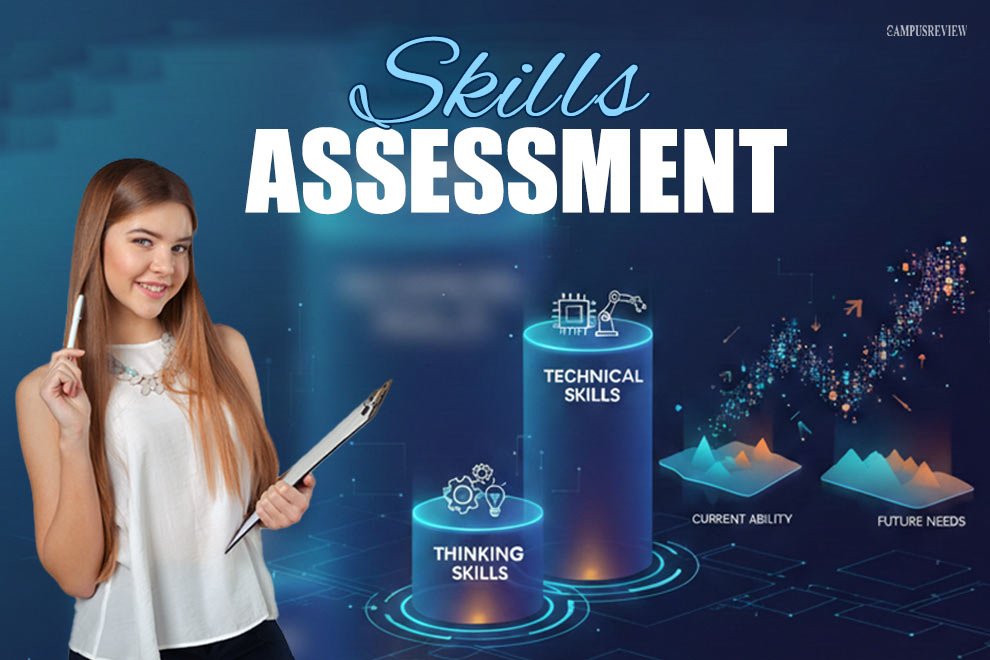
Therefore, hiring models must evolve quickly. A modern skills assessment approach moves beyond resumes. It measures real ability through structured evaluation. To understand this process clearly, we must first explore the layers that build strong workforce capability.
The Core Pillars: From Foundation to Specialized Testing
What is a foundation skills assessment?
A foundation skills assessment evaluates basic abilities. These include reading, writing, numeracy, and digital literacy. These skills support all advanced learning. Without them, employees struggle to adapt.
Why assess basic language and learning skills?
An assessment of basic language and learning skills helps entry level roles. It also supports workforce development programs. Organizations use it to identify learning gaps early. As a result, training investments deliver better returns.
What is a thinking skills assessment?
A thinking skills assessment measures reasoning ability. It evaluates logic, problem solving, and decision making. These skills predict how people handle complex work. According to Coursera, critical thinking learning grew 120 percent year over year. At the same time, GenAI learning rose 234 percent.
Therefore, cognitive skills now shape employability. However, thinking ability alone does not confirm job readiness. Technical validation must follow next.
Deep Dive: Technical and Platform Specific Validation
Why do technical skills assessments matter?
A technical skills assessment verifies hands on ability. Employers use live tasks, coding tests, and simulations. These methods reveal real performance. In contrast, resumes only show intent.
According to SHRM, 80 percent of organizations struggle to find skilled candidates. Data analysis gaps affect 36 percent of roles. AI skills impact 31 percent. Cybersecurity gaps affect 21 percent.
How does LinkedIn Skill Assessment help?
A LinkedIn Skill Assessment offers quick validation. Candidates demonstrate skill through timed tests. Recruiters use these signals for early screening. However, these tests support decisions. They should not replace deeper evaluation.
Skills assessment test vs job simulation
A skills assessment test checks knowledge. A job simulation checks execution. Execution matters more in modern roles. Therefore, employers now favor work samples over questions. This approach reduces hiring risk significantly.
Yet, collecting data alone does not close skill gaps. Organizations must apply insights strategically.
The Strategic Framework: Closing the Skill Gap
How employers use skills assessment data
Employers conduct skill gap analysis using skills assessment results. They compare current ability with future needs. This process guides hiring and training budgets. According to LinkedIn, 86 percent of companies lack talent velocity. Talent velocity reflects skill identification, development, and deployment speed.
How employees use assessment results
Employees use skill assessment data to plan learning paths. They focus on high value skills. This method improves career resilience. It also reduces random course selection.
Why AI integrity matters
AI now supports assessment delivery. However, integrity remains essential. Proctoring tools detect fraud. AI detection ensures authenticity. These controls strengthen trust and align with EEAT principles.
As automation grows, verification methods must evolve. Static credentials will no longer suffice.
Conclusion: Making Skills Your Competitive Advantage
A modern skills assessment system connects foundation ability, thinking capacity, and technical execution. Together, these layers create accurate talent insight. Organizations that adopt continuous evaluation adapt faster. Professionals who track skill progress stay relevant longer. Understanding the broader Types of Assessment helps ensure these evaluations remain balanced, objective, and future-ready.
In my experience studying labor transitions across decades, workforce success follows measurement discipline. When assessment becomes continuous, skill growth becomes intentional. This mindset transforms hiring into capital allocation. It also turns learning into a strategic investment.
The future favors those who measure what truly matters. Continuous assessment closes the talent gap faster than any credential ever could.
Tejas Tahmankar