
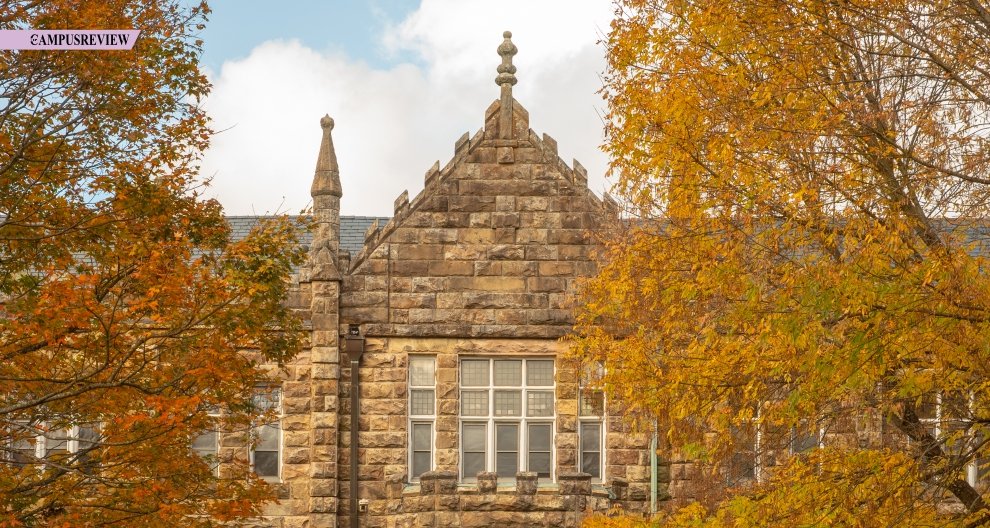
Some campuses are built first and studied later. Others grow around the land, shaped by it over time. On the Cumberland Plateau in Tennessee, one such place took form where forests, rock formations, and open sky were not just surroundings, but part of the curriculum itself.
At The University of the South, familiarly known as “Sewanee,” that relationship with the natural world began early. Founded in 1857, the university sits on what is known as the Domain, a vast landscape that now stretches across more than 13,000 acres. In 2025, the Princeton Review recognized it as the most beautiful campus in the country, though its significance extends far beyond appearance.
The land itself has long shaped how learning happens here. In 1893, a visit from Gifford Pinchot, who would later become the first chief of the United States Forest Service, helped set the university on a path toward formal environmental study. His influence contributed to one of the earliest forest management plans in the country to guide the conservation of the Domain. This early management plan laid the groundwork for what would become a defining strength of the institution.
Over time, that early direction expanded into a wide set of academic and applied programs. Today, Sewanee’s Integrated Programs in the Environment bring together multiple disciplines, allowing students to approach environmental questions from scientific, cultural, and policy perspectives. At the same time, the Office of Environmental Stewardship and Sustainability connects those ideas to practice through land management, conservation work, and campus operations.
What ties all of this together is the Domain itself. Situated in one of the most biologically diverse regions of the country, it functions not just as a backdrop, but as an active part of daily learning. Students study ecology in forests and wetlands, take part in managing natural resources, and grow food on the University Farm. In this setting, the boundary between the classroom and the environment becomes less defined.
The university’s guiding principle, “Ecce Quam Bonum,” reflects this approach. It points to a way of learning that values connection, not only among people, but also with the natural world.
Programs That Begin in the Field
Studying the environment at Sewanee rarely stays confined to a single discipline. The structure of its programs reflects the idea that understanding the natural world requires more than one lens.
Students can choose from six majors that approach environmental work from different directions. Ecology and Biodiversity examines species interactions and conservation in the face of global change. Environmental Arts and Humanities connects science with storytelling, drawing from history, philosophy, and the arts to explore how environmental issues are understood and communicated. Environment and Sustainability looks at the relationship between people and ecosystems, bringing in policy, economics, and questions of justice.
Other pathways focus more directly on the land itself. Forestry students study how forests function and how they can be managed responsibly within a Sewanee forest that is certified through the Forest Stewardship Council. Geology explores the processes that shape the earth, while Natural Resources combines elements of both to prepare students for work that balances use and conservation.
What gives these programs their edge is how often learning moves outdoors as part of field labs, practical experiences, and research. Through the Office of Environmental Stewardship and Sustainability, students can also take part in activities such as prescribed burns, land management, and food production on the University Farm. The experience extends further into the community through initiatives like an annual farm-to-table event. Students study hands-on conservation and environmental protection. The Sewanee Herbarium houses over 9,000 plant specimens and advances the study of Cumberland Plateau flora by connecting students to botanical research and outreach through the Block Fellowship Program. At the constructed wetlands research station, students learn how plants remove pollutants from municipal wastewater.
These field experiences also expand far beyond the Domain through study away opportunities, including a semester-long Ecuador: Global Environmental Challenges program, and short-term programs like Island Ecology on St. Catherine’s Island and Sustainability & Global Environmental Change in New Zealand.
Graduates leave with more than academic knowledge. They step into roles across fields such as environmental law, conservation, renewable energy, and research, carrying with them experience shaped as much by the land as by the classroom.
A Close-Knit Academic Community with Strong Outcomes
Scale often shapes the kind of experience students have. At Sewanee, the numbers point to a setting where learning remains personal and closely guided. The College of Arts and Sciences enrolls around 1,600 undergraduate students, alongside roughly 150 graduate students across the School of Theology and the School of Letters. The student body draws from 46 states and 27 countries, creating a community that brings together a wide range of perspectives.
That scale carries into the classroom. With a 10:1 student-to-faculty ratio and an average class size of sixteen, students are not lost in large lecture halls. Instead, they engage directly with faculty, often in discussion-based settings where questions, debate, and close feedback are part of the process. The academic offering remains broad, with 37 majors, 42 minors, and 13 special programs that allow students to shape their studies around both interest and direction.
Outcomes after graduation reflect this environment. Within a year, 98 percent of graduates are either employed or pursuing further study. Over time, alumni have earned recognition through Rhodes Scholarships, Watson Fellowships, and Fulbright grants. These results point to a model where close academic engagement and a wide range of opportunities prepare students for paths that extend well beyond campus.
A Return That Reflects the Institution’s Purpose
In many ways, the direction of an institution becomes clearer when its leadership reflects its own story. That sense of continuity is evident in Rob Pearigen, who returned to Sewanee in 2023 as its 18th vice-chancellor and president.
Pearigen first arrived on campus as a student in the 1970s. Years later, after completing advanced study in political science at Duke University and building a career that included teaching and senior leadership roles, he found his way back. His earlier time at Sewanee included work as dean of students and vice president for University Relations, along with teaching in constitutional law and political theory. He later spent more than a decade leading Millsaps College before returning to the Domain.
His leadership aligns closely with Sewanee’s stated mission. As Pearigen notes, “Sewanee’s mission is to prepare students for lives of service and leadership so they will become active citizens who contribute to democracy at home and the resolution of challenges around the world.”
He emphasizes that among the three pillars of the institution’s new strategic plan, the ‘Place’ pillar sets it apart. In describing Sewanee’s commitment to ‘Place’, the plan states as a goal: “To realize the full potential of the Domain–our laboratory, playground, and sanctuary–to create more opportunities to learn, explore, and reflect, while leading in matters of the environment.” In that sense, Pearigen’s own path mirrors the kind of engagement the institution hopes to cultivate in its students.
Defining Excellence Through Purpose and Direction
Ideas about educational excellence often shift with time, but at Sewanee, that definition remains closely tied to both tradition and forward planning. The university’s approach draws from its liberal arts and theological foundations while adapting to the expectations placed on graduates today.
Current priorities are shaped through a strategic plan that places students at the center of decision-making. One focus is on strengthening the breadth and depth of academic offerings, ensuring that programs remain both rigorous and relevant for a changing student population. At the same time, equal attention is given to preparing students for lives beyond the classroom.
A second priority reflects that direction. Students are encouraged to develop a sense of responsibility toward their communities and the wider world, to become active participants in civic life and contributors to broader global challenges. Anchoring these goals is the strategic plan’s emphasis on “Place,” which makes the Domain central to realizing this vision.
Such goals define how the university measures excellence, not only through academic achievement, but through the long-term impact its graduates have in the world.
Where Creativity and Activity Become Part of Daily Life
Student life at Sewanee does not sit on the sidelines of academics. It runs alongside it, shaped by a setting where creative work and physical activity are part of everyday routines.
In the arts, students are encouraged to explore their voice while building discipline in their craft. The Art program focuses on creative growth and helps students connect personal expression with broader cultural ideas. Theatre remains open to all, allowing students from any background to take part in productions, develop confidence in public speaking, and work within a collaborative environment. Music offers another pathway, where students not only perform but also study composition, history, and interpretation, gaining a deeper understanding of how music shapes culture and identity.
Athletics adds another dimension to campus life. Sewanee fields 24 varsity teams and competes in NCAA Division III within the Southern Athletic Association. More than 30 percent of students participate at the varsity level, balancing competition with academic commitments. At the same time, not all activity is structured. The Domain itself, recognized as a certified arboretum, becomes an extension of campus life, offering students access to hiking trails, climbing routes, biking paths, and caves that encourage regular outdoor engagement. The campus is home to over 60 miles of trail and connects directly to the Mountain Goat Trail, a 35-mile rail-to-trail project linking Sewanee to its neighboring communities.
Facilities support this level of involvement. The Wellness Commons brings together fitness, recreation, and outdoor programming in one place, while the Fowler Center continues to expand its role in training and competition. Together, these experiences create a campus where students remain active, engaged, and connected beyond the classroom.
From Exploration to Opportunity
By the time students begin to think seriously about life after Sewanee, many have already begun testing their interests in practical settings. That transition is supported through Sewanee Career Readiness, where students benefit from mentorship and one-on-one guidance to refine their goals and build the skills needed to pursue them.
Access plays a key role in this process. The university’s alumni network connects students with internships, mentors, and research opportunities across a wide range of fields and locations. These experiences often take place well beyond campus, and when an unpaid opportunity aligns with a student’s interests, the university provides stipends to make participation possible.
Research forms another pathway. Each summer, the Office of Undergraduate Research supports around sixty paid fellowships, many focused on environmental work. Students work closely with faculty, and their projects often lead to honors theses, co-authored publications, and presentations at academic conferences.
These experiences help students move from exploration to direction, with a clearer sense of how their interests translate into meaningful work.
Building Impact Through Research and Action
A clear intention shapes the direction ahead. The university’s focus remains on preparing students who can step into the world with both practical skills and a broader way of thinking. The aim is not limited to academic success. It is about graduating individuals who are ready to contribute, solve problems, and take responsibility for the environments they live in.
Several initiatives reflect how that goal is being pursued. One of the most significant is the Split Creek Environmental Observatory, a 50-acre watershed designed for interdisciplinary research. The site allows students and faculty to study environmental systems in real time, bringing together science, culture, and economic understanding. Over time, the intention is to develop this space into a leading research station, producing data that can be used both within the university and by researchers beyond it.
Another effort, Domain Across the Curriculum, extends environmental learning into every academic department. Instead of limiting environmental studies to specific majors, courses across disciplines now engage directly with the land. This approach is strengthened through partnerships with the Office of Civic Engagement, where students work alongside local communities on projects that connect learning with regional needs.
Sustainability efforts continue to move from policy into practice. The university’s Sustainability Statement outlines steps to reduce environmental impact while creating opportunities for hands-on involvement. Through the Sustainability Fellows program, students propose and lead projects that address real challenges. These have included building rain gardens to conserve water and expanding transportation options through a bicycle library that contributes to the university’s designation as a Bicycle Friendly University.
Beyond these initiatives, sustainability is reflected in day-to-day campus operations and student life. The Green House, the most active and highly collaborative student organization on campus, is currently expanding its footprint by installing a native grassland alongside the raised garden beds in its backyard.
Operational practices echo this commitment; Sewanee Dining, which is entirely self-operated, was recently recognized by the Sustainable Campus Index as one of the top ten greenest dining programs in higher education. By building close relationships with area farmers and utilizing the University Farm, a minimum of 15 percent of the produce and some meats purchased are locally sourced. Cooking from whole ingredients also allows the dining hall to compost peelings directly back at the University Farm. Even the campus landscape management embraces innovative biological methods, utilizing a goat flock as grazers to act as a biological control against non-native species incursions. These goats not only serve as a key asset in locally supported food systems, but they also promote wellbeing and fun across campus through activities like goat yoga and their natural affinity for petting.
These initiatives point toward a model where education, research, and community engagement are closely linked, preparing students to take part in shaping environmental solutions at multiple levels.
Quote
Our guiding principle, “Ecce Quam Bonum,” is taken from the Latin version of Psalm 133, “Behold how good and pleasant it is when kindred dwell together in unity.”
Also Read – Sewanee – The University of the South (The Elite Green Schools of 2026)
