Campus housing has changed deeply over the past decade. Earlier, student accommodation meant little more than a bed and a desk. However, modern students expect safety, comfort, privacy, and technology together. Recent 2025 preference data shows that nearly 70 percent of students favor apartment-style living. This shift reflects changing lifestyles and academic pressures.
Official analysis from the OECD confirms this transformation. Student housing demand now reflects broader housing affordability pressures and renter expectations. Therefore, housing decisions now influence academic performance and mental wellbeing. This guide explains modern campus housing options and shows how to choose wisely in 2026.
Decoding Campus Housing Options and Benefits of on-campus living
Campus housing now includes several accommodation formats. Each option serves different academic and personal needs. Understanding these choices reduces costly housing mistakes and improves student outcomes.
Traditional dormitories remain common on many campuses. These buildings usually offer shared rooms and communal bathrooms. They often cost less and sit close to classrooms and libraries. As a result, first year students benefit from convenience and social exposure. However, limited privacy can affect long term comfort and focus.
Suite style residences offer private bedrooms with shared living areas. This structure balances independence and social interaction. Students often choose suites after their first year. These spaces support quiet study while maintaining peer connection. Therefore, suites suit academically focused students.
Purpose Built Student Accommodation operates like managed student apartments. These buildings include gyms, study lounges, and digital security systems. They usually cost more but offer higher comfort and consistency. Demand for such housing continues to rise.
According to OECD Economic Surveys Canada 2025, supply remains limited. Only around 12 percent of students live in dedicated student accommodation. In contrast, about 30 percent do so in the United States and the United Kingdom. This gap explains rising off campus demand and investment interest.
While proximity to academic buildings attracts students, internal quality matters more today. Safety systems and technology now define the Smart campus housing experience.
The Safety & well-being in student residences Standard
Safety & well-being in student residences now function as core academic enablers. Students cannot perform well without stable and secure living conditions. Therefore, modern campus housing integrates physical security with emotional and psychological support systems.
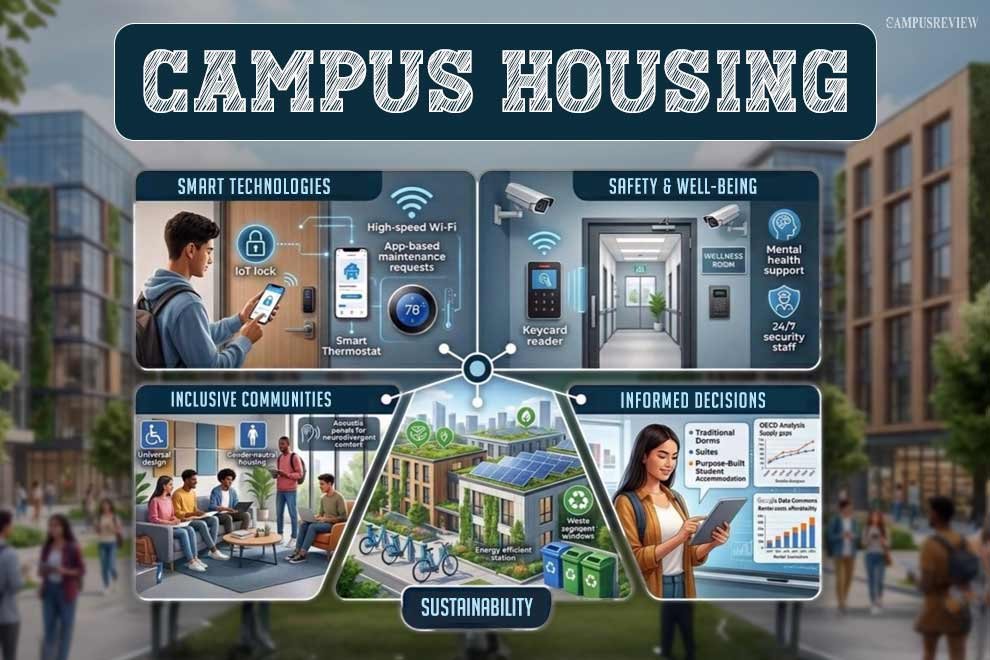
Physical safety begins with continuous monitoring and controlled access. Residences now use staffed entry points, surveillance systems, and emergency communication protocols. These systems reduce risk and improve trust within residential communities. When students feel secure, academic focus improves naturally.
Wellbeing extends beyond physical protection. Many student residences now include dedicated wellness rooms and mental health support access. Quiet zones allow students to decompress after academic pressure. These spaces help regulate stress during high workload periods.
Living Learning Communities strengthen this wellbeing framework. Students live with peers who share academic goals or interests. This structure improves peer accountability and academic engagement. It also reduces social isolation, especially during the first academic year.
Privacy has emerged as a recognized wellness factor. Shared living without private recovery space increases stress over time. Therefore, private rooms or controlled shared environments support emotional balance. This design approach aligns with long term student retention goals.
The OECD identifies rising housing costs and supply shortages as major policy challenges across advanced economies. Students experience these pressures directly. Stable and supportive housing reduces the psychological burden created by financial and housing uncertainty.
As safety expectations rise, students also expect digital reliability. Technology now supports both safety and wellbeing simultaneously.
Smart hostels & residential technologies
Trends in student housing design
Technology now shapes campus housing standards globally. Students expect seamless digital experiences across daily routines. Smart hostels and tech integrated dorms respond to this demand.
IoT enabled locks replace traditional keys. Students unlock rooms using secure mobile applications. This improves safety and reduces access errors. Digital visitor systems track entry activity while protecting privacy. These systems raise security without adding friction.
Maintenance systems have also evolved. App based platforms allow students to report issues instantly. Requests receive tracking updates in real time. Faster responses reduce daily frustration. As a result, students save time for academic priorities.
Connectivity remains essential. High-speed internet stands as the top student demand. Academic work, collaboration, and communication depend on stable connections. Modern residences prioritize strong network infrastructure accordingly.
Smart thermostats improve comfort and energy efficiency. Students control room temperatures digitally. Automated systems reduce waste and operating costs.
According to Google, data tools reveal consistent patterns. Google Data Commons analyzes rental costs, affordability, and student age populations. These datasets show sustained housing pressure near universities. Therefore, smart housing reduces friction within constrained markets.
Technological efficiency serves a broader goal. It allows students to focus on learning, connection, and growth.
Creating inclusive campus communities
Creating inclusive campus communities now defines housing quality standards. campus housing must support diversity, accessibility, and varied learning needs. Inclusion strengthens both social stability and academic outcomes.
Gender neutral housing options have expanded across campuses. These spaces provide safety and dignity for diverse identities. Inclusive housing reduces anxiety and improves residential comfort. As a result, students participate more actively in campus life.
Accessible design also plays a central role. Modern residences include elevators, step free access, and adaptive furniture. These features support students with mobility needs. They also improve usability for all residents, including visitors.
Neurodivergent friendly spaces further improve inclusivity. Controlled lighting and reduced noise environments support focus. These spaces help students manage sensory overload. Consequently, academic productivity improves for a wider student population.
Roommate matching systems contribute to inclusive living environments. These tools assess schedules, study habits, and lifestyle preferences. Thoughtful matching reduces conflict and improves long term satisfaction. Experience shows that compatibility supports emotional stability.
Inclusive campus communities also encourage peer learning. Students interact across cultures, abilities, and backgrounds. This exposure strengthens empathy and social intelligence. These skills matter beyond academic life.
As inclusion becomes standard, housing design now aligns with environmental responsibility.
Sustainability: The New High-Intent Factor
Sustainability has shifted from optional to essential in campus housing decisions. Students increasingly evaluate environmental impact alongside comfort and cost. Sustainable housing also offers long term economic advantages.
Eco conscious residences integrate energy efficient systems. Solar panels reduce reliance on conventional power sources. Water saving fixtures lower consumption without reducing comfort. These measures reduce operational costs over time.
Waste management practices also matter. Segregation systems encourage responsible habits among residents. Educational signage reinforces sustainable behavior. Over time, these practices shape environmentally aware communities.
Bike sharing schemes and walkable layouts reduce transport emissions. These features improve mobility while lowering environmental impact. Students benefit from healthier daily routines as well.
Before signing a lease, students should verify green certification status. Certified buildings meet defined sustainability benchmarks. Housing providers often publish certification details or sustainability disclosures.
OECD higher education finance research shows rising enrollment trends. However, housing supply expansion has not kept pace. This imbalance increases pressure on existing infrastructure. Efficient and sustainable housing reduces strain under growing demand.
Sustainable campus housing supports affordability, resilience, and long term planning. It represents responsible investment for institutions and families alike.
Making the Final Decision
Campus housing choices now require careful evaluation. The best option balances safety, technology, community, and sustainability. Each factor directly affects academic performance and wellbeing.
OECD evidence confirms global housing pressure. Google data reinforces demand concentration near universities. These realities shape modern housing standards.
Students and families should assess housing holistically. Short term savings may create long term discomfort. Well designed housing supports academic stability and growth.
A structured Housing Inspection Checklist simplifies decision making. It helps evaluate safety systems, technology readiness, and community design. Thoughtful housing choices build stronger academic futures.
Tejas Tahmankar