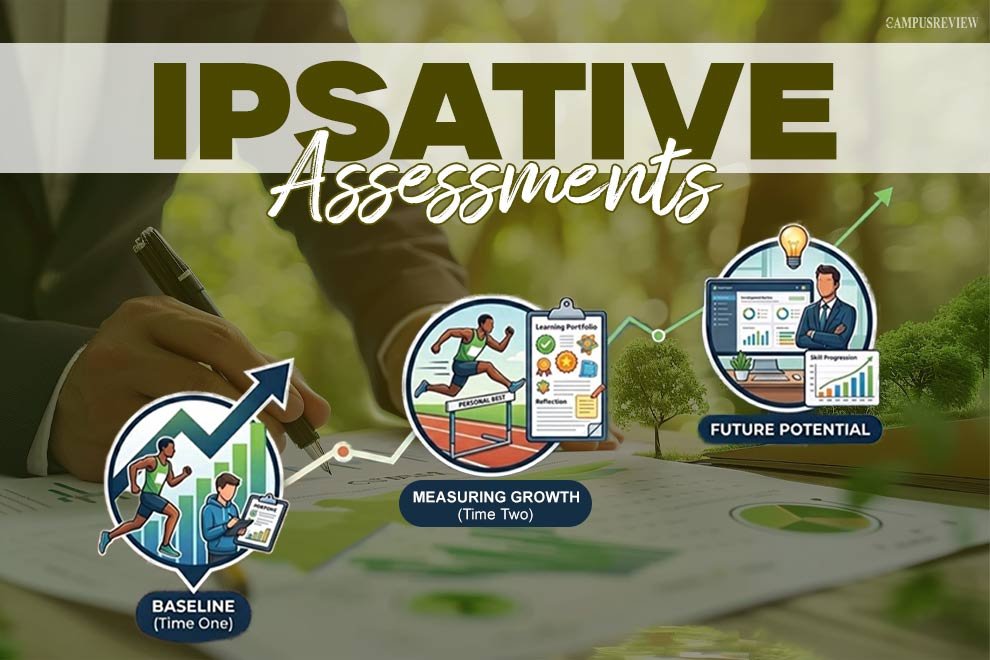
Every athlete understands one simple truth. Progress matters more than position. A runner improves by beating a personal best, not by watching others. Education and workplaces now face the same realization. Traditional ranking systems reward comparison, not improvement. These systems often label people as winners or failures too early. Ipsative assessments offer a different path. They focus on personal progress over time. This article explains what ipsative assessments are, how they work, and why they matter today.
Research synthesized by OECD shows that frequent norm referenced ranking links with higher anxiety and lower academic confidence. In contrast, progress focused assessment improves motivation and emotional well being. Therefore, ipsative assessments now attract educators, employers, and policymakers worldwide.
This guide explores definitions, comparisons, real examples, advantages, limitations, and future trends in a clear and structured way.
What is Ipsative Assessment?
What is Ipsative Assessment? The answer remains simple and precise. Ipsative assessment measures growth by comparing a person with past performance. It does not compare one learner with another learner. Instead, it compares Time Two performance with Time One performance. Therefore, progress becomes the core unit of measurement.
Ipsative assessments ask one central question. Has this individual improved since the last measurement? This approach shifts attention from rank to development. As a result, learners focus on effort, reflection, and consistency.
According to standards published by American Psychological Association, ipsative assessments validly measure intra individual change over time. However, these tools do not support reliable comparisons between individuals. This distinction remains critical for ethical and legal use.
Although the definition appears simple, application varies widely. Schools apply it through portfolios and reflections. Corporations apply it through development reviews and feedback cycles. Thus, context shapes how ipsative assessments operate.
Ipsative vs. Normative vs. Criterion Referenced Assessment
Assessment systems answer different questions. Confusion arises when institutions mix these purposes. Clear separation improves fairness and outcomes.
Normative assessment compares one person with others. It ranks performance within a group. Exams, percentiles, and grading curves follow this model. Therefore, success depends on relative position. Even capable learners may appear weak in high-performing groups.
This system supports selection decisions. However, it often discourages collaboration. It also increases stress and competitive pressure. Over time, motivation declines for average performers.
Criterion-referenced assessment compares performance against fixed standards. Driving tests and certification exams work this way. Learners either meet the standard or fail to meet it. As a result, outcomes remain predictable and transparent.
This model supports accountability and regulation. However, it reveals little about improvement beyond the threshold.
Ipsative assessments compare present performance with past performance from the same individual. Growth becomes the focus. Progress matters more than rank or cut off scores.
This model supports learning, reflection, and development. However, it cannot support ranking or selection decisions alone.
Each system serves a valid purpose. Problems arise only when institutions apply the wrong model to the wrong goal.
Ipsative Assessment Examples in Practice
Ipsative assessments appear wherever growth matters more than competition. Their structure adapts across sectors.
Education Systems
Teachers use learning portfolios to track progress across semesters. Students submit early drafts and final submissions. Reflection notes explain improvement steps. As a result, feedback becomes meaningful and specific.
Pre test and post test designs measure concept mastery growth. This approach works well in mathematics, science, and language learning. Students observe improvement clearly. Confidence increases naturally.
Reflective journals support metacognition. Learners document struggles and breakthroughs. Teachers assess progress in thinking quality, not just answers.
Corporate and Professional Development
Organizations use development reviews to track skill progression. Managers compare current performance with earlier feedback cycles. The focus stays on growth areas, not peer competition.
Personality instruments like MBTI and DiSC often use ipsative response formats. These tools support self awareness and team development. However, they should not guide hiring decisions alone.
360 degree feedback systems compare current competency levels with past evaluations. This structure supports leadership development over time.
Sports and Performance Training
Athletes track timing, strength, and endurance improvements. Coaches adjust programs based on progress curves. Competition exists, but personal growth drives training design.
These examples show versatility. At the same time, they reveal why context matters deeply.
Advantages of Ipsative Assessment
Advantages of Ipsative Assessment extend beyond academic outcomes. They shape behavior, motivation, and long term development.
Psychological Benefits
Ipsative assessments reduce fear of failure. Learners focus on improvement rather than judgment. This shift encourages persistence and effort.
Confidence grows steadily through visible progress. Small gains reinforce learning habits.
Instructional Benefits
Teachers identify learning trajectories. They see how understanding evolves. Feedback becomes targeted and practical.
Instruction adapts based on growth patterns. As a result, teaching quality improves.
Organizational Benefits
Employees engage more openly in development discussions. Competition decreases. Collaboration increases.
Managers detect hidden potential. Performance reviews become constructive rather than defensive.
These advantages explain why ipsative assessments work best in formative environments.
Disadvantages of Ipsative Assessment and Legal Considerations
Disadvantages of Ipsative Assessment require careful attention. Ignoring them weakens credibility.
Measurement Limitations
Ipsative scores lack comparability across individuals. One person’s growth score cannot equal another’s score. Therefore, ranking becomes impossible.
Statistical analysis also becomes complex. Traditional reliability measures apply poorly.
Legal and Ethical Risks
In employment contexts, exclusive reliance on ipsative tools creates risk. Selection decisions require comparable metrics. Legal standards emphasize fairness and consistency.
Therefore, organizations should combine ipsative data with validated benchmarks.
Operational Challenges
Tracking individual progress requires time and systems. Manual tracking increases workload. Without digital tools, consistency suffers.
These limitations do not negate value. Instead, they define boundaries for responsible use.
Purpose of Ipsative Assessment and Implementation Steps
The Purpose of Ipsative Assessment centers on growth, learning quality, and long term capability. Implementation determines effectiveness.
Step 1: Establish a Reliable Baseline
Baseline data anchors progress. Without it, growth lacks reference. Use diagnostic tests, early samples, or initial observations.
Step 2: Define Clear Progress Indicators
Combine qualitative feedback with quantitative metrics. Avoid vague goals. Precision improves interpretation.
Step 3: Schedule Regular Feedback Cycles
Frequent feedback sustains momentum. Long gaps weaken learning impact. Short cycles support adjustment.
Step 4: Use Appropriate Digital Tools
Learning platforms and HR systems automate tracking. Automation reduces bias and workload. Consistency improves accuracy.
Well implemented ipsative assessments support sustainable growth across domains.
The Future of Assessment and Ipsative Data
Technology reshapes assessment rapidly. Artificial intelligence enables detailed progress tracking. Micro improvements now appear visible and measurable.
Industry research published by Microsoft and analyzed by Harvard Business Review shows rising adoption of AI driven skill tracking systems. These systems blend growth data with benchmarks.
Experts increasingly expect hybrid models by 2030. These models will combine ipsative insights with criterion standards. Balance will define the future.
Rehumanizing Evaluation
Assessment shapes identity, motivation, and opportunity. Systems that value only rank often ignore growth. Ipsative assessments restore attention to personal development. They shift evaluation from comparison toward improvement. This shift aligns with learning science, workforce needs, and human dignity.
The most effective Types of assessment systems will not abandon standards. Instead, they will integrate progress, reflection, and benchmarks thoughtfully. Strategic evaluation respects both accountability and growth. Educators and leaders who adopt this balance will cultivate resilience, skill, and confidence across generations.
FAQ’s
- Is ipsative assessment better than normative?
Ipsative assessment works better for growth and motivation. Normative assessment works better for ranking and selection.
- Can you use ipsative assessments for grading?
Ipsative assessments support formative grading. They should not replace summative decisions alone.
- What is a common example of an ipsative test?
Pre test and post test learning comparisons represent a common ipsative model.
- How do you calculate an ipsative score?
Calculate the difference between current performance and past performance from the same individual.
Tejas Tahmankar