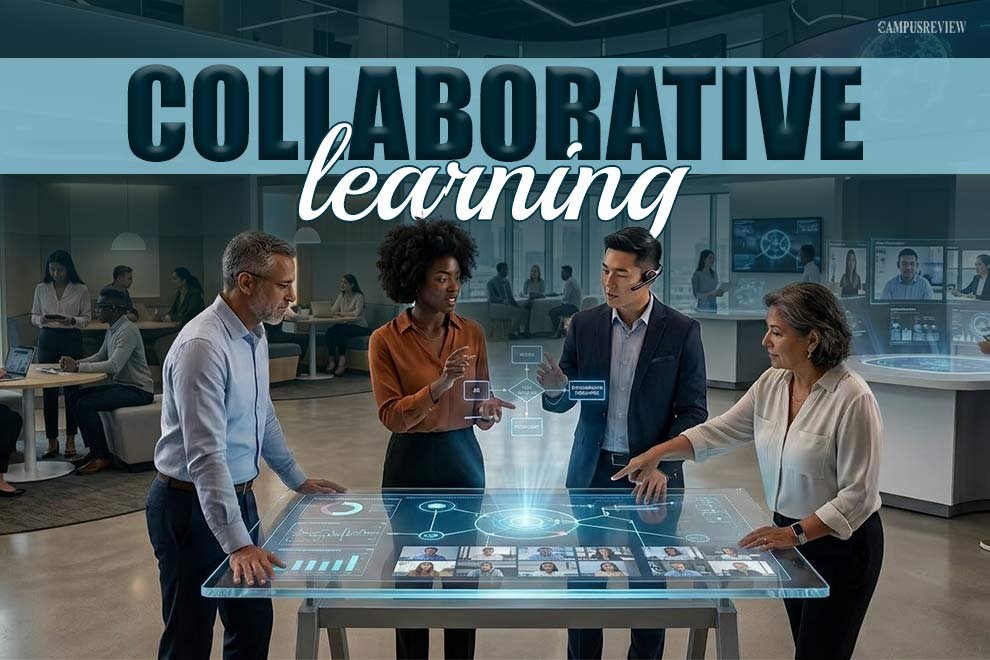
In 2026, the global learning collaborative is no longer limited to classrooms. It now drives survival in fast-moving industries. Today, organizations depend on collaborative learning to reduce overload and speed up innovation outcomes. At the same time, research shows a clear shift in priorities. “Teamwork and collaboration ranked at the top with 65%, ahead of even technical skills like AI integration with over 50%.” This insight proves that human connection now powers modern performance.
However, a clear gap exists between theory and practice. Many traditional models assume ideal teamwork conditions. Yet modern distributed environments demand structured systems and intentional design. Therefore, understanding the architecture behind collaboration becomes essential. To understand why this shift is happening, we must first examine the systems that enable it.
Building the Collaborative Learning and Innovation Complex
The collaborative learning and innovation complex acts as a hybrid system. It combines physical environments with digital tools. As a result, it creates a flexible ecosystem for problem-solving.
A collaborative learning center within this system encourages interaction. For example, shared spaces create natural “collision points.” These moments often spark spontaneous ideas and faster solutions. In contrast, isolated work reduces creative output.
Moreover, modern smart campuses now integrate technology deeply. They connect learners, data, and workflows in real time. This approach strengthens collaborative learning and ensures constant feedback loops.
However, a major challenge exists. Many professionals feel overwhelmed in current systems. Data shows that “64% of employees don’t have enough time and energy to do their work, and they are 3.5× more likely to struggle with innovation.” Therefore, poorly designed systems reduce both energy and creativity.
Because of this, organizations must redesign workflows. They must focus on clarity, shared ownership, and reduced friction. The learning collaborative thrives only when systems support human effort instead of draining it.
Design forms the structure. Yet methodology drives outcomes. Therefore, the next step involves understanding how learning itself happens inside these systems.
What is Cooperative Learning?
Cooperative learning is a structured method where individuals work in small groups. Each member takes responsibility for shared goals. They support each other’s learning while completing tasks together. This approach builds accountability, communication, and deeper understanding through active participation.
Cooperative learning plays a key role inside any collaborative classroom. It ensures that learners engage actively rather than passively. As a result, knowledge retention improves significantly.
Practical Models in a Collaborative Classroom
- Jigsaw Method
Each learner studies one part of a topic. Then they teach others in the group. This method strengthens ownership and clarity.
- STAD (Student Teams Achievement Divisions)
Teams work together, but individuals get assessed separately. This balances teamwork and accountability.
- Think-Pair-Share
Learners think individually, discuss in pairs, and then share with the group. This improves confidence and structured thinking.
- Group Investigation
Teams explore complex problems and present findings collectively. This builds research and collaboration skills.
Each method strengthens collaborative learning by promoting interaction and shared responsibility.
Cooperation vs Collaboration
- Cooperation involves dividing tasks. Each person completes a part.
- Collaboration involves merging efforts. Everyone works together continuously.
Therefore, collaboration creates deeper integration of ideas. It also improves problem-solving quality.
While these structures guide learners, leadership determines success. Strong systems fail without effective collaborative teaming at higher levels.
Leadership and Facilitation: Teacher Collaboration and Collaborative Teaming
Teacher collaboration has evolved significantly in recent years. Educators now shift toward collaborative teaming models. These models include co-teaching and shared leadership.
The collaborative classroom benefits greatly from this approach. When leaders model collaboration, learners follow naturally. This creates alignment across all levels.
The Center for the Collaborative Classroom sets strong standards in this area. It integrates social-emotional learning with academic collaboration. As a result, it builds trust and engagement simultaneously.
Trust plays a critical role in team performance. Research shows that “teams with high trust are 3.3× more efficient and 5.1× more likely to produce results.” Therefore, leadership must actively build trust within teams.
Practical Leadership Strategies
- Encourage open communication
- Define clear roles and expectations
- Provide regular feedback
- Promote shared accountability
Pro Tip: Handling Social Loafing
Social loafing occurs when one member carries most of the work. Leaders must address this early.
- Assign clear individual responsibilities
- Use peer evaluations
- Set measurable outcomes
These steps ensure fairness and maintain engagement.
When leaders demonstrate collaboration effectively, it influences learners strongly. As a result, peer teaching becomes the next natural stage of growth.
Scaling Growth: Advanced Peer Teaching Strategies
Peer teaching transforms collaborative learning into a scalable system. It allows knowledge to flow across groups quickly and efficiently.
The global learning collaborative model uses this concept effectively. It ensures that learning does not depend only on experts. Instead, every participant contributes actively.
Key Peer Teaching Strategies
- Reciprocal Teaching
Learners take turns teaching concepts. This improves understanding and communication.
- Peer-Led Team Learning (PLTL)
Trained peers guide group discussions. This builds leadership within teams.
- Mentorship Circles
Small groups share experiences and insights. This strengthens long-term learning relationships.
- Shadow Learning
Individuals observe others during tasks. This builds real-world understanding quickly.
The demand for such models continues to grow. Data shows that “57% of employees want more on-the-job observation and shadowing opportunities.” Therefore, organizations must adopt peer-based learning systems.
Case Insight for 2026
Modern organizations now integrate peer teaching into daily workflows. Teams share insights during short sessions. They also document learning for future use.
As a result, knowledge spreads faster. Teams adapt quickly to new challenges. This creates a high-functioning learning collaborative.
Consistent application of these strategies transforms average teams. It turns them into dynamic systems capable of continuous growth.
From Theory to High-Intent Action
Collaborative learning now defines how modern intelligence operates. The collaborative learning center and collaborative teaming together create a powerful innovation system. When structured correctly, the collaborative learning and innovation complex reduces friction and improves outcomes.
Moreover, collaboration is no longer optional. It forms the foundation of productivity and innovation. Systems must support people, not overwhelm them. Leaders must build trust intentionally. Teams must learn continuously through peer interaction.
In practice, collaborative learning becomes the bridge between knowledge and execution. It aligns people, processes, and purpose. Therefore, organizations that invest in collaboration will lead the future.
The next step is clear. Build systems that enable collaboration. Train leaders to model it. And scale learning through peer-driven methods.
Tejas Tahmankar