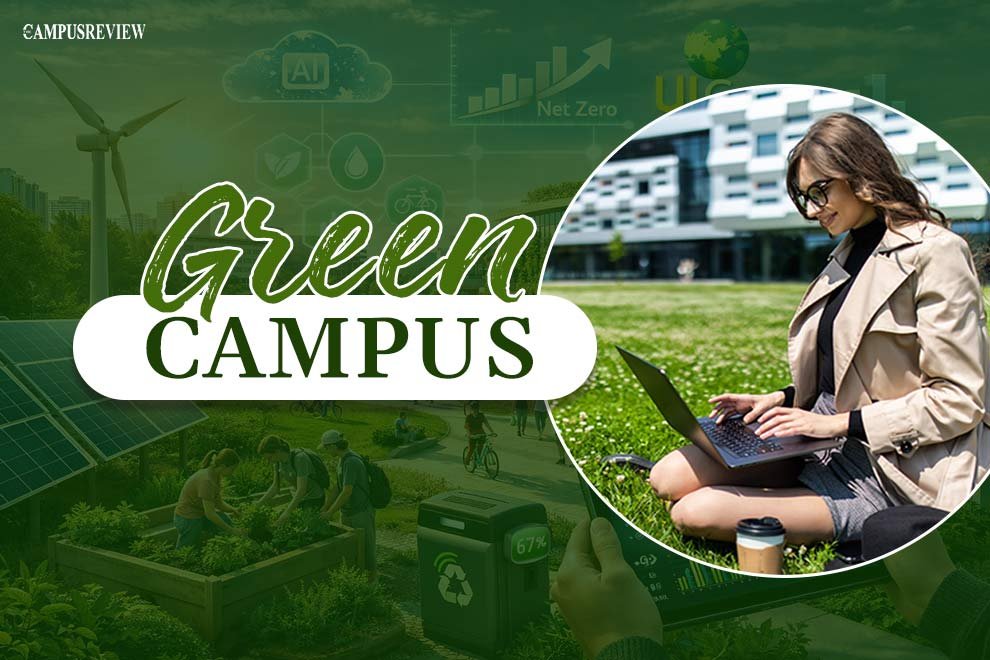
A green campus today means far more than installing solar panels or running recycling campaigns. Universities function like small cities, with constant demand for energy, water, transportation, and materials. When sustainability efforts rely only on intention and symbolism, they often fail to deliver lasting results. This gap between ambition and execution has become a major challenge for higher education institutions worldwide.
This blog explains how universities can build a truly effective green campus by combining sustainability goals with data driven systems. It explores how campus design, energy management, waste practices, student participation, and global rankings connect into a single operational framework. As of 2025, 1,745 universities across 105 countries are formally evaluated on sustainability performance across energy, waste, water, infrastructure, transport, and education, according to UI GreenMetric World University Rankings. This roadmap shows how institutions can move from isolated green actions to a measurable, intelligent, and future ready campus model.
Sustainable Green Campus Design & Architecture as the Core Pillar
A green campus begins with sustainable campus design & architecture, because design decisions determine environmental impact for decades. Once buildings are constructed, correcting inefficiencies becomes costly and disruptive. For this reason, universities now focus on sustainability at the planning stage rather than after completion. This shift marks a clear evolution from decorative green features to systemic environmental thinking.
Many campuses now apply biomimetic design principles that mirror natural systems. These designs regulate heat, airflow, and lighting through structure rather than mechanical force. As a result, buildings consume less energy while maintaining comfort for students and faculty. LEED standards further support this approach by guiding material selection, water use, and energy efficiency across building lifecycles.
However, modern sustainability frameworks no longer judge campuses solely by green buildings. Global assessment systems now evaluate whether sustainability is embedded across infrastructure planning, academic programs, daily operations, and institutional governance. According to the Association for the Advancement of Sustainability in Higher Education, sustainability performance reflects how deeply environmental thinking influences decision making at every level. This perspective reinforces the idea that a green campus functions as an integrated system rather than a collection of projects.
Digital twin technology now strengthens this foundation. Universities simulate energy loads, occupancy patterns, and environmental conditions before construction begins. This practice reduces design errors, improves long term efficiency, and lowers operational risk. As a result, campuses transition more smoothly into smart, adaptable environments.
Precision Energy Management From Efficiency to Net Zero
Energy management defines the operational success of a green campus. Universities operate laboratories, classrooms, housing, and digital infrastructure around the clock. Traditional efficiency measures often reduce consumption temporarily but fail to address long term variability. Therefore, institutions now pursue comprehensive carbon-neutral campus initiatives supported by real time data.
Renewable energy integration plays a central role in this transition. Solar and wind systems increasingly connect to smart grids that balance supply and demand dynamically. These systems respond to weather conditions, usage patterns, and storage capacity. As a result, campuses stabilize energy costs while reducing emissions.
Artificial intelligence now enhances this precision further. Predictive HVAC systems adjust heating and cooling based on classroom occupancy and scheduling data. This approach minimizes energy waste without sacrificing comfort. Such systems represent the core of energy-efficient universities & green buildings, where automation supports both sustainability and financial discipline.
Arizona State University demonstrates this model in practice. The university reported a STARS sustainability score of 91.1, reflecting strong performance across energy, climate action, transportation, procurement, and waste diversion. This verified outcome from Arizona State University confirms that data driven energy systems can operate effectively at institutional scale. The example reinforces the value of integrating intelligence into campus energy strategy.
Closing the Loop With Smart Waste and Water Systems
While energy receives significant attention, material flows often determine the overall sustainability of a green campus. Waste and water management influence operational costs, environmental impact, and regulatory compliance. Without intelligent systems, campuses struggle to control these flows efficiently.
Smart waste management systems now use sensors to monitor bin capacity and contamination levels. This data improves collection routes and reduces unnecessary transportation. Automated sorting further increases recycling accuracy and diversion rates. Over time, these improvements lower disposal costs and environmental burden.
Water management follows a similar logic. Graywater recycling systems reuse water from sinks, showers, and cooling processes. Campuses reduce freshwater demand while maintaining hygiene and safety standards. These systems also stabilize long term utility expenses, which supports financial planning.
Effective waste management & eco-friendly campus practices therefore serve both environmental and economic goals. However, infrastructure alone cannot guarantee success. Human behavior shapes daily outcomes, which leads directly to the importance of community engagement.
The Human Element and Student Participation
Technology delivers results only when people use it responsibly. This principle applies strongly to any green campus. Students influence energy use, waste generation, and transportation patterns every day. Without engagement, even the best systems underperform.
Universities now promote student involvement in sustainability programs through digital tools and incentives. Mobile applications track energy consumption and carbon footprints at individual and group levels. Gamification encourages participation by making sustainability visible and rewarding progress. These tools transform abstract goals into daily actions.
Many institutions also operate living labs that integrate sustainability into education. Students conduct research on real campus systems rather than simulated models. This approach strengthens learning outcomes while improving operational performance. Sustainability becomes both an academic and practical discipline.
The STARS framework formally measures student engagement, behavioral change, and sustainability education. It recognizes that campus performance depends as much on people as on infrastructure. This perspective from the Association for the Advancement of Sustainability in Higher Education reinforces the human foundation of a smart campus. Long term success emerges when technology and culture evolve together.
Measurement, Rankings, and Institutional Authority
Measurement defines credibility in sustainability efforts. Without transparent data, claims lose trust among stakeholders. Universities now face increasing pressure from students, regulators, and funding bodies to demonstrate real progress.
Global rankings such as UI GreenMetric provide structured evaluation across environmental dimensions. These frameworks allow institutions to benchmark performance against peers worldwide. More importantly, they encourage consistent data collection and disclosure.
Transparent reporting strengthens governance and strategic planning. Leaders identify gaps, allocate resources more effectively, and track progress over time. Public disclosure also improves institutional accountability and reputation.
Leading global bodies emphasize transparency as essential for sustainability leadership. Public reporting enables benchmarking, credibility, and alignment with global climate and education goals. This position reflects guidance from the United Nations Environment Programme and World Bank. Over time, institutions that master measurement will define the future standard of a green campus.
The Roadmap to a Net Zero Future
A green campus can no longer rely on isolated initiatives or symbolic commitments. It requires systems thinking, data discipline, and institutional accountability. Smart infrastructure transforms sustainability from aspiration into governance.
Design establishes the foundation for long term performance. Energy systems drive daily efficiency and emissions control. Waste and water loops reduce material loss and operating costs. Student participation reinforces cultural change. Transparent reporting builds trust and authority.
From a scholarly perspective, universities must manage sustainability with the same rigor applied to finance or safety. Metrics, oversight, and long-term planning separate meaningful progress from temporary success. A smart campus framework provides this structure.
The future of higher education depends on institutions that align intelligence with responsibility. A data-driven green campus is no longer an experiment. It is the emerging standard for resilient and credible universities.
Tejas Tahmankar