
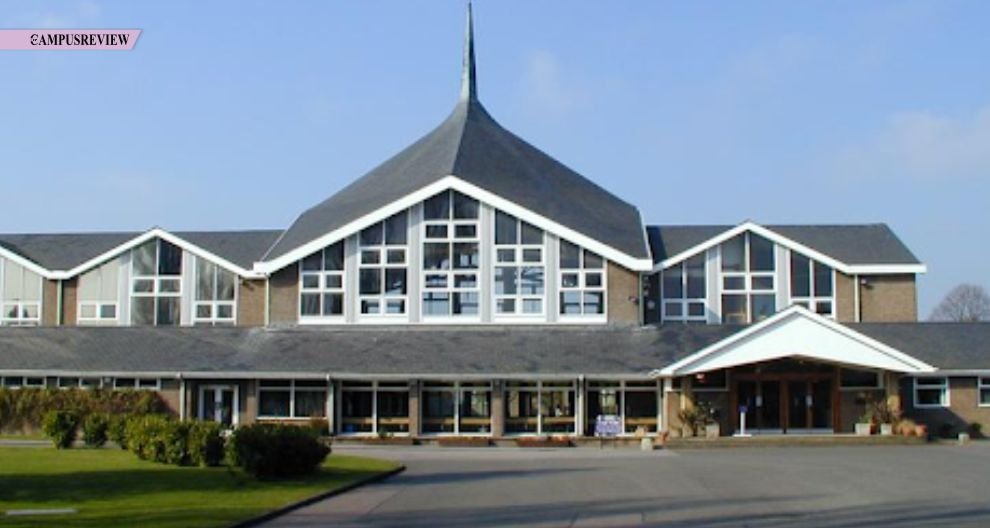
Cambridge has a longstanding association with academic inquiry, and The Perse School’s own story began in 1615. Since its foundation, the school has continued to develop its educational approach while retaining a clear commitment to expanding opportunity and nurturing young minds.
Its founder, Dr Stephen Perse, was a fellow of Gonville and Caius College, a theologian who later became a tutor in medicine and a successful practising physician. Through investments in land, property and the ventures of others, he acquired the means to pursue a larger ambition. Having witnessed the limited opportunities available to poorer patients he treated, and the divide between the university and the town around it, he sought to make education a means of widening life chances.
His response was to leave a considerable sum for a free grammar school for talented boys from all backgrounds, offering an educational route towards university. Initially, the school provided places for 100 free scholars, many of whom went on to study at Caius College. The founding principle was not simply to teach, but to widen the possibilities available to young people whose circumstances might otherwise restrict them.
That original purpose gives The Perse a distinctive place in Cambridge’s educational history. Its official history identifies it as the city’s oldest surviving secondary school, while its wider contemporary community serves children from ages three to eighteen. Today, the school combines that historical heritage with a co-educational day-school model intended to develop academic ability, individual character and a sense of responsibility.
A History of Change, Not Complacency
The school’s history has not been a straight line of uninterrupted success. During the eighteenth century, neglect by its governors contributed to a decline in teaching standards and pupil numbers. The school’s survival came under pressure, and local protests helped keep it open. A court case in 1837 eventually reformed the College’s administration of Stephen Perse’s trust and placed the school on a firmer footing. Its official account presents these episodes as part of the institution’s history, a reminder that educational traditions depend on stewardship as much as on their founding ideals.
The school’s development continued through periods of significant change. The Perse School for Girls opened in 1881 with support from the town, the University, and the Perse endowment. Under Headmaster W. H. D. Rouse, whose tenure ran from 1902 to 1928, experimental teaching methods, particularly the Direct Method of teaching foreign languages, attracted attention and talented teachers. Rouse also established a preparatory school and two boarding houses, including Hillel House, a Jewish boarding house.
The Upper School moved to Hills Road in 1960. From 1945 to 1976, The Perse operated as a direct-grant school, offering free places to around 40% of its pupils. After government support was withdrawn, it became independent. The school began admitting girls to its Sixth Form in 1995 before extending co-education throughout the institution in 2012. Its 400th anniversary, celebrated across the 2015–2016 academic year, provided an opportunity to reflect on four centuries of educational change and continued development.
An Education With Five Dimensions of Purpose
The Perse describes its purpose in a concise phrase: “We make the future better.” The statement is supported by an educational philosophy that brings intellectual ambition together with reflection, kindness and responsibility. The school aims to prepare young people for higher education, meaningful careers and fulfilling lives, equipping them with knowledge, skills, character and confidence.
Its published values place emphasis on inspiring intellectual curiosity, maintaining high standards of teaching and learning, and making use of Cambridge’s academic environment. Alongside these ambitions sits an explicit commitment to pastoral care, inclusion, equality, diversity and environmental sustainability. The school also identifies philanthropy as part of its purpose, citing fees assistance, partnerships, community projects and charitable giving as ways of extending support beyond its immediate community.
These priorities are reflected in what the school describes as a three-dimensional education, combining academic learning, pastoral care and extra-curricular participation. Pupils and teaching staff are expected to contribute to all three. The approach recognises that academic ability is only one part of preparation for adult life; independence, resilience, perspective and consideration for others also develop through a wider range of experiences.
One Community From Early Childhood to Sixth Form
The Perse is a co-educational day school serving children aged three to eighteen across four stages: Pelican School for ages three to seven, Prep School for ages seven to eleven, Upper School for ages eleven to sixteen, and Sixth Form for ages sixteen to eighteen. This structure allows pupils to progress through the institution while encountering increasingly demanding academic work and greater personal responsibility.
The school’s educational approach encourages pupils to take responsibility for their choices, approach unfamiliar ideas with curiosity and continue learning beyond the classroom. Cambridge’s academic environment provides a wider intellectual context in which questions about science, culture, literature and society can be explored through connections beyond school.
Pastoral care is another central feature of the school’s published philosophy. The Perse aims to recognise individual needs and develop happy, balanced and considerate pupils. Alongside academic progress, the school seeks to foster an environment where pupils feel secure, develop an understanding of their own wellbeing, respect the rule of law and build a considered sense of right and wrong.
Facilities That Make Learning Tangible
The Perse’s facilities reflect the breadth of its educational programme. The school lists high-specification information technology suites, newly refurbished science laboratories and classrooms, a lecture theatre, a purpose-built sports centre, a sports studio and a strength and conditioning suite. Its music provision includes a music centre, rehearsal hall and extensive practice rooms, while its arts facilities encompass studios, a graphic design suite and a gallery.
The school’s sports centre brings together a 25-metre swimming pool, a climbing wall measuring 10.5 metres and a dedicated sports hall. Students also have access to 45 acres of outdoor space at Little Abington, approximately fifteen minutes from the school. Together, these spaces accommodate different forms of learning and participation, from developing physical skills to exploring creative interests and putting classroom understanding into practice.
Each setting offers a different way to develop skills. Scientific investigation creates opportunities to test ideas; music calls for practice and attentive listening; art encourages observation and experimentation; and sport develops technique, teamwork and perseverance. Together, these experiences complement classroom learning and broaden the ways in which pupils can discover their strengths.
More Than a Hundred Ways to Participate
The Perse’s co-curricular programme is notably broad. The school’s published Sixth Form information describes more than 100 clubs and societies, ranging from bridge and sewing to robotics, debating, literature and ecology. Pupils can also participate in more than 70 music ensembles, while the school reports over 150 sports teams.
Sport illustrates the scale of this involvement. Across the Upper School and Sixth Form, the school fields around 160 teams and plays an average of 450 matches each term. Its core sports include cricket, hockey, netball, rugby, football and tennis, alongside alternatives such as badminton, basketball, climbing, dance, rowing, swimming and yoga. The aim is to provide opportunities for participation at different levels of ability, rather than treating sport solely as a competition for the most accomplished performers.
Outdoor education adds another dimension. The Perse Exploration Society includes groups undertaking high-altitude expeditions to destinations such as India, Bolivia and Morocco, while another group completes the Duke of Edinburgh’s Gold Award qualifying expedition in the Italian Alps. Sixth Form pupils can also volunteer to support younger students on expeditions and during training sessions. These experiences bring together practical skills, leadership, confidence and an awareness of the wider world, while allowing older pupils to contribute to the development of younger members of the school community.
Access, Kindness and the Meaning of Distinction
The school’s official purpose includes a commitment to fees assistance and charitable work, connecting its contemporary approach with the founding vision of Stephen Perse. The historical provision of free places to talented boys from different backgrounds and the later direct-grant period demonstrate that questions of educational access have been part of the school’s story for generations. Its current values continue to identify philanthropy and community partnership as responsibilities of the institution.
The Perse’s distinction lies in how it brings these elements together. Its academic programme, specialist facilities and extensive co-curricular opportunities are valuable not simply for their scale, but for what they enable pupils to discover, practise and contribute.
The Perse represents an educational tradition that has repeatedly adapted without abandoning its central purpose. Four centuries after its foundation, its founding vision finds contemporary expression in an education that connects intellectual ambition with kindness, personal growth and responsibility to the wider community. The school’s guiding question remains relevant: how can education help make the future better? Its answer lies in preparing young people to think independently, develop their talents, and use what they learn to contribute meaningfully beyond the school gates.
Also Read – Loreto Grammar School (The UK’s Most Distinguished Schools of 2026)
