
By the time the University of Michigan began offering forestry courses in 1881, the clear-cutting of the state’s dense forests was well underway. Michigan became the first university in the United States to offer forestry courses. In 1903, a Department of Forestry was created, chaired by Filibert Roth, and it conferred its first Master of Science in Forestry degrees the following year. That department is the forerunner of today’s School for Environment and Sustainability, known as SEAS.
A Century of Names
The school has changed its name more than once, and each change marks a widening of ambition. In 1927, the department became the School of Forestry and Conservation, the first such school in the nation. Samuel T. Dana was appointed professor and dean, heading a faculty of ten and 25 enrolled students. By 1929, the school had opened its first forestry camp for summer field work.
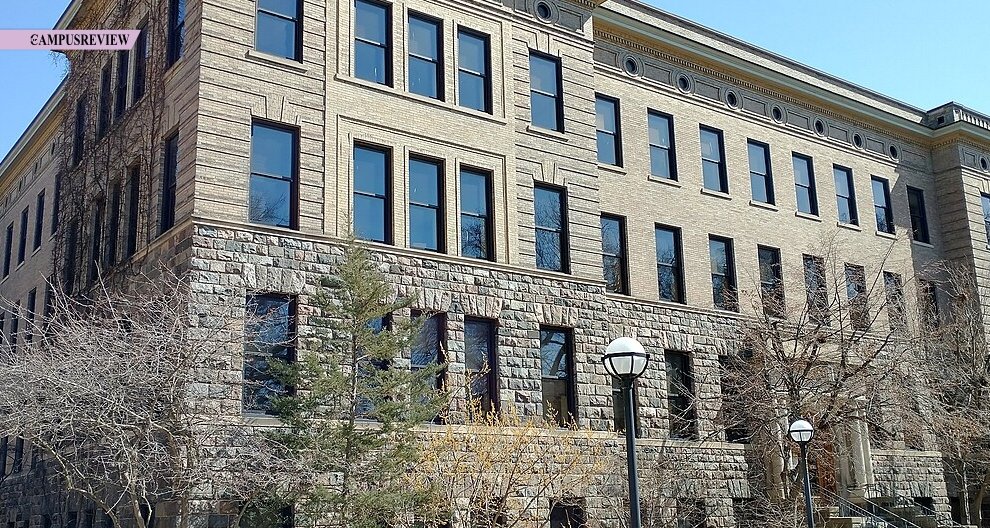
It became the School of Natural Resources in 1950. In 1961, it gathered its departments under one roof in the Natural Resources Building, renamed the Samuel Trask Dana Building in 1973. Landscape architecture joined the school’s administration in 1965, and its students, who had been housed in one campus building after another for nearly 30 years, moved into the Dana Building in 1994. The word Environment was added to the name in 1992. On July 1, 2017, the school became SEAS.
Firsts and Fields
The record is crowded with firsts. The school’s Environmental Justice program was the first academic program of its kind in the nation. Established by Bunyan Bryant and Paul Mohai in the 1990s, it became an early academic center for examining how environmental burdens fall disproportionately on communities of color and low-income communities. A master’s specialization in environmental justice was created to study the disproportionate burden that environmental problems place on communities of color and low-income communities.
The 1990s and 2000s added more. A 1995 joint venture with the Stephen M. Ross School of Business led to the Corporate Environmental Management Program and the Erb Environmental Management Institute. In 1998, the Doris Duke Charitable Foundation provided funding for the school’s master’s program, one of only three schools in the nation to win such an award, and the Center for Sustainable Systems followed in 1999.
The Program in the Environment, an undergraduate collaborative program overseen by LSA and SEAS, arrived in 2001. In 2006, the school established its current fields of study, seven for master’s students and two for PhD students, and fully funded its PhD program for the first time. In 2007 it hosted Coping with Climate Change, the first national summit devoted to helping the country prepare for changes in temperature, precipitation, sea level and species range.
Even its home reflects the mission. The Dana Building was renovated with sustainable practices and earned a Gold LEED rating, becoming the first major academic renovation in Michigan to receive such a high rating and one of the first in the country.
An Integrated Education
The school describes itself as an interdisciplinary institution that brings together natural sciences, social sciences, engineering, policy, planning, and design in environmental and sustainability education. Students choose among seven specializations within the Master of Science in Environment and Sustainability, including Behavior, Education, and Communication; Environmental Justice; Environmental Policy and Planning; Geospatial Data Sciences; Sustainability and Development; Ecosystem Science and Management; and Sustainable Systems, alongside the Master of Landscape Architecture, the PhD, and an online certificate in sustainability science.
Six sustainability themes cut across all of it: Cities, Mobility and Built Environment; Climate and Energy; Conservation and Restoration; Food Systems; Water; and a cross-cutting category. The school also established the Tishman Center for Social Justice and the Environment in 2021, extending its longstanding work in environmental justice and inclusion.
A Network and a Numbers Story
SEAS reports more than 14,100 SEAS and Program in the Environment alumni, which it calls the largest network of any U.S. environmental degree program. Alumni live in every state and in more than 80 countries. Research volume reached a record $28 million in 2025, double what it was five years earlier.
The research itself is close to home. SEAS Assistant Professor Parth Vaishnav and PhD student Mallika Kothari are studying how residents of Ann Arbor’s Bryant neighborhood cope with power outages longer than 12 hours, as part of a larger effort to make Bryant the nation’s first carbon-neutral neighborhood. Faculty member Derek Van Berkel is helping Great Lakes communities plan for climate migration, and landscape architecture faculty and students are working on the urban heat island effect and stormwater management.
Leadership for the Next Century
Jonathan T. Overpeck, appointed dean in 2017, holds the title of Samuel A. Graham Dean and is a professor of climate and space sciences and engineering as well as earth and environmental sciences. The school operates from the Dana Building at 440 Church Street in Ann Arbor.
It has changed names and expanded its academic reach over more than a century, but the idea underneath has held for more than 120 years: understand the land, then take care of it.
Also Read – Sewanee – The University of the South (The Elite Green Schools of 2026)
