
Static is the quiet danger of any institution that has found something that works. A formula
succeeds, the calendar fills, and the temptation is to protect the formula rather than question it.
Schools, with their inherited routines and familiar rhythms, know that temptation well.
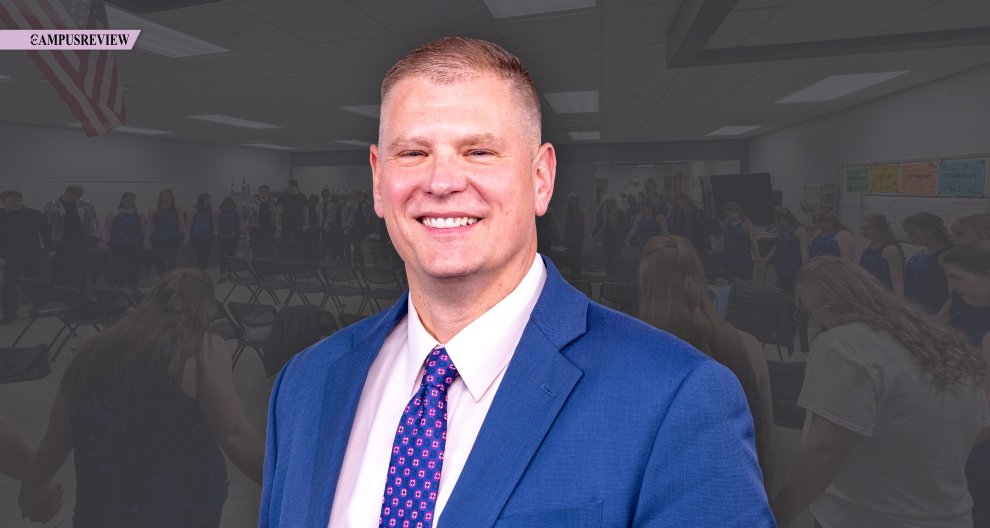
Dr. Justin Wagner, Superintendent of Woodbine Community School District, has the
opposite instinct. His conviction, stated plainly, is that “successful organizations cannot remain
static.” Schools, he believes, have to keep learning, adapting, and improving, all while staying
grounded in a clear mission.
A Mission as the Foundation
At Woodbine, the mission is written as a promise: “to provide a safe environment where all are
welcomed and given access to personalized, unparalleled learning experiences that positively
shape futures.” For Dr. Wagner, that sentence is not decoration. It has become the foundation for
how the district approaches change.
For Woodbine Community Schools, this starts with people. The most important responsibility of
school leaders is “developing people and creating the conditions for them to be successful.”
Around that core sit the daily duties of setting direction, developing leaders, supporting teachers,
managing resources responsibly, building partnerships, and making sure the district’s systems
keep evolving around the needs of students.
Asked about his proudest accomplishment, Dr. Wagner does not point to a single program or
statistic. He points to a shift in habit: improvement has become normal within the district.
Change, he explains, does not mean abandoning what works. It means asking thoughtful
questions, examining evidence, listening to students and staff, and making purposeful
adjustments when the district knows it can do better.
The results he credits to that approach include enrollment growth, stronger academic outcomes,
expanded career pathways, more work-based learning, strong attendance, reduced discipline over
time, and increased community college participation. The district’s staff survey adds a further
signal. Employees want the emphasis to continue on personalized learning, innovation, student
opportunities, leadership, flexibility, career readiness, and staff support.
Personalized Learning, Mapped and Shared
At Woodbine, personalized learning is a far broader idea than technology or pacing. Dr. Wagner
describes it as meeting learners where they are, providing clarity about what they are learning,
allowing appropriate flexibility, offering timely support, and giving students the chance to move
forward when they are ready.
To make that idea consistent across classrooms, the district created a 13-step Personalized
Learning Teacher Roadmap. It links collaboration, clarity, high expectations, interventions,
student agency, parent communication, safe learning environments, and self-reported learning to
everyday classroom practice. The roadmap gives teachers a common structure while leaving
room for professional judgment.
The same philosophy now extends to the adults. Rather than assuming every teacher or
administrator needs the same learning at the same time, the district is increasingly personalizing
professional development, recognizing that staff members bring different strengths, goals, and
needs. Supporting that effort is a significant investment in the partnership with Leadership
Resources, which focuses on individualized leadership development, coaching, accountability,
communication, and personal growth for administrators and other district leaders.
Three Goals, Four Values
Woodbine’s strategic direction is intentionally simple: academics, culture, and growth. Four
values support those goals, and staff votes on them every year: communication, collaboration,
respect, and accountability.
The next phase the district is undergoing is about deeper implementation rather than chasing
additional initiatives. The aim is for staff to become exceptionally good at the systems already in
place: personalized learning, Professional Learning Communities, high-quality instruction,
interventions, career pathways, leadership development, and student ownership.
At the center of that effort is fidelity of implementation. This year’s staff learning carried a
pointed message: a proven strategy applied inconsistently is no longer the same strategy that
produced the original results. The conversation has therefore shifted from asking, “Are we doing
it?” to asking, “Are we doing it well, consistently, and with the intended impact?”
Success is measured through academic achievement and growth, attendance, behavior,
graduation, dropout rates, work-based learning, college credit, staff retention, enrollment, student
advancement, and feedback from students and staff.
Growing Without Losing the Advantages of a Small School
Woodbine’s enrollment growth has placed it among Iowa’s top 10% fastest-growing districts,
and the leadership there is direct about the responsibility that comes with it. “Growth has to be
managed intentionally.” The district’s approach is to expand opportunity without losing the
advantages of a small school, which calls for thoughtful staffing, scheduling, facilities planning,
partnerships, and financial stewardship.
Every new opportunity is tested against the mission. The district asks whether an offering aligns
with who it is, rather than adding programs simply because they are available.
The question carries particular weight in rural education, where enrollment patterns are changing
dramatically. Guided by regional needs assessments, Woodbine has created learning
opportunities shaped around business and industry needs, allowing students to earn certifications
more quickly while retaining more of what they learn. For the Woodbine Community School
District, change has become an organizational mindset. Staff work hard to anticipate change,
evaluate it thoughtfully, and respond purposefully rather than react after the fact.
Pathways That Connect College and Career
Woodbine’s career and technical programs span agriculture, construction trades, business, and
family and consumer science. The district as a whole wants students to use the vast array of
resources available to them as a way of discovering “what they are interested in, what they are
good at, and where those strengths can take them.”
Through the IGNITE Pathways Regional Center and district programming, students are
exposed to multiple career fields, college credit, work-based learning, industry credentials, and
direct relationships with employers. In Woodbine, the staff does not believe students have to
choose between college and career because many of the pathways intentionally connect the two.
The outcomes are measurable. Woodbine students far exceed the state average in work-based
learning experiences, and community college enrollment has grown by over 240% across the
past seven years. These results reinforce a central aim of personalization: helping students
connect school to a future that matters to them.
The Numbers Behind the Narrative
The staff insists on multiple measures because no single number defines a student or a school
district. Beyond the indicators already named, the district’s review includes academic
proficiency, individual growth, chronic absenteeism, career credentials, and financial health.
The figures that emerge are specific. The district’s 2025–26 attendance rate was 93.79%,
compared with a state average of 89%. The four-year graduation rate was 92.86%, and the
district’s dropout rate was an impressive 0%. Additionally, the district has increased the number and amount of college credits taken and earned by more than 200% over the past six years. In this same timeframe, secondary and elementary discipline referrals have each been reduced by more than 30%.
The Woodbine staff collectively do not treat these as trophies. They are used to identify where
the next improvement needs to occur.
Progress on Several Fronts at Once
Asked for a single measurable achievement, Woodbine administration offers a pattern instead:
multiple outcomes have improved at the same time. According to the performance charts
presented to staff, elementary academic performance now exceeds state averages in both
mathematics and English language arts at grades three and four.
Personalized learning is also producing visible advancement. In TK–4 grades, over 36% of
students in ELA and 56% of students in math have advanced a full year ahead of their peers
academically. Taken together, these figures show progress not through one isolated measure, but
across different dimensions of the student experience.
To the administration and staff, that is the real story. It shows that thoughtful change can
improve the student experience across many areas simultaneously, which he finds more
meaningful than any isolated statistic.
Tested by Uncertainty
As Superintendent of the Woodbine Community School District, some of Dr. Wagner’s most
formative leadership lessons came during the COVID-19 pandemic, through both his work in
education and his service in the Iowa Air National Guard. After having served in Iraq,
Afghanistan, Syria, and in countries throughout the Middle East, creating clarity during crisis is
challenging, but vitally important. In periods of uncertainty, he observed, people need clarity,
consistency, communication, and confidence that the organization has a direction.
The experience reinforced a principle he now emphasizes throughout Woodbine. Leadership, he
says, is not about one individual having all the answers. It is about developing people who can
think, communicate, solve problems, and take ownership collectively as a whole. That principle
has shaped the district’s effort to broaden leadership capacity, with principals, central-office
leaders, and other staff members being developed so that leadership is distributed throughout the
organization. The goal is leaders who can navigate change thoughtfully rather than simply
manage the status quo.
Safety as a Culture
Woodbine’s innovation does not stop with learning in the classroom. The WCSD mission
statement includes the word ‘safe,’ and because of this, the WCSD has invested in a layered
approach to school safety and expanded on-site mental health support. The district’s view of
safety reaches well beyond security equipment. A safe school includes physical protection,
trusted relationships, clear expectations, mental-health access, early intervention, consistent
behavior systems, and adults who know their students.
That broader view of safety also connects to the district’s culture-building work. When students
know the expectations, feel connected to adults, and receive support early, many problems can
be addressed before they grow. Physical safety has been strengthened alongside that work, and
expanded partnerships now give students access to services within the school environment. The
aim is for students to be both physically safe and genuinely connected to their school.
Making Improvement Last
The next step is to make all staff improvement sustainable. The district focuses on innovation
and an interdependent process that is not dependent upon one person alone. It is evident that a
culture exists amongst the Woodbine staff where questioning existing practices, using evidence,
listening to students, learning from one another, and making purposeful changes when those
changes will better serve students are ever present.
That commitment also extends to adult learning. Personalized professional growth, leadership
coaching, PLC collaboration, and fidelity of implementation will remain central to the work.
The larger hope reaches beyond Woodbine’s borders: that the district will demonstrate what is
possible in rural public education. “A small district can be transformational, academically
strong, financially responsible, relationship-driven, and capable of providing opportunities that
rival much larger systems.”
Quotes
“We never want enrollment growth to come at the expense of relationships, responsiveness, or personalization.”
“We intentionally look at multiple measures because no single number defines a student or a
school district.”
Also read – The Most Influential K–12 Education Leaders to Watch in 2026
