Why do some students stay calm under pressure, build strong friendships, and recover from failure, while others struggle despite having the same intelligence or resources?
The difference often has little to do with grades or IQ. It has everything to do with emotional intelligence.
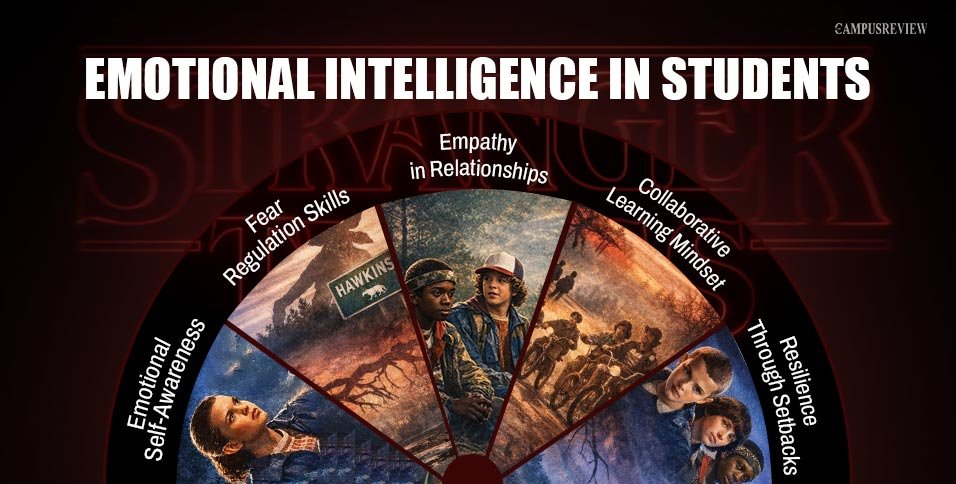
What makes this concept truly relatable isn’t just psychological research; it’s storytelling, and few modern stories capture emotional intelligence better than Stranger Things.
Beneath the supernatural threats and 1980s nostalgia, Stranger Things is a story about students navigating fear, identity, peer relationships, isolation, teamwork, and resilience. The characters don’t succeed because they are fearless or gifted. They succeed because they learn to understand emotions, both their own and others’.
This article explores emotional intelligence in students through lessons from Stranger Things, blending educational research with narrative examples to help students, educators, and advisors understand why emotional intelligence is essential for academic success and personal growth.
Emotional Intelligence in Students: Lessons from Stranger Things
- How Eleven’s Identity Journey Teaches Emotional Self-Awareness
Eleven’s story is fundamentally about identity.
She begins the series unable to name her emotions, fear, anger, confusion, and belonging because no one ever helped her understand them. This mirrors many students who feel overwhelmed but struggle to explain why.
In education, self-awareness is the foundation of emotional intelligence. Students who recognize their emotions can:
- Identify stress triggers
- Understand learning strengths and weaknesses
- Recognize emotional patterns that affect academic performance
Research consistently shows that emotional self-awareness improves focus, decision-making, and emotional regulation.
Educational research in social-emotional learning consistently links self-awareness with improved student engagement, classroom behavior, and academic outcomes.
Like Eleven, students grow when they learn to label emotions instead of suppressing them.
- Facing the Upside Down: How Students Learn to Manage Fear
Fear defines Stranger Things, yet the characters move forward despite it.
Students face their own “Upside Down”:
- Exam anxiety
- Fear of failure
- Social pressure
- Uncertainty about careers and the future
Emotionally intelligent students don’t eliminate fear. They acknowledge it and regulate their response.
In educational psychology, this ability to regulate emotional responses under stress is a core component of emotional intelligence in students and a strong predictor of long-term academic resilience.
Psychological research links emotional regulation with improved academic performance and reduced burnout. Students who manage fear perform better under pressure, adapt more easily to change, and maintain motivation during challenges.
Fear doesn’t disappear, but emotional intelligence prevents it from becoming paralyzing.
- Dustin, Lucas, and Empathy in Student Relationships
One of the most powerful lessons in Stranger Things is empathy. The group survives not because they agree on everything, but because they listen, support, and adjust their behavior.
In academic environments, empathy:
- Improves peer relationships
- Reduces conflict and isolation
- Creates inclusive classrooms
- Encourages collaboration
Empathy allows students to understand perspectives beyond their own, especially in diverse and international learning environments.
This skill is increasingly essential in global classrooms where students interact across cultures, disciplines, and learning styles.
Studies in educational psychology show that empathetic students engage more effectively in group learning and demonstrate stronger social and emotional well-being.
- Teamwork Over Talent: Academic Lessons from the Hawkins Group
No character in Stranger Things succeeds alone.
Whether solving mysteries or surviving danger, progress happens through teamwork and shared motivation, a core element of emotional intelligence.
In education, emotionally intelligent students:
- Communicate clearly during group projects
- Resolve conflicts constructively
- Stay motivated through shared academic goals
- Support peers instead of competing destructively
Research links emotional intelligence with higher academic engagement and persistence. When students feel emotionally supported, they participate more actively and remain committed to long-term learning outcomes.
This aligns closely with research-backed social-emotional learning frameworks used across modern education systems.
- Resilience After Loss: What Students Learn from Setbacks
Failure and loss are recurring themes in Stranger Things. Characters experience defeat, grief, and emotional exhaustion, but they adapt and continue.
For students, resilience means:
- Recovering from poor grades
- Managing academic disappointment
- Handling personal and social stress
- Continuing despite setbacks
Emotional intelligence strengthens resilience by helping students process emotions rather than ignore them.
Research shows that emotionally intelligent students experience lower stress levels and recover faster from academic and emotional challenges, reinforcing the importance of emotional intelligence in student development
Resilience isn’t about avoiding hardship; it’s about learning how to recover emotionally.
- Emotional Intelligence Is Learned, Not Inherited
Perhaps the most important lesson from Stranger Things is growth.
Eleven doesn’t remain emotionally static. She learns through experience, relationships, reflection, and guidance. Students are no different.
Emotional intelligence can be developed through:
- Reflection and emotional awareness practices
- Supportive peer relationships
- Mindfulness and stress-management techniques
- Emotionally supportive learning environments
Educational institutions that integrate emotional learning consistently report improvements in student well-being, behavior, and academic performance.
Emotional intelligence is not a fixed trait; it’s a learnable life skill.
Conclusion: Why Emotional Intelligence Matters More Than Ever
In a world shaped by academic pressure, digital overload, and constant change, emotional intelligence is no longer optional.
Stranger Things shows us that intelligence alone doesn’t ensure success. Understanding emotions, fear, empathy, motivation, and resilience does.
For students, emotional intelligence:
- Improves academic performance
- Strengthens mental health
- Builds meaningful relationships
- Prepares them for leadership and real-world challenges
Education isn’t just about teaching students what to think; it’s about helping them understand how they feel while learning.
These skills don’t just improve grades; they shape confident, capable individuals who can navigate academic and personal challenges with clarity and resilience. Emotional intelligence deserves the same importance as academic achievement in modern education.
In simple terms, emotional intelligence in students refers to the ability to recognize emotions, regulate responses, build healthy relationships, and remain resilient under academic pressure.
Key Lessons Students Can Apply Today
Whether in classrooms, universities, or academic advising spaces, these emotional intelligence habits can be applied immediately to support student growth and performance.
- Understand your emotions before reacting
Pause and identify what you’re feeling before responding to stress, feedback, or conflict. Self-awareness leads to better decisions.
- Use fear as information, not limitation
Fear often signals growth or uncertainty; learning to manage it helps students stay focused instead of feeling overwhelmed.
- Practice empathy in classrooms and friendships
Listening and understanding others’ perspectives builds trust, improves collaboration, and creates healthier learning environments.
- Collaborate instead of competing unnecessarily
Working together strengthens problem-solving skills and motivation while reducing academic pressure and isolation.
- View setbacks as emotional learning opportunities
Mistakes and failures offer insight into resilience, helping students adapt, grow, and perform better over time.
Conversations around emotional intelligence become more meaningful when students, educators, and academic communities share this blog and engage with its ideas together, turning insight into collective growth.
FAQs
- Why is emotional intelligence important for students today?
It helps students manage stress, build relationships, improve academic performance, and adapt to changing environments.
- Can emotional intelligence be taught in schools and universities?
Yes. Emotional intelligence can be developed through structured programs, reflective practices, and supportive learning cultures.
- How does emotional intelligence affect academic performance?
Students with higher emotional intelligence show better focus, motivation, stress management, and persistence.
- How does pop culture help explain emotional intelligence?
Stories like Stranger Things make complex psychological concepts relatable, memorable, and easier to apply in real life.
- Is emotional intelligence more important than IQ?
Both matter, but emotional intelligence determines how effectively students apply their knowledge under pressure.