The Campus Review
September 22, 2026
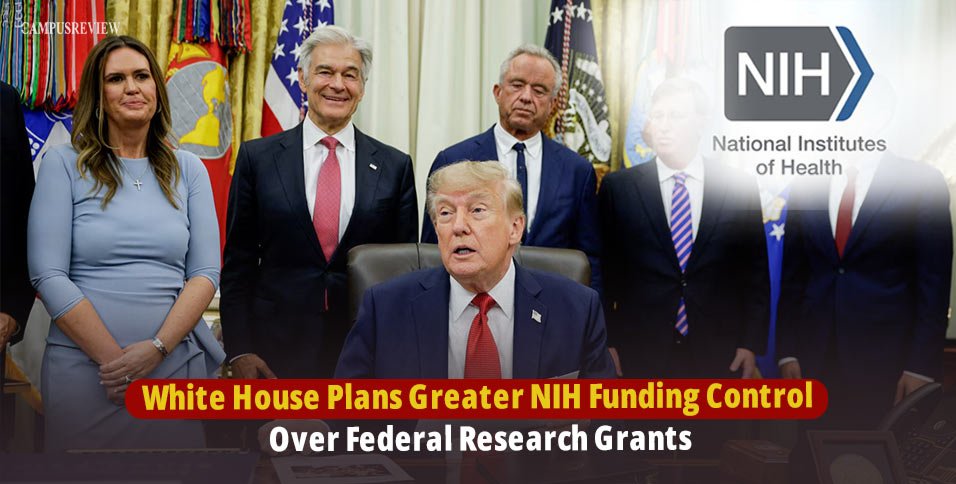
The White House is drafting an executive order that could give the administration greater NIH funding control over federal medical research awards. The reported plan could create an outside committee to review and potentially veto specific grants, drawing concerns from researchers, university leaders, and congressional lawmakers.
The order has not been issued, and its final structure and authority remain unclear. The proposal could add an external review layer to the NIH’s existing scientific peer-review process.
The Proposal at a Glance
| Feature | Current Framework | Reported Draft Proposal |
| Review Process | Scientific peer review followed by NIH institute consideration | Proposed outside committee could review awards before funding |
| Review Criteria | Scientific merit and peer review | Undetermined; subject to ongoing policy discussions |
| Potential Members | NIH scientific and agency leadership | OMB Director Russell Vought and NIH Director Jay Bhattacharya reported as potential members |
| Voting Mechanism | Standard agency grant-review procedures | Unanimous agreement reported as a possible requirement |
| NIH Budget | Nearly $48 billion, with about 82% going to extramural research | Proposed review focuses on grant awards within the agency budget |
What the White House Is Proposing
Administration officials are discussing options to increase executive oversight over federal research grants. The administration argues that federal research spending should maintain greater accountability to taxpayers and align with its priorities.
Recent NIH funding disputes have included research involving topics such as diversity, gender, and health disparities. Lawsuits have separately alleged that the agency utilized keyword screening involving areas including diversity, gender identity, and climate change.
The reported draft proposal aims to formalize an external review mechanism, though officials have not publicly defined specific evaluation criteria.
How NIH Grant Review Could Change
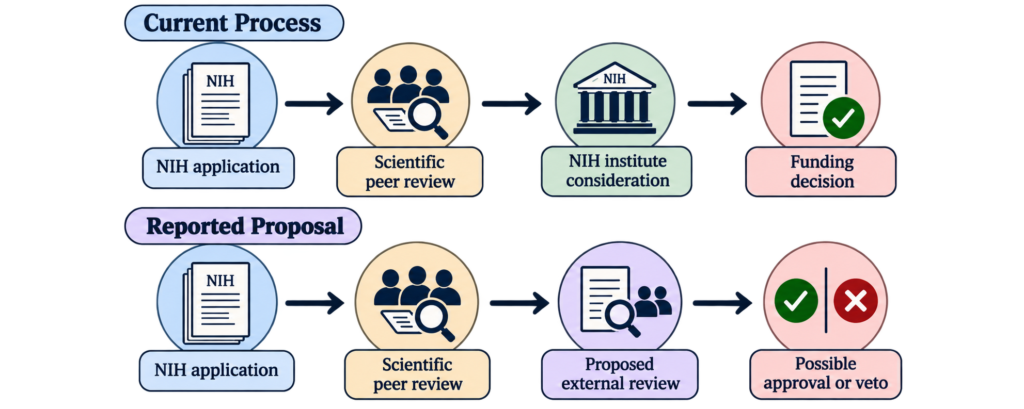
If an executive order is signed, the existing NIH review process could gain an additional external layer of review:
- Scientific panels would continue scoring applications for technical merit and research design.
- The proposed external committee would then review awards before funds are released.
- Reporting indicates the proposed panel could require unanimous agreement to approve an award, meaning a single objection could prevent approval.
Internal Debate on NIH Funding Control
The reported discussions have revealed disagreements within the executive branch. Reporting on a recent White House meeting indicates disagreement between Office of Management and Budget Director Russell Vought and NIH Director Jay Bhattacharya over proposed administrative shifts.
According to reporting on the White House meeting, Bhattacharya resisted pressure to cut funding to Harvard researchers amid disagreements over the proposed changes.
An official statement from the National Institutes of Health emphasized stability for active research programs:
“NIH remains committed to its mission of funding biomedical research to benefit the health of the American people. There will be no rescissions to NIH grant monies. All NIH grant monies will be spent.” (National Institutes of Health)
Meanwhile, OMB leadership is reportedly seeking broader changes to how executive agencies oversee discretionary research grants.
Why Universities Are Watching the Proposal
Higher education institutions depend on federal research funding to maintain advanced laboratories, train graduate students, and run long-term clinical trials. Federal scrutiny of medical education has also increased, including investigations into medical schools’ admissions practices.
- Grant Stability: Nearly 82% of NIH funding goes to extramural research, supporting researchers at universities, medical schools, and other institutions. Changes to approval mechanisms introduce uncertainty for multi-year academic research grants.
- Federal Funding Exposure: Campuses have already faced scrutiny over administrative policies, with federal authorities previously freezing awards to Columbia University.
- Early-Career Researchers: Changes to grant approval could create uncertainty for researchers who depend on NIH funding to establish laboratories and continue academic careers.
Congressional Response
The reported proposal drew criticism from congressional appropriations leaders on September 21. Key lawmakers responsible for drafting agency budgets warned against introducing political screening into scientific allocations:
“Any attempt to politicize grantmaking at NIH, whether through an executive order or guidance, is contrary to congressional intent.”
(Senator Susan Collins, Chair of the Senate Appropriations Committee)
Collins also pointed to a continuing resolution signed September 2 that she said blocks OMB’s proposed rule or anything substantially similar.
Senator Patty Murray, the panel’s vice chair, similarly objected to the concept, warning that outside vetoes threaten essential medical research. In the House, Representative Rosa DeLauro joined the response, emphasizing that Congress holds constitutional authority over how federal research funding is appropriated and directed.
Legal Questions and What Happens Next
If the administration issues the order, its scope and legal authority could face court challenges. Researchers and civil liberties groups have already challenged previous NIH grant screening and funding decisions, raising questions about how far executive oversight can extend.
“What the First Amendment does not allow is the government’s use of its funding power to target or silence the expression of disfavored viewpoints within the biomedical research community.”
The proposed NIH funding control changes could therefore face further legal scrutiny if the administration moves forward with the executive order.