The Campus Review
November 11, 2026
The Edinburgh Academy abuse inquiry has revealed more than 40 years of sexual, physical and emotional abuse at the Scottish boarding school. In findings published on November 10, 2026, Lady Smith, chair of the Scottish Child Abuse Inquiry (SCAI), concluded that school leaders ignored complaints, overlooked warning signs and prioritised the institution’s reputation over children’s safety.
The abuse involved staff members and fellow pupils, while violence, bullying, racism, misogyny and homophobia became part of school life. The report also exposes how a lack of effective safeguarding and institutional accountability allowed children to suffer for decades.
Key Findings of the Edinburgh Academy Abuse Inquiry
The Edinburgh inquiry’s report examines the school’s residential care arrangements and the treatment of children over several decades.
| Key Detail | Findings |
| School | The Edinburgh Academy, Scotland |
| Inquiry | Scottish Child Abuse Inquiry |
| Report published | November 10, 2026 |
| Period examined | 1930 to 2008 |
| Sexual abuse | 1950s to 1980s |
| Physical abuse | Continued into the 1990s |
| Key perpetrators identified | Four former staff members |
| Inquiry chair | Lady Smith |
| School response | Acknowledged failures and apologised to survivors |
The report is the inquiry’s 17th volume of findings and its eighth report in the boarding schools case study.
How Did Abuse Become Normalised at Edinburgh Academy?
One of the most disturbing findings concerns the school’s culture. The inquiry found that physical punishment, bullying and humiliation became regular experiences for many pupils.
Children faced beatings, choking, sexual abuse and psychological mistreatment. Some boarders also lived in constant fear because they could not predict when a teacher or another pupil might hurt them.
A former pupil identified as Henry described how abuse became part of everyday life.
He told the inquiry:
“It was normal to kick, hit, and strangle, to the point of unconsciousness, 10 year olds.”
Henry also described sexual grooming, humiliation and the absence of proper pastoral care.
Lady Smith rejected the idea that these experiences represented normal school discipline. She said:
“None of this behaviour was ‘normal’. Or acceptable. It was simply abusive.”
The inquiry also found that children sometimes experienced abuse from fellow pupils. Older boys bullied younger boarders, while violent initiation practices and group attacks created an environment of fear.
Inquiry Identifies Four Teachers Linked to Historical Child Abuse
The Edinburgh Academy inquiry report identified four former staff members whose abuse contributed to the school’s history of safeguarding failures.
| Former Staff Member | Role and Findings |
| Hamish Dawson | A housemaster and Senior School teacher who sexually and physically abused boys. The school knew about his unusual behaviour but failed to intervene. He died in 2009. |
| John Brownlee | A housemaster and deputy head of the Junior School who physically and emotionally abused pupils over several decades. |
| Iain Wares | A Prep School teacher who sexually abused pupils at Edinburgh Academy and later at Fettes College. |
| William Bain | A former physics teacher and twice-convicted sex offender who began his history of abuse at Edinburgh Academy before moving to other schools. |
Why Did the School Fail to Stop the Abuse?
The inquiry found that warning signs existed for years, but school authorities did not take appropriate action.
Hamish Dawson’s behaviour, for example, was known to other people at the school. He used various objects to beat pupils, which were referred to as his “instruments of correction”.
The inquiry found that the school celebrated his unusual classroom behaviour rather than questioning it. When pornography was discovered on his desk, the school took no action.
Even more troubling, the objects Dawson used to punish pupils were auctioned when he left the school.
John Brownlee’s abuse also continued for years. In 2024, a Scottish court examination of facts found that he had committed cruel and unnatural acts of physical and emotional abuse against pupils between 1967 and 1991. He was medically unfit to stand trial and was not sentenced.
These cases show how institutional failures can allow abusive behaviour to continue even when staff have opportunities to intervene.
Bullying, Racism and Misogyny Extended Beyond Physical Abuse
The inquiry found that the hostile environment affected different groups of pupils.
Abuse was not limited to physical punishment or sexual misconduct. Discrimination and bullying also shaped children’s experiences.
The report highlighted several problems:
- Misogyny: Girls faced unpleasant and abusive behaviour after the school introduced co-education in its sixth form. The inquiry found no evidence that the school had properly considered the risks.
- Homophobia: Homophobic behaviour and language were widespread across the Academy.
- Racism: Racism existed even in the Prep School. Some pupils faced abuse because of their skin colour or because they were Jewish.
- Peer bullying: Younger children experienced violent bullying, humiliation and abusive initiation practices.
The inquiry found that staff frequently failed to challenge this behaviour, allowing bullying and discrimination to continue.
Former Pupils Describe the Impact of Abuse
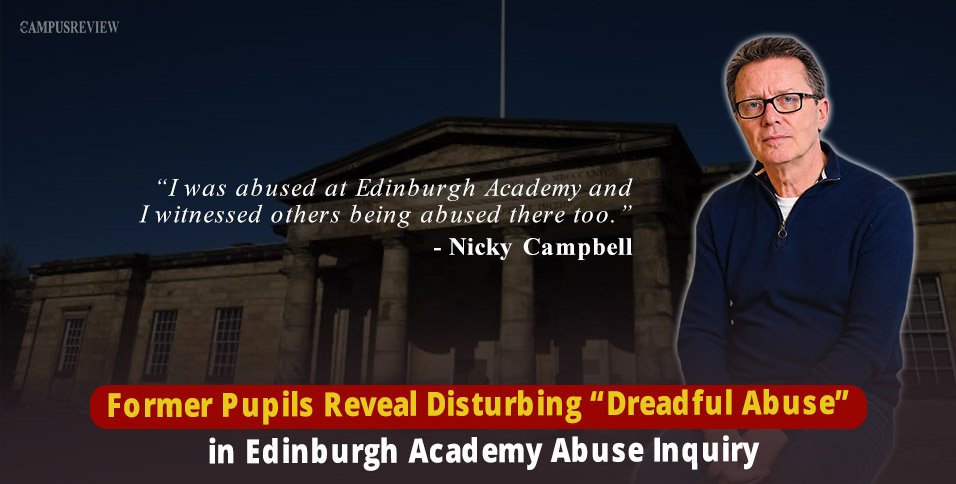
Broadcaster Nicky Campbell, who attended Edinburgh Academy between 1966 and 1978, gave evidence to the Scottish Child Abuse Inquiry in August 2023.
In his witness statement, Campbell wrote: “I was abused at Edinburgh Academy and I witnessed others being abused there too.”
During his testimony, he also spoke about the lasting effects of those experiences, describing the shame he felt when discussing the abuse. He said it was difficult to talk about and that there was “a lot of shame in it”.
Another former pupil, identified by the pseudonym Henry, attended the school for nine years. He described how physical and sexual abuse, bullying and the absence of safeguarding had become part of everyday life for pupils.
Henry told the inquiry: “It was normal to have no safeguarding. It was normal to have no risk assessment.”
His testimony also described children being physically assaulted and pupils having no obvious way to report abuse.
These accounts formed part of the evidence examined by the inquiry and helped establish how abuse affected pupils and how the school failed to respond to warning signs.
How Has Edinburgh Academy Responded to the Findings?
Following the report’s publication, the Academy’s rector, Barry Welsh, acknowledged the school’s past failures and apologised to former pupils.
He said:
“We reiterate our sincere apology to all those affected by any abuse that occurred at our school.”
Welsh also recognised the bravery of former pupils who came forward and shared their experiences.
He added:
“While we cannot change the past, we can shape the future.”
The school said it continues to support survivors while educating its current pupils in a caring and supportive environment.
The response acknowledges the harm caused to former pupils. However, the Edinburgh inquiry’s findings make clear that institutional change requires more than an apology. Schools must demonstrate that they can recognise risks, respond to complaints and protect children effectively.
What Can Schools Learn From the Edinburgh Academy Abuse Inquiry?
The findings offer important lessons for schools, particularly those that provide residential care.
Safeguarding is not simply about having written policies. It also depends on whether teachers, school leaders and governing bodies act when children report abuse.
The Edinburgh Academy Abuse Inquiry report highlights four areas that educational institutions must prioritise:
- Clear reporting systems: Children need safe and accessible ways to report abuse without fearing punishment or disbelief.
- Regular staff training: Teachers and school employees must understand child protection responsibilities and recognise warning signs.
- Independent oversight: School leaders and governing bodies must investigate complaints fairly rather than protecting the institution’s reputation.
- Strong pastoral care: Schools must provide emotional support and take bullying, discrimination and student welfare seriously.
These measures are especially important in boarding schools, where children spend much of their time under staff supervision, particularly in cases involving abuse in Edinburgh schools and failures to protect pupils.
Pranjal Kharche
Also read – Government Strengthens UK Phone-Free Schools Guidelines to Keep Smartphones Away During the School Day