The Campus Review
November 11, 2026
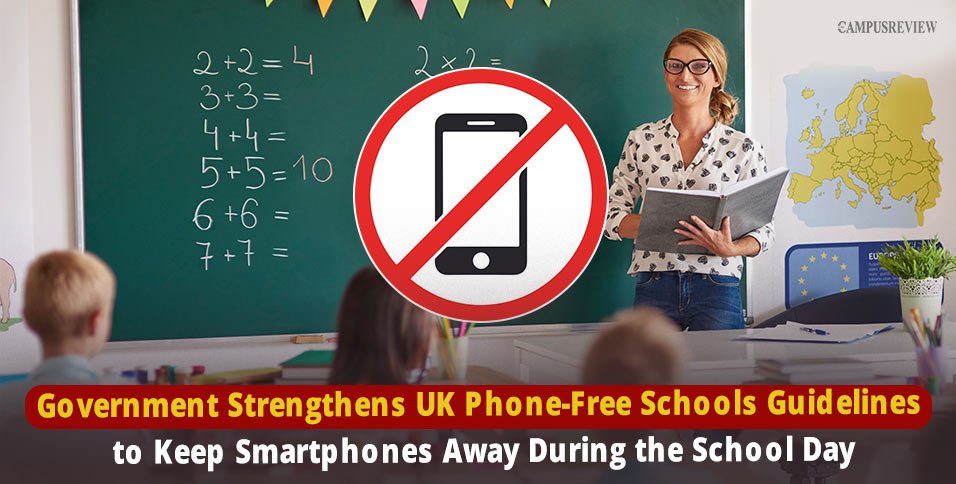
The UK Department for Education has announced strengthened guidance to establish UK Phone-Free Schools, encouraging schools across England to keep students’ smartphones inaccessible throughout the school day. Published on November 10, 2026, the guidance encourages schools to move beyond the existing “not seen, not heard” approach, which allows pupils to keep their phones in school bags.
The updated school mobile phone policy encourages schools to introduce stronger measures, including lockable phone pouches, secure storage and collecting devices at the start of the day. The government aims to reduce classroom distractions, improve student engagement and give pupils more opportunities for face-to-face interaction.
What Changes Under the UK Phone-Free Schools Guidance?
The Department for Education wants schools to adopt stronger measures to prevent students from accessing their phones during school hours.
Under the previous approach, pupils could keep their devices in bags as long as they did not use them. However, the government believes this does not adequately address digital distractions.
Only 16% of secondary school pupils say their school’s mobile phone rules are followed all the time.
The measures under the phone free schools aim to establish consistent mobile phone restrictions in schools and make devices inaccessible during lessons, breaks and other school activities.
Why Is the UK Government Strengthening UK Phone-Free Schools?
The government says access to smartphones can distract pupils from classroom learning and social interaction. Giving students more opportunities to interact in person can also support their social development. This is particularly relevant to play-based learning, which encourages children to communicate, cooperate and develop skills through shared activities.
The announcement highlights concerns about children’s screen habits. A March 2026 poll found that 40% of children aged 9-16 were turning down real-world opportunities to spend time online.
The government also referred to findings from the Milburn review’s interim report, which highlighted concerns about young people staying up late scrolling on their phones.
The strengthened guidance for Phone ban in UK schools focuses on four areas:
- Classroom concentration: Reducing smartphone access can help pupils pay attention to lessons.
- Student interaction: Phone-free breaks can create more opportunities for conversations, games and friendships.
- Digital wellbeing: Limiting access during school hours can give children a break from constant notifications and online activity.
- Learning environment: Teachers can spend less time addressing phone-related disruptions and more time teaching.
The government wants schools to provide an environment where pupils can learn, connect and participate without constant digital interruptions.
How Are Schools Implementing Mobile Phone Restrictions?
Some schools in England have already introduced stronger school smartphone restrictions to keep devices away from students during the day.
The Department for Education highlighted several approaches that schools are using.
| Storage method | How it works |
| Lockable phone pouches | Students secure their phones in individual pouches until the end of the school day. |
| Morning collection | Schools collect devices when pupils arrive. |
| Secure storage | Schools keep phones in designated storage facilities. |
| Onsite prohibition | Schools prohibit pupils from bringing phones onto school premises. |
Clayton Hall Academy is one example. The school provides pupils in Years 7 to 11 with individual phone pouches. Students switch off their devices and lock them away when they arrive. They retrieve their phones at the end of the school day.
Caty Reid, headteacher of Clayton Hall Academy, said:
“Students deserve time in their school day to concentrate on learning and enjoy being with their friends.”
What Did the UK Education Secretary Say About Phone-Free Schools?
Education Secretary Lucy Powell said “Children should not be using smartphones at any point during the school day, full stop.”
She said the strengthened guidance would help schools move towards genuinely phone-free environments. Powell also emphasised that schools should remain places for learning and friendship rather than scrolling through phones.
Dame Rachel de Souza, Children’s Commissioner for England, welcomed the strengthened guidance, highlighting the importance of creating a school environment where students can focus on learning and social interaction.
She said, “I welcome strong action to stop phones distracting pupils and disrupting the school day.”
Government Also Plans Stronger EdTech Safety Standards
Alongside the UK Phone-Free Schools guidance, the government has launched a consultation on technology used in classrooms.
The consultation will explore independent safety certification for educational technology (EdTech). The proposed certification aims to help schools and parents assess whether digital learning products meet appropriate safety standards.
The initiative distinguishes between personal smartphone use and technology introduced for structured classroom learning.
The government wants educational technology to support teaching while meeting stronger safety and reliability expectations.
Pranjal Kharche