The Campus Review
October 1, 2026
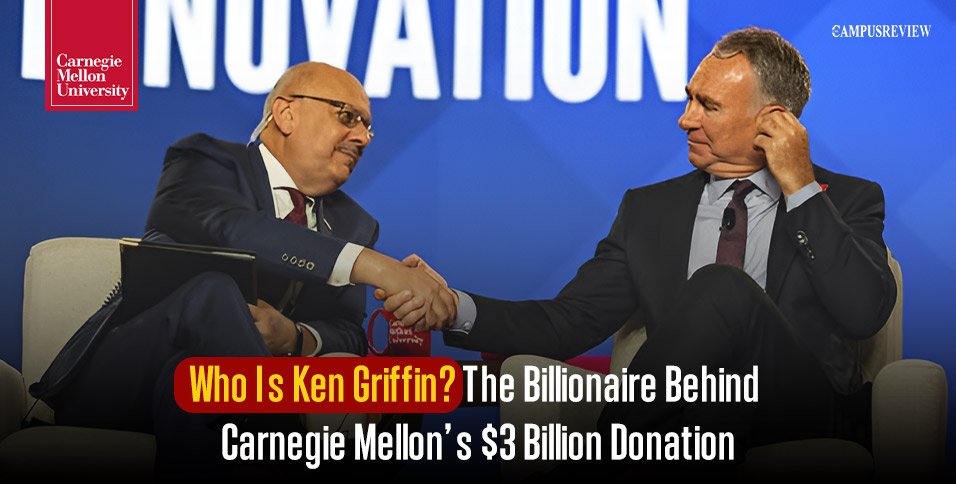
Billionaire investor Ken Griffin, founder and CEO of Citadel, has pledged the Carnegie Mellon $3 billion donation, the largest individual gift to a U.S. higher-education institution. Announced on September 30, 2026, the historic gift provides $2 billion to establish a new Carnegie Mellon campus in Miami and $1 billion to support the university’s Pittsburgh campus.
The Miami campus is planned for a 35-acre site in Wynwood, with construction expected to begin in 2027 and the first students expected to enroll in 2028. The Pittsburgh allocation will support the School of Computer Science and other university priorities.
| Fast Fact | Details |
| Donor | Ken Griffin (Founder and CEO, Citadel) |
| Gift Size | $3 billion (largest individual gift to a U.S. higher-education institution) |
| Recipient | Carnegie Mellon University |
| Primary Allocation | $2 billion to establish Carnegie Mellon University Miami |
| Secondary Allocation | $1 billion for the Pittsburgh campus |
| Miami Location | 35-acre site in Wynwood, Miami |
| Projected Timeline | Construction begins in 2027; first student enrollment in 2028 |
Who Is Ken Griffin?
Ken Griffin is an American investor, entrepreneur, and philanthropist. He began trading from his Harvard University dorm room in 1987 before founding the multinational alternative investment firm Citadel in 1990. Griffin also established Citadel Securities, a dedicated market maker that executes a substantial share of retail and institutional trades across U.S. equity and options markets.
With the Carnegie Mellon gift included, Griffin’s lifetime philanthropic giving reaches approximately $5.7 billion, according to Reuters. His contributions, coordinated in part through his civic engagement initiative Griffin Catalyst, have supported education, medical science, cultural institutions, and community initiatives.
Griffin relocated Citadel’s corporate headquarters from Chicago to Miami in 2022. Since establishing operations in South Florida, his regional philanthropic commitments have totaled approximately $2.4 billion, supporting education, public spaces, and civic resilience programs.
Why Did Ken Griffin Make the Carnegie Mellon $3 Billion Donation?
The Ken Griffin Carnegie Mellon donation will help bring Carnegie Mellon University to South Florida through a new campus focused on research, education, and interdisciplinary work. Rather than operating as an isolated outpost, the initiative aims to build an active center of research and discovery in the region.
Griffin emphasized this civic and educational objective during the announcement:
“If you look across the United States, our great cities are anchored by world-class universities. We want to create that same ecosystem of economic vitality and prosperity around this campus in Miami.”
Carnegie Mellon President Farnam Jahanian noted the timing of the initiative in the context of emerging technological shifts:
“Higher ed is at an inflection point. Universities have the responsibility to prepare students for a world that’s changing.”
As part of the gift terms, Griffin will join the Carnegie Mellon University Board of Trustees.
How Carnegie Mellon Will Use the $3 Billion
The Carnegie Mellon $3 billion donation will be divided between the new Miami campus and the Pittsburgh campus.
Miami Campus Commitment ($2 Billion)
The university will direct $2 billion to establish Carnegie Mellon University Miami across a 35-acre site in the Wynwood neighborhood. The funding will cover academic and research space, industry research labs, and venture studios designed for cross-sector collaboration.
Pittsburgh Campus Support ($1 Billion)
The remaining $1 billion will reinforce operations and academic priorities at Carnegie Mellon’s main Pittsburgh campus:
- School of Computer Science: $500 million will directly support Carnegie Mellon’s School of Computer Science, recognized among the best AI universities, which the university will rename the Kenneth C. Griffin School of Computer Science.
- Flexible Priorities: $500 million will provide flexible support for the university’s highest strategic priorities.
What Is Planned for Carnegie Mellon’s Miami Campus?
Rather than organizing education strictly around traditional academic majors, the Carnegie Mellon Miami campus will center its programs around four major societal challenge areas:
- Human Health and Biological Discovery: Computational biology, bioinformatics, and healthcare solutions.
- National Security and Strategic Capabilities: Information protection, system resilience, and defense software systems.
- Energy and Climate Resilience: Sustainable power research and environmental infrastructure models.
- Advanced Manufacturing and Industrial Transformation: Robotics, automation, and industrial technology.
According to planning figures shared by the university, the campus is projected to accommodate more than 3,500 undergraduate and graduate students once fully developed, along with nearly 300 faculty members and more than 600 staff.
When Will the Carnegie Mellon Miami Campus Open?
All campus planning and construction timelines remain subject to regulatory approvals and community reviews. The planned development schedule includes:
| Year | Milestone Target | Notes |
| 2026 | Official Announcement | Carnegie Mellon announces the $3 billion gift and plans for CMU Miami. |
| 2027 | Construction Phase | Construction is expected to begin in Wynwood, subject to approvals. |
| 2028 | First Enrollment | The first students are expected to enroll at CMU Miami. |
| 2032 | Undergraduate Cohort | Undergraduate enrollment is expected to begin, according to Reuters. |
The Carnegie Mellon $3 billion donation will fund two major initiatives: the launch of CMU Miami in Wynwood and a $1 billion investment in Carnegie Mellon’s Pittsburgh campus. The Miami campus is expected to enroll its first students in 2028, while the Pittsburgh funding will support the School of Computer Science and other university priorities.
Also Read- Hegseth Launches America’s Corps of Cadets at Five US Universities