The Campus Review
October 14, 2026`
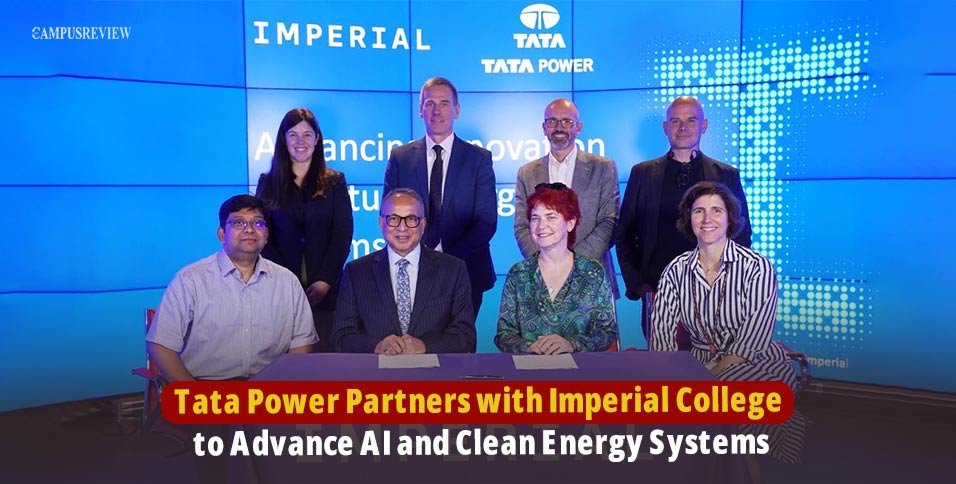
Tata Power and Imperial College London signed a Memorandum of Understanding (MoU) on October 13, 2026, to explore research and new technologies for cleaner, more reliable energy systems. Through this collaboration, Tata Power partners with Imperial College to examine key areas such as artificial intelligence (AI), energy storage, grid flexibility, and digital energy systems.
The partnership brings together Tata Power’s experience in the energy sector and Imperial College London’s research expertise. The collaboration aims to explore solutions that support India’s energy transition and broader net-zero ambitions.
| Key Fact | Official Detail |
| Agreement Date | October 13, 2026 |
| Document Type | Memorandum of Understanding (MoU) |
| Partner Institutions | Tata Power Company Limited and Imperial College London |
| Announced Focus Areas | Energy storage, grid flexibility, AI/ML, and digital energy systems |
| Policy Context | India-UK Vision 2035 and Net Zero Innovation Partnership |
| Tata Power Net Zero Goal | Net zero emissions target by 2045 |
Why Tata Power Partners with Imperial College
Tata Power partners with Imperial College London to explore research and technologies that can improve electricity networks and support the shift to cleaner energy. The collaboration focuses on four key areas:
- Energy Storage Technology: Exploring storage solutions to provide backup when renewable energy generation drops.
- Grid Flexibility: Studying ways to help power networks manage changes in electricity demand and renewable energy supply.
- AI and Machine Learning: Exploring how AI and data analysis can monitor power grids and identify distribution problems.
- Digital Energy Systems and Decarbonisation: Examining digital tools that connect energy sources and help businesses reduce emissions.
How the Partnership Supports Clean Energy Innovation
The collaboration links industry needs with academic research to address energy-sector challenges. It also supports broader India-UK efforts to develop cleaner technologies, improve energy efficiency, and reduce carbon emissions.
| Focus Area | Potential Significance |
| India-UK Energy Cooperation | Encourages research and knowledge exchange between Indian and UK institutions. |
| Industrial Decarbonisation | Supports research into ways to reduce emissions from energy-intensive operations. |
| Net Zero Innovation | Explores technologies that could support lower-carbon energy systems. |
| Renewable Energy Integration | Examines approaches to managing renewable power and improving grid flexibility. |
What Leaders Said About the Partnership
Dr Praveer Sinha, CEO and Managing Director of Tata Power, said:
“India’s energy transition is entering a phase where scale, flexibility and reliability will be as important as the pace of renewable energy growth. The next generation of grids, storage and digital energy systems will need to work together to meet a rapidly evolving demand landscape.”
Professor Mary Ryan, Vice Provost (Research and Enterprise) at Imperial College London, said:
“Tata Power has expertise across a range of energy technologies and the scale needed to deliver the cleaner and more resilient energy systems we urgently need.”
Why the Partnership Matters
This MoU sets a research plan rather than launching commercial products. Tata Power partners with Imperial College to connect university researchers with power industry experts and address real-world challenges.
Researchers often develop models that struggle to work in real power networks. By working with utility engineers, they can better understand issues such as crowded power lines, equipment problems, and changes in renewable energy supply.
The Tata Power and Imperial College partnership also allows Tata Power to explore new research in energy storage, AI, and grid flexibility with academic experts.
Pranjal Kharche
Also read – IMF Warns AI Could Affect 40% of Jobs, Young Workers Face Risks