Picture a fish with a see-through head. Picture a squid that sprays glowing blue slime instead of ink. These weird ocean animals are real, and they live in the darkest part of our planet.
Deep sea creatures are animals that live below 200 meters, where sunlight fades away. Most of these deep ocean creatures live in cold, black water that reaches about 11,000 meters down. The pressure there can crush a submarine. Food is rare. Yet life still thrives.
This guide explores 10 strange deep sea creatures, from the barreleye fish to the goblin shark. Discover their habitat, size, diet, unique features, and how they survive in the deep ocean. It also examines how climate change threatens their underwater world.
Where Do Deep Sea Creatures Live?
Deep sea creatures live in the ocean layers below 200 meters. Scientists split the ocean into five zones. Pressure appears in atmospheres (atm), and one atm equals the air pressure at sea level.
| Ocean Zone | Depth | Light and Pressure | Example Animals |
| Sunlight Zone (Epipelagic) | 0 to 200 meters | Full sunlight, up to 20 atm | Most fish you know |
| Twilight Zone (Mesopelagic) | 200 to 1,000 meters | Faint light, 20 to 100 atm | Barreleye fish, goblin shark |
| Midnight Zone (Bathypelagic) | 1,000 to 4,000 meters | No sunlight, 100 to 400 atm | Vampire squid, gulper eel |
| Abyssal Zone (Abyssopelagic) | 4,000 to 6,000 meters | No sunlight, 400 to 600 atm | Dumbo octopus, tripod fish |
| Hadal Zone (Hadalpelagic) | 6,000 to 11,000 meters | No sunlight, 600 to 1,100 atm | Mariana snailfish, hadal amphipods |
The abyssal plains alone cover more than half of Earth’s surface, according to Let’s Talk Science. This makes the deep sea habitat the largest living space on our planet and one of the most fascinating types of ecosystems on Earth.
Types of Deep Sea Creatures
Deep sea animals fall into six main groups. Fish are the most common, and many rare deep sea creatures belong to the other five. Cephalopods, such as squid and octopuses, are soft-bodied animals with arms. Crustaceans have hard shells and many legs.
The giant squid grows up to 13 meters long, and scientists first filmed one alive in its home in 2012, says the Smithsonian.
| Type | Examples | Where It Lives | Survival Trick |
| Bony fish | Barreleye fish, gulper eel, viperfish, fangtooth fish, blobfish | Twilight zone to hadal zone | Glowing lures, huge mouths, soft bodies |
| Sharks | Goblin shark, frilled shark | Continental slopes and canyons | Electric sensing, fast jaws |
| Cephalopods | Vampire squid, dumbo octopus | Twilight zone to hadal zone | Soft bodies, fins, glowing slime |
| Crustaceans | Giant isopod, yeti crab, hadal amphipods | Sea floor and hot vents | Hard shells, scavenging |
| Sea floor animals | Sea pig (a sea cucumber), sea stars | Abyssal plains | Slow life, eating sea floor debris |
| Jellies and drifters | Siphonophores, comb jellies | Whole water column | Making their own light |
10 Strange and Weird Deep Sea Creatures
These 10 deep sea species show how many shapes life can take in the dark. Each one gets the same six quick facts.
1. Barreleye Fish (Macropinna microstoma)
For decades, scientists could not fully understand the barreleye’s unusual head because fishing nets often damaged its transparent covering. In 2004, MBARI researchers filmed a living barreleye using a remotely operated submarine, revealing its clear head and rotating eyes for the first time.
- Habitat and Location: Open water in the North Pacific, including off California and Japan.
- Depth: 600 to 800 meters.
- Size: Up to 15 cm (6 inches).
- Physical Features: A clear, fluid-filled dome covers its head. Two green, tube-shaped eyes sit inside it.
- Diet and Hunting: It eats small drifting animals such as copepods and soft jellies. It hovers still, looks up for shadows, then swivels its eyes forward to grab its meal.
- Interesting Fact: The dome may shield its eyes from the stinging tentacles of the jellies it eats.
2. Gulper Eel (Eurypharynx pelecanoides)
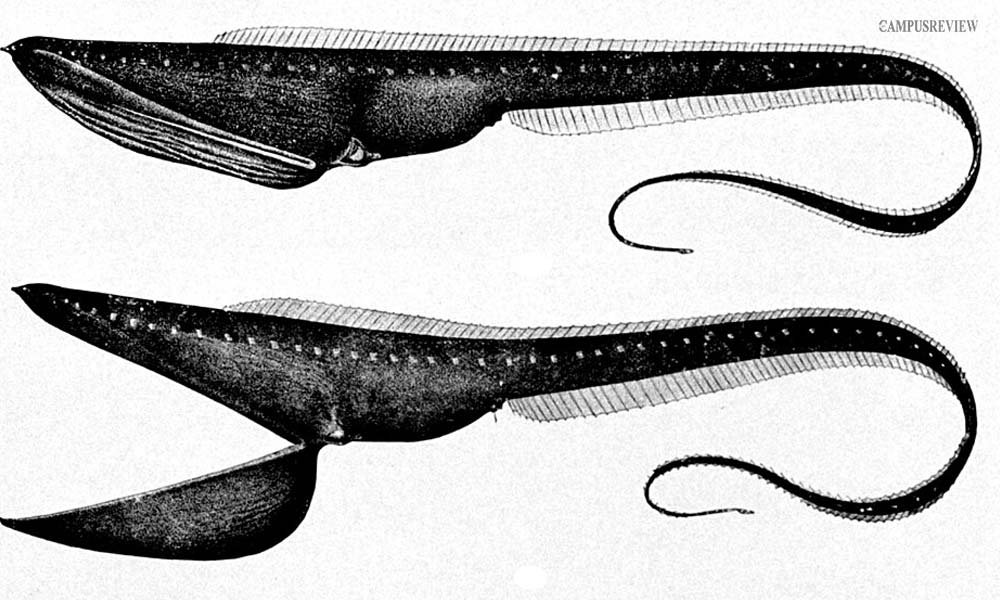
Unlike fish that chase their prey, the gulper eel waits patiently in the darkness. When food comes close, it opens its enormous mouth, which is surprisingly large compared to its body.
Habitat and Location: Deep tropical and temperate waters of the Atlantic, Pacific and Indian Oceans.
Depth: 500 to over 3,000 meters.
Size: 75 to 100 cm (2.5 to 3.3 feet).
Physical Features: A huge, loose jaw hangs from a tiny skull. It has tiny eyes, no scales and a whip-like tail with a glowing tip.
Diet and Hunting: It eats shrimp, small fish and squid. It opens its jaw like a net, gulps in water and prey, then pushes the water out through its gills.
Interesting Fact: People also call it the pelican eel, because its jaw works like a pelican’s pouch.
3. Vampire Squid (Vampyroteuthis infernalis)
Despite its frightening name, the vampire squid is harmless. It does not hunt or bite. Instead, it drifts through oxygen-poor water and feeds on tiny bits of food that sink from above.
- Habitat and Location: Tropical and temperate oceans worldwide, often in low-oxygen water.
- Depth: 600 to 1,200 meters, and sometimes deeper.
- Size: About 30 cm (1 foot) long, including its arms.
- Physical Features: Dark red to black skin, arms joined by a cape-like web, large eyes and two ear-like fins. It also has two long, sticky threads.
- Diet and Hunting: It eats marine snow, which is dead plankton and waste that sinks from the surface. It traps the bits on its sticky threads.
- Interesting Fact: When scared, it flips its arms over its body in a “pineapple pose” and shows soft spines. It also sprays glowing blue slime instead of ink to confuse attackers.
4. Giant Isopod (Bathynomus giganteus)
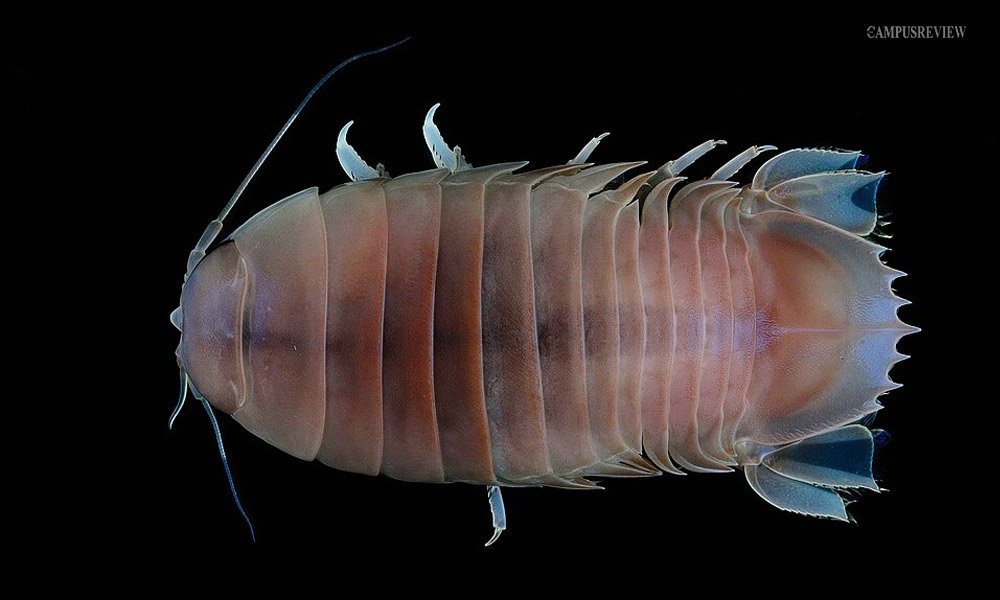
Imagine a pill bug under a garden pot, but as large as a shoe. The giant isopod crawls along the dark ocean floor, feeding on dead animals and other food that sinks from above.
- Habitat and Location: Muddy sea floors in the Gulf of Mexico, the Caribbean Sea and the deep Atlantic.
- Depth: 170 to 2,140 meters.
- Size: Usually 19 to 37 cm. The biggest reach 50 cm (20 inches) and weigh about 1.7 kg.
- Physical Features: A hard, armored shell made of overlapping plates. It has two pairs of feelers, seven pairs of legs and eyes with over 4,000 tiny lenses.
- Diet and Hunting: It scavenges. It eats dead whales, fish and squid that sink to the bottom.
- Interesting Fact: It stores fat in its body and can survive for years without food. Its large size is a classic case of deep sea gigantism.
5. Pacific Blackdragon (Black Dragonfish) (Idiacanthus antrostomus)
The Pacific blackdragon, a type of black dragonfish, blends into the darkness of the deep sea. Like the deep-sea anglerfish, it uses a glowing lure to attract and catch its prey.
- Habitat and Location: The North Pacific, including waters off California.
- Depth: From near the surface to roughly 2,000 meters. It rises toward shallow water at night.
- Size: Females reach about 50 cm (20 inches). Males stay under 8 cm.
- Physical Features: A long, snake-like black body. Females have a huge mouth, see-through fangs and a glowing chin whisker called a barbel. Males have no teeth and no barbel.
- Diet and Hunting: Females dangle the glowing barbel as bait. Fish and shrimp swim close, and the jaws snap shut.
- Interesting Fact: A 2020 study in Current Biology found that its skin absorbs more than 99.5 percent of light. That keeps its own lure from lighting up its body. The viperfish and the fangtooth fish also wear scary fangs, and the fangtooth has ultra-black skin too.
6. Dumbo Octopus (Grimpoteuthis)
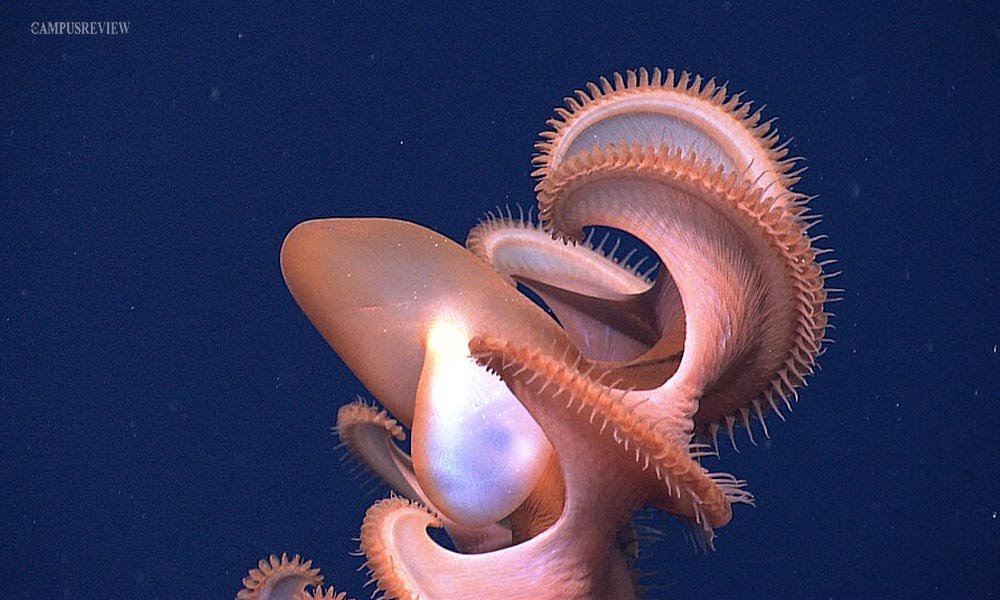
The dumbo octopus looks almost cartoon-like, with ear-shaped fins that resemble Disney’s Dumbo. These fins help it swim through the deep sea in search of food.
- Habitat and Location: Deep sea floors around the world, including trenches.
- Depth: About 3,000 to 7,000 meters. In 2019, cameras filmed one at 6,957 meters in the Java Trench, a depth record for any octopus.
- Size: Usually 20 to 30 cm (8 to 12 inches). A few giants reach 1.8 meters (6 feet).
- Physical Features: A soft, jelly-like body shaped like an umbrella. It has two ear-like fins and eight short arms joined by a web of skin.
- Diet and Hunting: It hovers above the mud and swallows worms, copepods and tiny shrimp-like animals whole.
- Interesting Fact: It swims by flapping its fins instead of jetting water. That saves energy where food is rare.
7. Mariana Snailfish (Pseudoliparis swirei)
Few people expect to find life at the bottom of the Mariana Trench. But the Mariana snailfish survives there despite the enormous water pressure. Its soft, pink, jelly-like body is specially adapted to life in these extreme conditions.
- Habitat and Location: Deep trenches in the western Pacific, including the Mariana Trench.
- Depth: About 6,000 to 8,178 meters.
- Size: 10 to 25 cm (4 to 10 inches).
- Physical Features: Pink, see-through skin with no scales. It has soft skull bones and no swim bladder, the gas bag most fish use to float.
- Diet and Hunting: It sucks in small crustaceans called amphipods. It rules its trench because few other fish live there.
- Interesting Fact: A protective molecule called TMAO keeps its proteins working under pressure. In 2022, scientists filmed another snailfish at 8,336 meters off Japan, the deepest fish ever recorded.
8. Stoplight Loosejaw (Malacosteus niger)
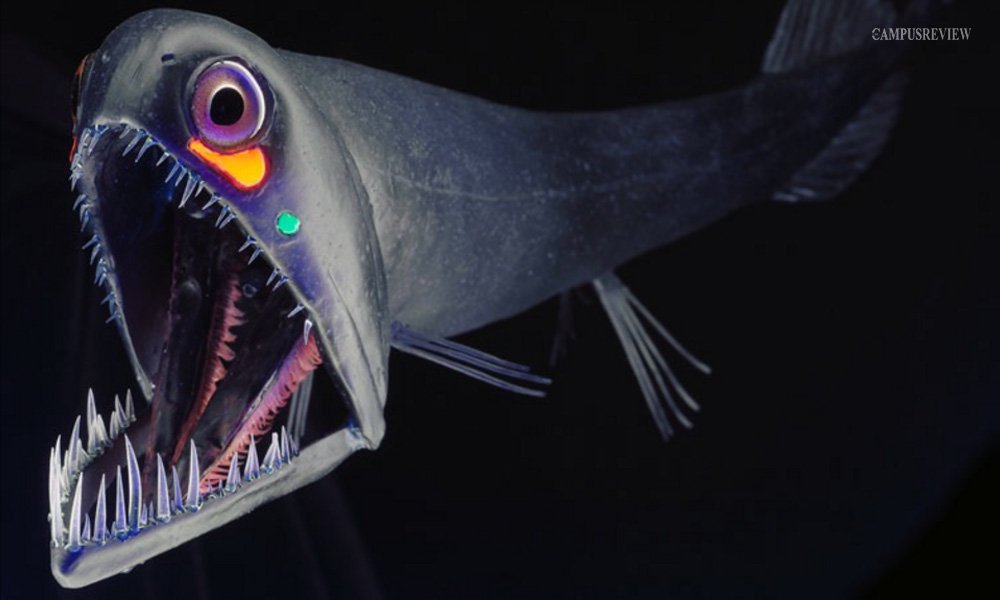
Most deep-sea animals cannot see red light, but the stoplight loosejaw can. It produces red light to spot prey in the darkness without alerting other nearby animals.
- Habitat and Location: Deep tropical and temperate waters in all major oceans.
- Depth: 500 to 2,000 meters.
- Size: Up to about 25 cm (10 inches).
- Physical Features: A long, floorless lower jaw with no skin between the bones. Glowing organs below its eyes make blue-green and red light.
- Diet and Hunting: It eats fish and shrimp. It sweeps its jaw out fast to grab them.
- Interesting Fact: Its red beam works like a private flashlight. Prey cannot see red, so the loosejaw spots a meal without giving itself away.
9. Tripod Fish (Bathypterois grallator)
The tripod fish does not swim around searching for food. Instead, it rests on the sea floor using three long fin rays to support its body while waiting for prey to drift by.
- Habitat and Location: Sea floors in the Atlantic, Pacific and Indian Oceans.
- Depth: About 900 to 4,700 meters.
- Size: Its body reaches 30 to 40 cm (12 to 16 inches). Its fin rays can stretch to about 1 meter (3 feet).
- Physical Features: A pale body with tiny eyes. Long, stiff fin rays on its belly and tail form a tripod. Long, feathery front fins work as feelers.
- Diet and Hunting: It faces the current and waits for copepods and tiny shrimp-like animals to drift by. Its feelers sense the food.
- Interesting Fact: The tripod stance lifts it above the muddy bottom and saves energy. Its species name, grallator, means “one who walks on stilts.”
10. Goblin Shark (Mitsukurina owstoni)
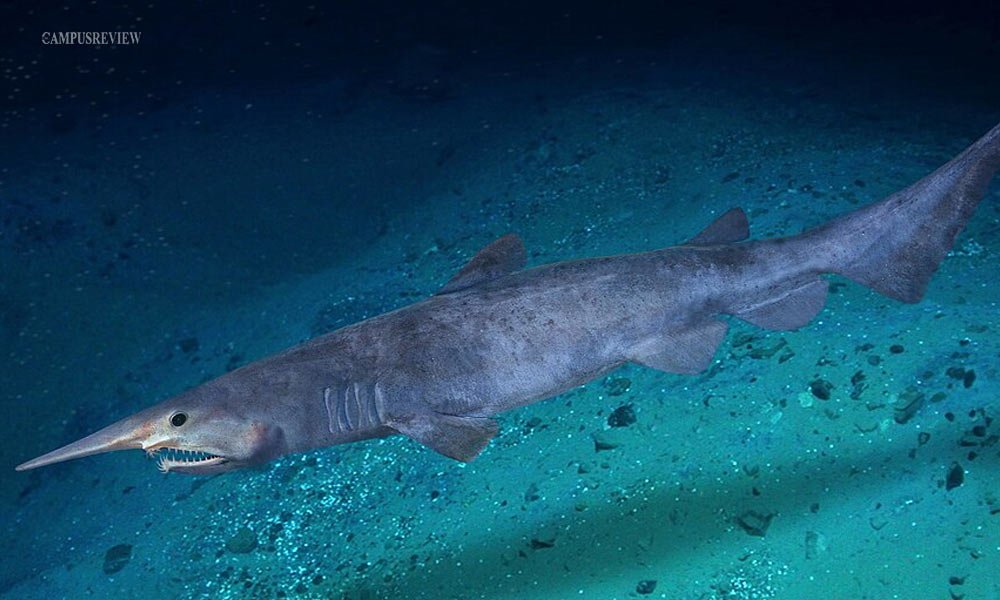
The goblin shark looks unusual, with pink skin, a long, flat snout and jaws that shoot forward to catch prey in a quick movement.
- Habitat and Location: Continental slopes, underwater canyons and seamounts worldwide, including off Japan, Australia and the Gulf of Mexico.
- Depth: About 200 to 1,300 meters.
- Size: Adults usually reach 3 to 4 meters (10 to 13 feet).
- Physical Features: Soft pink skin, a long flat snout and needle-like teeth. The snout has tiny electric sensors.
- Diet and Hunting: It eats deep sea fish, squid and crabs. It sweeps its snout over the sea floor to sense them.
- Interesting Fact: Its jaw snaps forward in a flash to snag prey. Few people have ever seen a goblin shark alive, and the frilled shark is just as rare.
What Is the Deep Sea Food Chain?
Deep sea animals feed on this snow or eat one another. Only 1 to 3 percent of surface food reaches the abyssal sea floor, according to Let’s Talk Science. This food chain supports marine biodiversity in the deep ocean and works like this:
- Phytoplankton grow in sunlit surface water.
- Dead plankton and waste sink as marine snow.
- Small animals, such as copepods, eat the snow. The vampire squid feeds on it directly.
- Deep sea predators, such as the loosejaw, blackdragon and goblin shark, eat smaller animals.
- Dead whales sink to the bottom and provide food for scavengers such as the giant isopod.
Special Body Adaptations
- Soft, jelly-like bodies: Snailfish and dumbo octopuses have soft bodies that handle pressure well. The blobfish looks droopy in photos because trawls pull it up from deep water.
- Giant mouths and stretchy jaws: The gulper eel and the goblin shark catch rare meals.
- Built-in lures: Anglerfish, dragonfish and viperfish bring prey to them.
- Slow living: Many animals burn little energy and store fat for lean times.
- Odd ways to eat: Yeti crabs live near hot vents and carry bacteria on their hairy claws. Sea pigs, a kind of sea cucumber, walk on tube-shaped feet and eat debris on the bottom.
Final Thoughts
Deep sea creatures reveal how life adapts to extreme conditions. From transparent heads to glowing bodies, each species has unique ways to survive in darkness, under immense pressure and with little food.
Three key things to remember:
- Deep sea animals live below 200 meters, across five ocean zones with increasing darkness and pressure.
- They survive using special body adaptations, glowing light and energy-saving behaviours.
- Climate change, plastic pollution and deep-sea mining threaten their habitats and marine biodiversity.
Frequently Asked Questions
1. Can deep sea creatures survive in shallow water?
Most deep sea creatures cannot survive for long in shallow water because changes in pressure, temperature and light can affect their bodies.
2. How do scientists discover new deep sea creatures?
Scientists use remotely operated vehicles (ROVs), deep-sea cameras and research submarines to explore the ocean and record deep sea animals in their natural habitats.
3. Do deep sea creatures ever come to the ocean surface?
Some deep sea animals move closer to the surface at night to feed. This daily movement is called diel vertical migration.
4. How many deep sea species are still undiscovered?
Scientists have identified only a fraction of ocean life. Many deep sea species remain unknown because large parts of the ocean floor have not been explored.