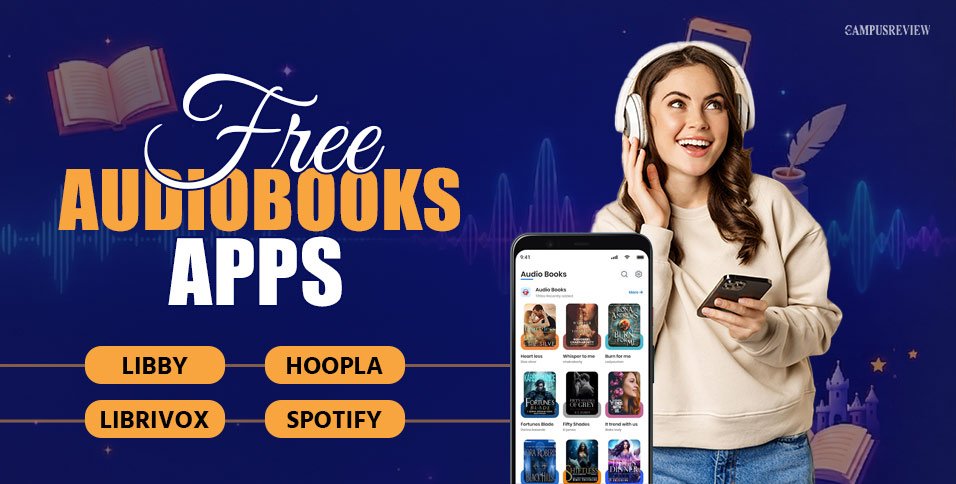
Finding quality audiobooks without spending heavily feels frustrating, especially when most platforms push subscriptions upfront. That is exactly where the real value of smart listening choices begins. Today, students and budget-conscious learners actively search for free audiobooks apps that deliver both accessibility and long-term value. However, not every platform works the same way, and choosing the right one can directly impact both learning efficiency and cost savings.
This blog breaks down ten popular audiobook platforms by analyzing their features, practical benefits, and real usage for students. Moreover, it goes beyond surface-level descriptions and highlights the financial trade-offs behind each option. As you move ahead, you will clearly understand which apps save money, which improve productivity, and which deliver premium value. Therefore, this guide helps you make a smarter, more strategic decision rather than just picking what looks popular.
Here are the top 10 free audiobook apps you should give a try in 2026
| App Name | Parent Company / Developer | Available Platforms |
| Libby | OverDrive, Inc. (owned by KKR) | iOS, Android, Fire OS, Web Browser |
| Hoopla | Midwest Tape, LLC | iOS, Android, Apple TV, Fire TV, Roku, Web |
| LibriVox | Volunteer community (App by Bookdesign LLC) | iOS, Android, Web |
| Spotify | Spotify Technology S.A. | iOS, Android, Windows, Mac, Web, Smart TVs |
| Loyal Books | Twist Idea LLC | iOS, Android, Web |
| Internet Archive | Internet Archive (Non-profit) | Web (Mobile friendly), Various 3rd party apps |
| Storynory | Storynory Ltd. | iOS, Android, Web |
| Audible | Amazon.com, Inc. | iOS, Android, Windows, Fire OS, Alexa Devices |
| Anyplay | Anyplay AB | iOS, Android |
| Google Play Books | Google (Alphabet Inc.) | Android, iOS, Web |
- Libby
Free audiobooks apps like Libby give students direct access to library content without any cost. It connects to public libraries, so users can borrow audiobooks instantly with a valid card. Moreover, the app supports offline listening, bookmarks, and syncing across devices, which makes studying flexible.
However, some popular titles come with wait times, so students must plan ahead. As a result, it builds discipline and consistency in reading habits. In addition, Libby provides access to biographies, literature, and academic content that supports exams and personal growth.
From a financial perspective, Libby removes recurring costs completely. Over time, students save significantly while still accessing high-quality material. Therefore, it becomes a reliable long-term learning tool.
- Hoopla
Hoopla offers instant access to audiobooks, which makes it ideal for students who need quick learning resources. It removes wait times and allows immediate borrowing. Moreover, it includes movies and educational media, which increases overall value.
Because Hoopla sets a monthly borrowing limit, students must plan usage carefully. However, this structure promotes focused learning instead of random consumption. Additionally, offline downloads ensure uninterrupted study sessions.
From a financial angle, Hoopla helps students avoid subscriptions while still accessing diverse content. Over time, it becomes a practical and efficient learning tool for daily use.
- LibriVox
LibriVox provides free access to public domain audiobooks, which makes it especially useful for literature students. It includes works from authors like Shakespeare and Dickens, so learners can explore classics easily. Moreover, it supports offline listening, which improves flexibility.
However, narration quality can vary since volunteers record the content. Still, many versions remain clear and engaging for regular use. Students benefit by improving listening and comprehension skills consistently.
From a financial perspective, LibriVox removes all barriers to learning, and it continues to stand strong among free audiobooks apps for those who want depth without spending.
- Spotify
Spotify has expanded beyond music and now includes audiobooks along with podcasts and educational content. This makes it convenient for students who prefer an all-in-one platform. Moreover, the familiar interface ensures easy navigation.
In today’s learning ecosystem, free audiobooks apps play a key role, and Spotify supports that shift by offering limited audiobook access even on free plans. However, listening hours are restricted, which may not suit heavy users.
From a financial perspective, Spotify offers flexibility with both free and paid plans. Over time, it complements other platforms by adding variety to daily learning routines.
- Loyal Books
Loyal Books offers a simple and structured reading experience for students who prefer classic literature. It provides both text and audio formats, which helps improve comprehension through dual learning. Moreover, offline access ensures uninterrupted study.
It remains a dependable choice for academic reading, especially for those who want consistent exposure to timeless works. However, since it relies on public domain recordings, narration quality may vary. Still, the platform delivers stable performance.
From a financial standpoint, Loyal Books eliminates spending while still supporting strong reading habits over time.
- Internet Archive
The Internet Archive serves as a massive digital library that includes audiobooks, research papers, and rare historical material. As a result, students gain access to deeper academic resources that go beyond standard platforms. Moreover, it supports both streaming and downloads.
However, the interface may feel slightly outdated at first. Still, users adapt quickly with regular use. Additionally, the platform offers unmatched variety for serious learners who want to explore niche topics.
From a financial perspective, it removes the need for expensive academic subscriptions. Therefore, it becomes a valuable long-term resource for students.
- Internet Archive
The Internet Archive serves as a massive digital library that includes audiobooks, research papers, and rare historical material. As a result, students gain access to deeper academic resources that go beyond standard platforms. Moreover, it supports both streaming and downloads.
However, the interface may feel slightly outdated at first. Still, users adapt quickly with regular use. Additionally, the platform offers unmatched variety for serious learners who want to explore niche topics.
From a financial perspective, it removes the need for expensive academic subscriptions. Therefore, it becomes a valuable long-term resource for students.
- Audible
Audible offers a premium audiobook experience with high-quality narration and exclusive titles. It provides access to bestsellers, self-help, and academic books, which helps students learn efficiently. Moreover, features like bookmarks and offline listening improve productivity.
However, the credit-based system requires careful financial planning. Therefore, users must choose books strategically to maximize value.
From a financial perspective, Audible involves recurring costs, yet it delivers strong returns in terms of content quality. Over time, it becomes a productivity-focused investment.
- Anyplay
Anyplay follows an unlimited streaming model, which allows students to listen without restrictions. As a result, it supports continuous learning across multiple subjects. Moreover, offline downloads make it convenient for travel or study sessions.
However, it does not offer a free tier, which may not suit every student. Still, it provides flexibility for heavy users who consume content regularly.
From a financial angle, it works best for those who want unlimited access without worrying about limits, making it comparable to free audiobooks apps in terms of usage freedom.
- Google Play Books
Free audiobooks apps often focus on access, but Google Play Books focuses on ownership. It allows users to purchase audiobooks individually instead of subscribing, which gives students better financial control. Moreover, it supports offline listening and syncing across devices.
Although it is not completely free, it works well alongside other platforms. Students can wait for discounts and buy only what they truly need.
From a financial perspective, this model prevents unnecessary recurring costs. Over time, it helps build a personalized and flexible digital library.
End Note
Choosing the right audiobook platform is less about popularity and more about aligning cost with actual usage. While many users start with free audiobooks apps, the real advantage comes from understanding when free options are enough and when paid platforms justify their price. For instance, library-based apps reduce financial pressure, yet they require planning due to limited availability. On the other hand, premium platforms demand investment but offer speed, exclusivity, and consistency.
From a practical standpoint, students should treat these platforms as tools rather than entertainment sources. Mixing free and paid options often creates the most efficient system, where cost stays controlled and access remains flexible. Moreover, long-term value depends on usage habits, not just features. Therefore, instead of chasing the “best” app, the smarter approach is to build a combination that maximizes learning while minimizing unnecessary spending.
Tejas Tahmankar
Also Read: 10 Best Language Learning Apps: Master Any Language for FREE