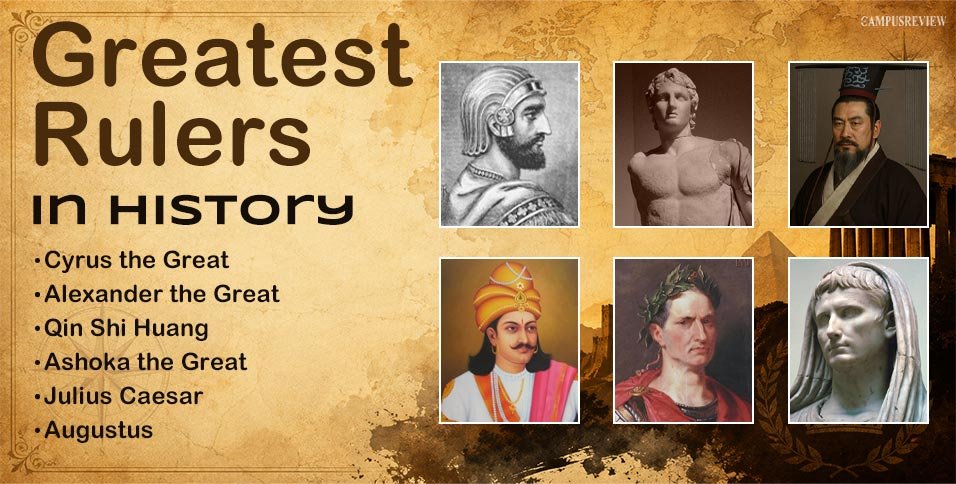
The greatest rulers in history left lasting legacies through laws, reforms, ideas, and systems that shaped future generations. Cyrus the Great respected local cultures, while Napoleon introduced a legal code that still influences countries today.
In this guide, you’ll discover the 10 greatest rulers in history, how they rose to power, the achievements that defined their reigns, and the legacies they left behind. From visionary reformers to legendary conquerors, each changed the course of world history uniquely.
What Makes a Ruler “Great”?
A ruler earns a place among the greatest rulers in history when their impact lasts beyond their own lifetime. Here is what historians actually look at:
● Did their empire survive after they died, or fall apart right away?
● Did they build lasting systems, like laws, roads, or schools?
● Did they unite different groups of people, or just conquer them?
● Did their ideas or reforms outlive their own empire?
Keep these four questions in mind. They explain why some famous rulers in history are remembered as wise leaders.
10 Greatest Rulers in History at a Glance
Here is a quick snapshot of all 10 greatest rulers in history before you read their full stories.
| Ruler | Empire | Reign |
| Cyrus the Great | Achaemenid Persia | 559-530 BCE |
| Alexander the Great | Macedonian Empire | 336-323 BCE |
| Qin Shi Huang | Qin Dynasty, China | 221-210 BCE |
| Ashoka the Great | Mauryan Empire, India | c. 268-232 BCE |
| Julius Caesar | Roman Republic | 49-44 BCE |
| Augustus | Roman Empire | 27 BCE-14 CE |
| Charlemagne | Frankish Empire | 768-814 CE |
| Genghis Khan | Mongol Empire | 1206-1227 CE |
| Akbar the Great | Mughal Empire, India | 1556-1605 |
| Napoleon Bonaparte | French Empire | 1804-1815 |
The Full Stories: 10 Greatest Emperors and Kings in History
Now let’s go deeper. Each of these greatest rulers in history has a story worth knowing, not just a list of dates.
1. Cyrus the Great: The King Who Let People Keep Their Faith
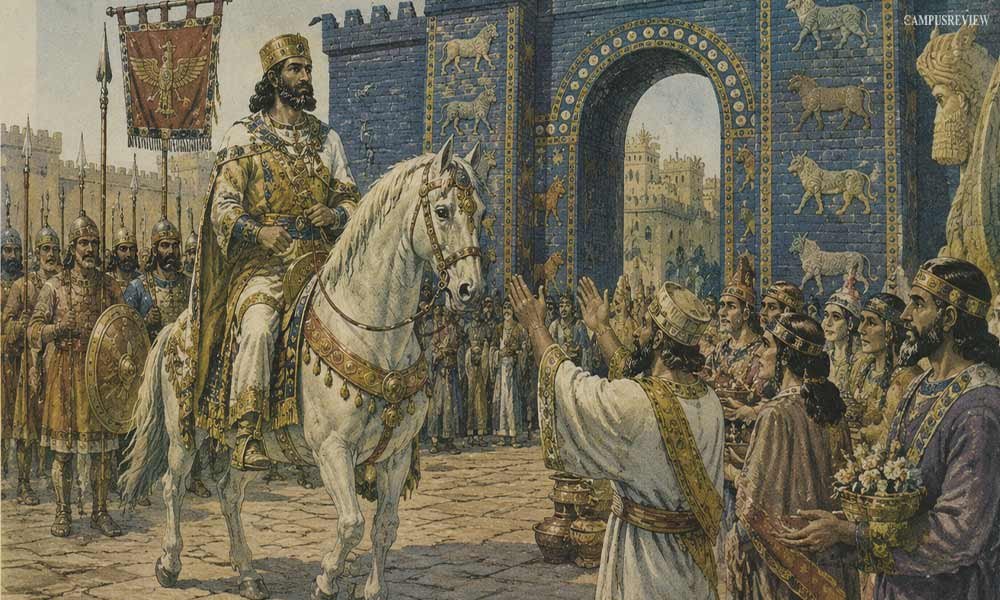
● Empire: Achaemenid Persia
● Known for: Freeing captives, respecting local customs
● Death: Killed in battle against Queen Tomyris
Cyrus was born in Persia around 600 BCE. Old legends say his own grandfather tried to have him killed as a baby. A shepherd saved him instead and raised him in secret. Cyrus grew up, and years later, he took the throne from that same grandfather.
He built the largest empire the ancient world had ever seen. But he did something rare for a conqueror. He let people keep their own religion and customs instead of forcing his rule on them. When he took Babylon in 539 BCE, he freed people held captive there and let them return home to rebuild their temple.
This act is carved on the Cyrus Cylinder, one of the earliest known human rights records.
Cyrus died in battle in 530 BCE while fighting a nomadic queen named Tomyris. He was buried in a stepped stone tomb at his capital, Pasargadae. His empire outlived him by 200 years, which is rare for a ruler who built his power through conquest, and that legacy makes him one of the greatest rulers in history.
Lesser-known fact: Cyrus is mentioned by name in the Bible, praised for letting the Jewish people return to Jerusalem.
2. Alexander the Great: Undefeated, But With No Plan After
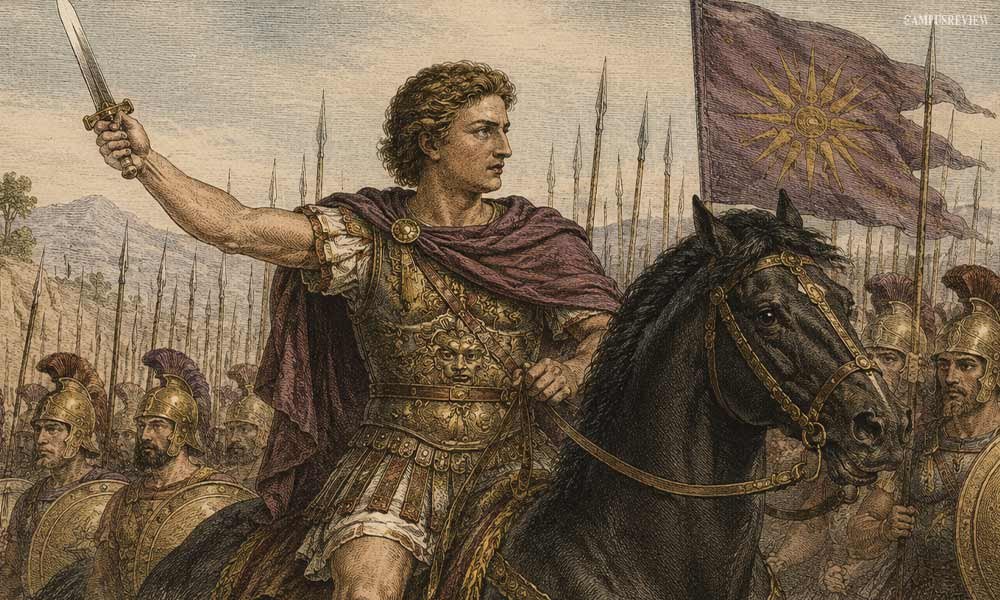
● Empire: Macedonian Empire
● Known for: Conquering most of the known world by age 30
● Death: Sudden illness in Babylon
Alexander was born in 356 BCE in Macedon, in what is now Greece. His father was King Philip II. His teacher was Aristotle, one of history’s greatest thinkers. Alexander grew up learning philosophy, literature, and how to command an army.
He became king at just 20 years old, after his father was murdered. Over the next 12 years, he never lost a single battle. He crushed the mighty Persian Empire, was crowned pharaoh in Egypt, and pushed his army as far as India.
His own soldiers finally refused to march further. They were tired and homesick. Alexander agreed to turn back, but the retreat through the desert killed thousands of his men from heat and thirst.
He died in Babylon in 323 BCE at only 32 years old, after a sudden illness following a banquet. He never named an heir. Within days of his death, his generals began fighting over his empire, and it split apart.
Lesser-known fact: Alexander founded more than 20 cities named Alexandria. One of them, in Egypt, is still a major city today.
3. Qin Shi Huang: The Emperor Who United China, Then Feared Death
● Empire: Qin Dynasty, China
● Known for: Uniting China, building the first Great Wall
● Death: Mercury poisoning
Ying Zheng became king of Qin at just 13 and, by 221 BCE, united China for the first time. He adopted the title Qin Shi Huang, meaning “First Emperor,” and laid the foundation of imperial China.
He standardized writing, currency, weights, measures, and even the width of cart wheels, while connecting defensive walls that later became the Great Wall of China. However, his rule was harsh.
He burned books, persecuted scholars, and became obsessed with immortality. Believing alchemists could help him live forever, he consumed mercury-based elixirs that likely caused his death in 210 BCE. He was buried in a vast mausoleum guarded by the famous Terracotta Army, thousands of life-sized clay soldiers.
Lesser-known fact: His tomb has never been fully opened. Scientists believe it may contain rivers of liquid mercury, matching old written accounts.
4. Ashoka the Great: The Conqueror Who Chose Peace
● Empire: Mauryan Empire, India
● Known for: Turning from war to peace after the Kalinga War
● Death: Natural causes
Ashoka was born around 304 BCE in India. He fought hard to become emperor. Some old texts claim he killed his own brothers to secure the throne. Early in his rule, people feared him so much they called him Ashoka the Fierce.
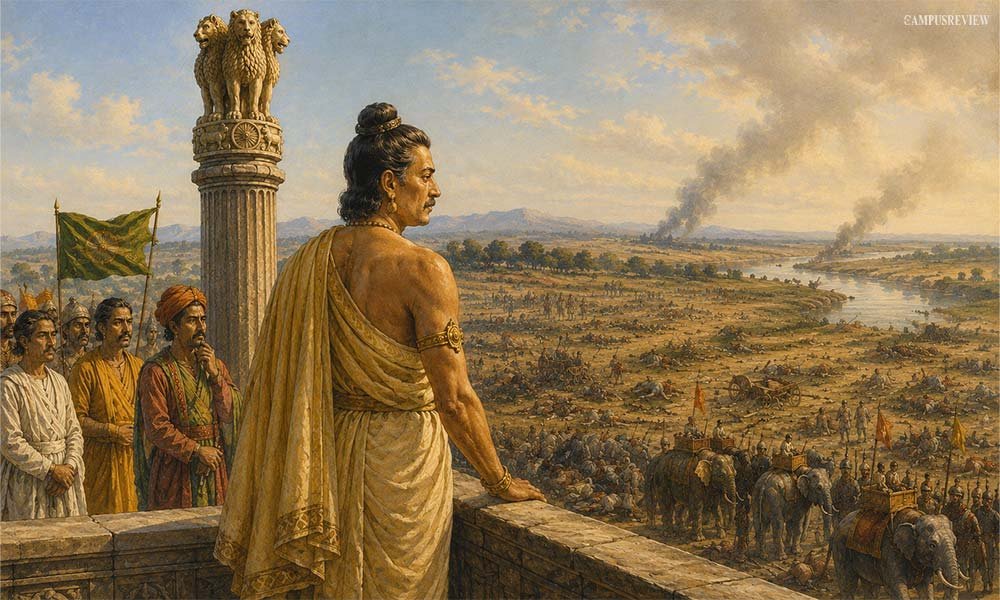
One war changed everything. In 261 BCE, Ashoka invaded the kingdom of Kalinga. The fighting killed and displaced hundreds of thousands of people. Ashoka stood on the battlefield afterward and felt sick with guilt over what he had done.
He never fought a war of conquest again. He turned to Buddhism and chose to rule through kindness instead of fear. He built hospitals for people and animals. He planted shade trees along roads for tired travelers. He carved messages of peace onto rocks and stone pillars across his empire, so ordinary people could read his new values.
Ashoka died around 232 BCE of natural causes. His empire weakened soon after him. But his ideas never disappeared. His stone pillar, topped with four lions, is now the national emblem of India, making him one of the greatest rulers in history
Lesser-known fact: Ashoka sent Buddhist teachers as far as Greece and Egypt, turning a regional Indian faith into a world religion.
5. Julius Caesar: The Man Who Crossed a River and Started a War
● Empire: Roman Republic
● Known for: Crossing the Rubicon, reforming Rome
● Death: Assassinated by Roman senators
Julius Caesar was born in Rome in 100 BCE into a noble but not wealthy family. He rose through politics and became one of Rome’s greatest generals after his successful campaigns in Gaul (modern-day France).
In 49 BCE, the Senate ordered him to disband his army. Instead, Caesar crossed the Rubicon River, an act that sparked a civil war and gave rise to the phrase “crossing the Rubicon,” meaning a point of no return.
After winning the war, Caesar ruled Rome and introduced major reforms, including a new calendar, land grants for veterans, and expanded Roman citizenship. His growing power alarmed many senators, who assassinated him on March 15, 44 BCE. Rather than saving the Republic, his death led to more conflict and paved the way for the Roman Empire.
Lesser-known fact: Caesar’s killers stabbed him 23 times, but doctors examining the accounts later said only one wound was fatal.
6. Augustus: The Teenager Who Became Rome’s First Emperor
● Empire: Roman Empire
● Known for: Starting 200 years of peace, the Pax Romana
● Death: Natural causes
Augustus was born as Octavius in 63 BCE and became Julius Caesar’s adopted heir at just 18 after Caesar’s assassination. Against the odds, he emerged victorious in the struggle for power by defeating Mark Antony and Cleopatra at the Battle of Actium in 31 BCE, becoming Rome’s first emperor.
Augustus maintained the appearance of the old Republic while holding supreme authority. He transformed Rome through major building projects and famously claimed he found the city of brick and left it of marble.
His reign began the Pax Romana, nearly 200 years of peace and stability across the empire. Augustus died in 14 CE after a long reign and was succeeded by his stepson, Tiberius.
Lesser-known fact: The month of August is named directly after him.
7. Charlemagne: The King Who Rebuilt Learning in Europe
● Empire: Frankish (Carolingian) Empire
● Known for: Uniting Western Europe, reviving education
● Death: Illness (pleurisy)
Charlemagne was born around 742 CE in the Frankish kingdom. He ruled alongside his brother at first, then became sole king after his brother’s sudden death. Over the following decades, he led more than 50 military campaigns and built the largest empire in Western Europe since the fall of Rome.
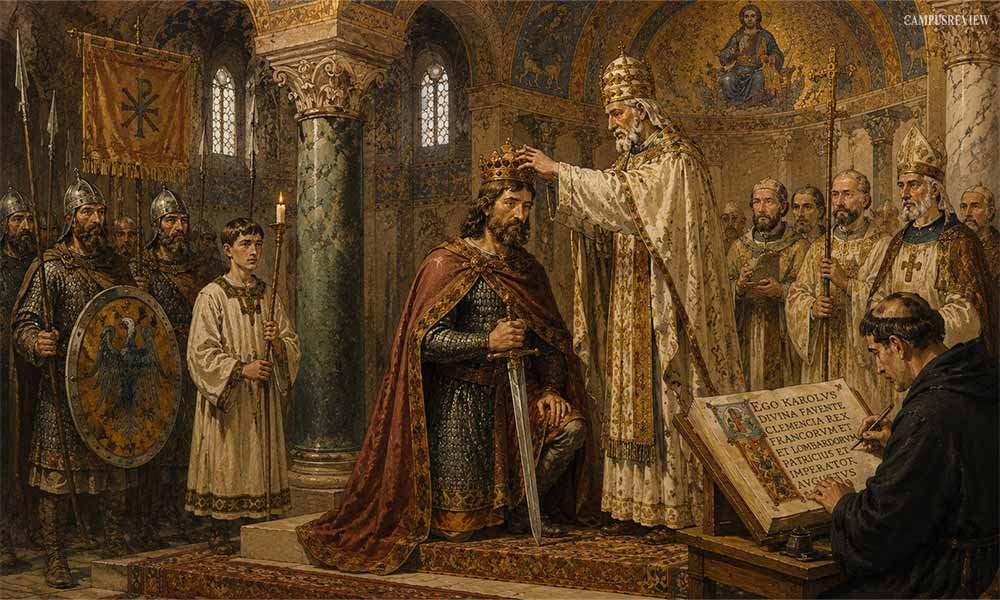
On Christmas Day in the year 800 CE, the Pope crowned him Emperor of the Romans in Rome itself. This moment linked his political power directly to the Church and revived a title that had not existed in the West for centuries.
Charlemagne cared deeply about learning, at a time when most people in Europe could not read. He built schools inside monasteries and invited scholars from across Europe to his court. His push for clear, standard handwriting created a script that still influences the fonts we read today.
He died in 814 CE at Aachen after a short illness. His empire did not survive long after him. Within 30 years, his grandsons split it into three parts, land that would eventually become modern France and Germany.
Lesser-known fact: Historians believe Charlemagne could speak several languages and understood Latin well, but he likely never fully learned to write.
8. Genghis Khan: From Abandoned Child to Ruler of the Largest Empire on Earth
● Empire: Mongol Empire
● Known for: Building the largest connected land empire in history
● Death: Injury or illness after a fall from his horse
Temujin, later known as Genghis Khan, endured a harsh childhood. After his father was poisoned, his family was abandoned by their tribe, and he was later captured by a rival clan. Despite these setbacks, he united the Mongol tribes and was proclaimed Genghis Khan, or “universal ruler,” in 1206.
He created a highly disciplined army known for its speed and strategy, conquering vast regions of China and Central Asia to build the largest contiguous land empire in history. He also introduced the Yassa legal code and the Yam messenger network, which helped govern and connect his empire.
Genghis Khan died in 1227, likely from an injury after falling off his horse. He divided his empire among his sons before his death, which helped it stay stable for a while after he was gone.
Lesser-known fact: Genetic studies suggest roughly 1 in every 200 men alive today may be a direct descendant of Genghis Khan.
9. Akbar the Great: The Emperor Who Could Not Read, But Ruled Wisely
● Empire: Mughal Empire, India
● Known for: Religious tolerance and fair rule
● Death: Illness (dysentery)
Akbar was born in 1542 while his family lived in exile, far from the throne he would later inherit. He could not read or write, a condition modern historians link to dyslexia. Instead, he learned by having scholars read to him aloud.
He became emperor at just 13, after his father’s sudden death. He won a major battle to secure his throne, then spent the next 50 years expanding and strengthening the Mughal Empire in India.
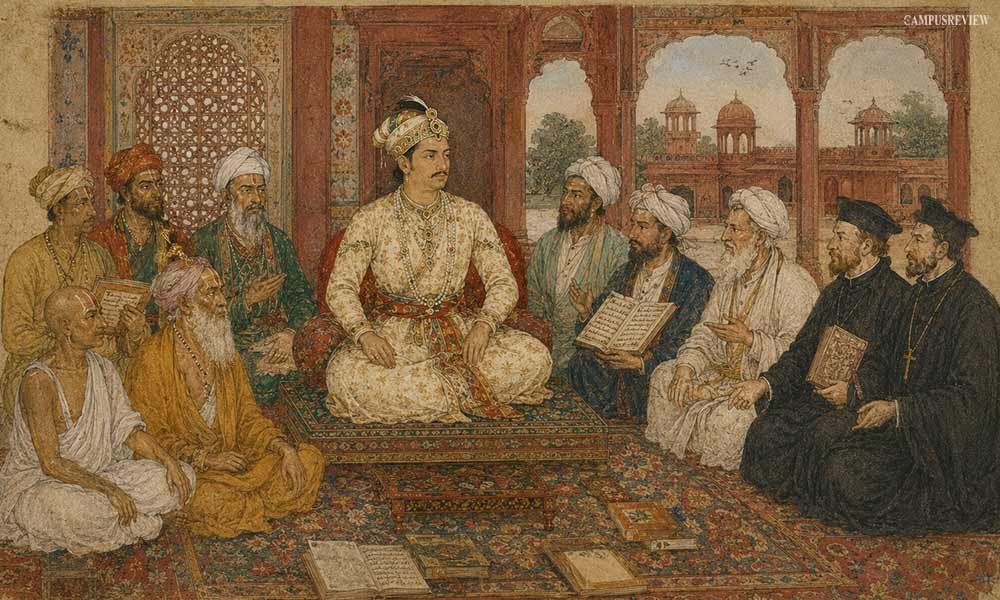
Akbar ruled a mostly Hindu population as a Muslim king, and he chose inclusion over force. He removed unfair taxes placed only on non-Muslims and married into Hindu royal families, giving them real power at court. He built a hall where scholars from different religions could debate freely together, something almost unheard of for a ruler at that time.
He died in 1605 from severe dysentery. He left behind an empire that was stable, wealthy, and known across the region for its fairness toward people of different faiths.
Lesser-known fact: Akbar created his own blended faith, called Din-i Ilahi, combining ideas from Islam, Hinduism, and other religions.
10. Napoleon Bonaparte: The Soldier Who Crowned Himself Emperor
● Empire: French Empire
● Known for: The Napoleonic Code, military genius
● Death: Illness, likely stomach cancer, in exile
Napoleon Bonaparte was born in 1769 on the island of Corsica and trained as a military officer in France. During the French Revolution, he rose rapidly through the ranks and seized power in 1799. In 1804, he crowned himself Emperor of France, symbolizing that his authority came from himself rather than the Church.
Napoleon conquered much of Europe, but his greatest legacy was the Napoleonic Code, which established legal equality and influenced legal systems around the world.
His failed invasion of Russia in 1812 weakened his empire, and his final defeat came at the Battle of Waterloo in 1815. Exiled to the island of Saint Helena, he died in 1821, likely from stomach cancer.
Lesser-known fact: Napoleon was not actually short. He stood about 5 feet 7 inches, average height for a Frenchman of his time. The “short” myth came from British cartoons mocking him.
Final Thoughts
These 10 greatest rulers in history changed history in very different ways. Some built with swords. Some built with laws. Some built with ideas that outlived their empires by thousands of years. What connects them all is simple. Real power needs structure, not just strength.
If you are studying history for an exam, or you just enjoy learning about the past, remember this one pattern.
Great rulers shaped history through conquest, reform, and governance, but their stories survived because historians, poets, and writers recorded them. If you’re interested in the people who preserved history through literature, explore our guide to the Greatest Authors of All Time.
FAQs
1. Which ruler had the largest empire?
The Mongol Empire, founded by Genghis Khan in 1206 and expanded by his successors, became the largest contiguous land empire in world history. At its peak, it stretched across much of Asia and Europe, covering approximately 24 million square kilometers.
2. Did any of these rulers die peacefully?
Yes. Several rulers on this list died of natural causes or illness rather than in battle or through assassination. Ashoka the Great, Augustus Caesar, Akbar the Great, and Charlemagne all died peacefully after long and influential reigns.
3. Who was the youngest ruler in history?
Qin Shi Huang and Akbar the Great both became rulers at around 13 years old, making them the youngest rulers in history. Alexander the Great became king at 20, while Augustus rose to power at 18 after the assassination of Julius Caesar.