The Campus Review
September 16, 2026
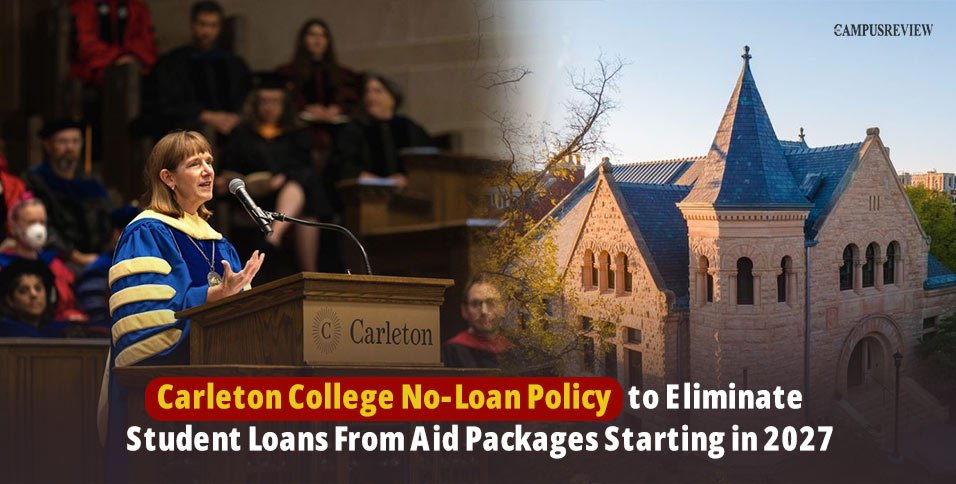
Carleton College announced a major financial aid policy change on Monday during its Opening Convocation. Beginning in the 2027–28 academic year, Carleton College will implement its Carleton College no-loan policy, eliminating student loans from need-based financial aid packages. The college will replace the federal and institutional loans it would otherwise include with grants and scholarships.
Carleton says it will become the first college in Minnesota to remove loans from need-based aid packages for all qualifying students. Under the initiative, titled “No-Loan for All,” the institution will continue meeting 100 percent of demonstrated financial need through a combination of grants, scholarships, and student employment. Students and families may still choose to borrow independently if they need additional funds.
Carleton College Financial Aid Policy
| Policy Detail | Institutional Terms |
| Effective Date | Fall term, 2027-28 academic year |
| Primary Mechanism | Grants and scholarships replace packaged federal and institutional loans |
| Eligibility Standard | All students who qualify for need-based financial aid |
| Income Caps | None; no specific family income thresholds apply |
| Demonstrated Need | Meets 100 percent of demonstrated financial need |
| Self-Help Component | Packages continue to include campus student employment |
| Independent Borrowing | Allowed if families choose to seek outside or federal loans |
| Endowment Target | $128 million total ($80M+ committed, $48M remaining) |
What Is Carleton College No-Loan Policy?
The Carleton no-loan policy removes packaged loan requirements from standard need-based awards. Rather than expecting students to borrow to meet demonstrated financial need, Carleton will replace the loan portion of those packages with institutional gift aid.
According to the college, approximately 57 percent of Carleton students currently receive need-based financial aid. For the 2026-27 academic year, the college reports an average financial aid award of $71,866, leaving the average family receiving need-based aid paying $21,763 out of pocket.
Carleton reports that among Class of 2025 graduates who borrowed, the average debt at graduation was $21,075. By removing Carleton College student loans from standard award letters starting in 2027, the college aims to eliminate this typical borrowing expectation for future cohorts.
Who Qualifies?
Carleton structured the initiative to apply across all students who demonstrate financial need rather than establishing tiered cutoffs:
- No Income Caps: Unlike tuition-promise models that restrict benefits to families earning under specific salary figures, Carleton has no specific income restriction. Students who qualify for need-based financial aid will receive packages without Carleton-packaged loans.
- Current and Incoming Students: The new Carleton College no-loan policy will apply to incoming and eligible continuing students beginning in Fall 2027. It will also apply to continuing students who are enrolled as first-years, sophomores, and juniors during the 2026-27 academic year for their remaining undergraduate terms.
- No Retroactive Relief: The policy does not retroactively pay off loans that alumni or current seniors have already accumulated.
How Financial Aid Packages Will Change
Under the new model, Carleton will adjust the composition of need-based awards rather than altering its calculation of family financial need.
- Packaged Loans Replaced: Federal and institutional loans included in Carleton’s financial aid packages will be replaced with grants and scholarships.
- Student Employment Retained: Aid awards will continue to feature student employment opportunities. Campus jobs will allow students to earn money directly for personal expenses, books, and day-to-day costs.
- Independent Borrowing Permitted: Students and families may still choose to borrow independently if they need additional funds or want more flexibility to handle out-of-pocket costs.
How Carleton Is Funding the Policy
Carleton is financing the transition through an endowed fundraising effort to sustain financial aid without loans over the long term:
- $80+ Million Committed: Early donors and alumni contributed more than $80 million in gifts over the past ten months. Every member of the Carleton College Board of Trustees contributed to this initial phase.
- $48 Million Remaining: The college is actively raising an additional $48 million to reach its $128 million financial aid endowment goal.
- Matching Gift Challenge: A leadership group of trustees and donors established a pool that matches all new donations to the financial aid endowment dollar-for-dollar.
What Students and Families Should Know
Applicants and returning students do not need to fill out a separate application to receive loan-free aid:
- Standard Aid Applications: Families must submit the Free Application for Federal Student Aid (FAFSA) and CSS Profile annually to determine demonstrated financial need.
- Middle-Income Impact: The policy will also apply to families across different income levels who qualify for need-based financial aid, including those who may have previously received loan components in their aid packages.
- Overall Cost Considerations: Carleton College financial aid 2027 considers the student’s overall cost of attendance, including housing, dining plans, activity fees, and off-campus studies.
The policy could also be relevant to students planning to study abroad in the United States, as financial aid can play an important role in deciding which colleges families can afford.
Why the Policy Matters
During her Opening Convocation address, Carleton President Alison Byerly framed the policy around opening broader choices for undergraduates:
“As a liberal arts college that prepares students for a wide variety of futures, we want students to know that whatever path they choose to follow, they will begin without any burden of debt to limit their options. We believe that a family’s finances should never determine a student’s ability to attend Carleton, and we’re proud to be one of a small number of colleges nationwide with the resources to make this possible.”
Vice President and Dean of Admissions and Financial Aid Art Rodriguez highlighted the connection between undergraduate borrowing and students’ plans after graduation. He noted that students who finish their undergraduate education without packaged student loan debt may have more flexibility when considering further education and other post-graduation options.
The Carleton College no-loan policy changes how the college structures need-based financial aid beginning in 2027. By eliminating packaged student loans from need-based financial aid offers, Carleton will shift more of its aid toward grants and scholarships while continuing to allow students and families to borrow independently if additional funds are needed.