The Campus Review
October 15, 2026
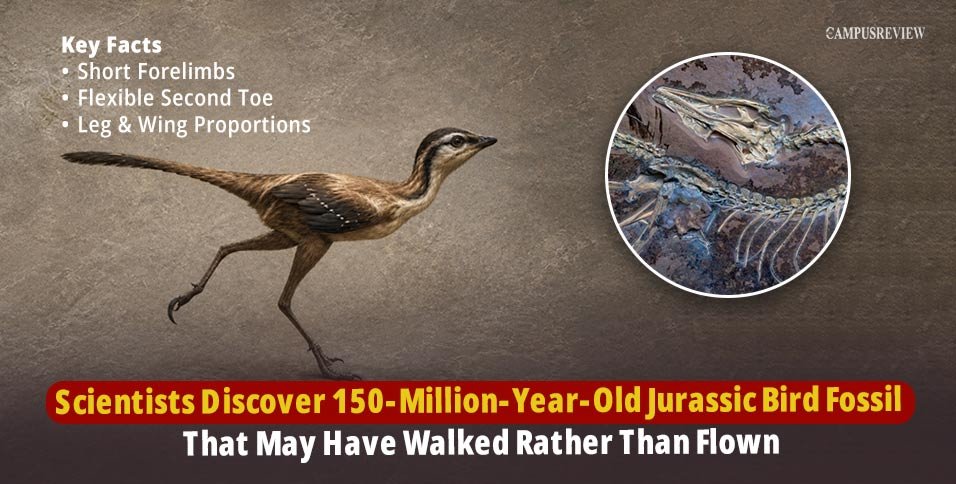
Researchers have described a 150-million-year-old flightless Jurassic bird fossil discovered in Fujian Province, China. Named Yuezhuornis yangyuanensis, the ancient bird had short forelimbs, relatively long hind limbs, and a specialized second toe.
Published in the journal Nature, the study suggests that some early birds lived on the ground during the Late Jurassic period, offering new insights into early bird evolution.
Facts at a Glance
| Feature | Detail |
| Species Name | Yuezhuornis yangyuanensis |
| Geological Age | Late Jurassic period (~148 to 150 million years old) |
| Discovery Location | Fujian Province, China |
| Estimated Mass | Approximately 821 grams |
| Inferred Lifestyle | Terrestrial, flightless |
| Primary Reference | Research study published in Nature |
Key Anatomical Traits
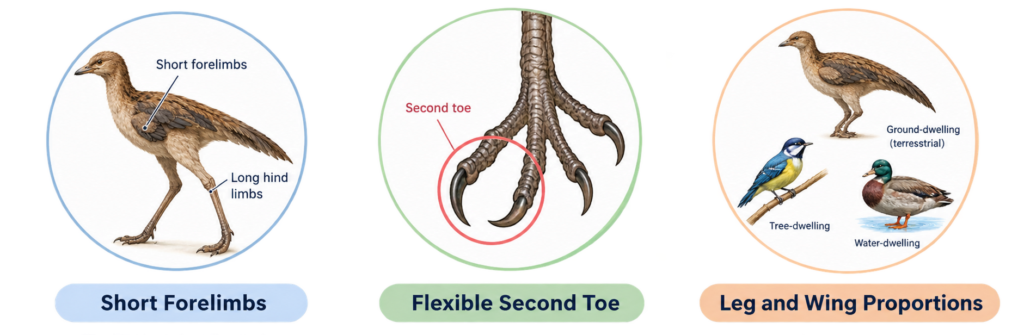
- Short Forelimbs: The bird had short forelimbs and relatively long hind limbs. These features suggest that it was better suited to walking on the ground than flying.
- Flexible Second Toe: The fossil shows a highly flexible second toe, similar to features found in some dinosaur groups related to early birds.
- Leg and Wing Proportions: Comparisons with modern birds show that Yuezhuornis yangyuanensis had body proportions more similar to ground-dwelling birds than to birds that live in trees or water.
What the Fossil Reveals About Early Bird Evolution
The discovery shows that early birds had different body shapes and ways of living during the Late Jurassic period. Unlike birds adapted for flight, Yuezhuornis yangyuanensis had body proportions that suggest it lived on the ground and may have been unable to fly.
Its short forelimbs, relatively long hind limbs, and specialized second toe give scientists clues about how it moved and lived. Researchers compared its body proportions with those of 377 living bird species to better understand its likely movement.
The fossil does not show whether the species descended from ancestors that could fly. Instead, it provides evidence that some early birds may have lived without flight, adding to our understanding of how birds evolved from dinosaurs.
What the flightless Jurassic bird Fossil Reveals About Bird Evolution
Scientists have long studied how flight shaped the evolution of early birds. However, the fossil of Yuezhuornis yangyuanensis suggests that some early birds lived on land and may not have been able to fly.
Fossils help scientists understand how living things changed over millions of years. They also help researchers study the stages of human evolution and learn how humans developed over time.
This flightless Jurassic bird fossil adds to our understanding of early bird evolution. However, scientists cannot yet confirm whether this species descended from birds that could fly.
What Comes Next in the Research
Because Yuezhuornis yangyuanensis is known from only one fossil specimen, scientists need more evidence to understand its evolution, habitat, and physical development. Several questions remain for future research:
- Evolution: Scientists need to determine whether this bird lost the ability to fly over time or belonged to an early bird group that never developed the ability to fly.
- Habitat and Distribution: Researchers need to investigate whether other ground-dwelling birds lived across Asia during the Late Jurassic and how widely these birds were distributed.
- More Fossil Evidence: Finding additional fossils, especially parts of the skull and backbone, could help scientists understand what the bird ate, how it moved, and how it grew.
End Note
The study of Yuezhuornis yangyuanensis provides evidence regarding the structural and ecological diversity of early avialans. By supporting the inference of a terrestrial lifestyle early in avian history, this flightless Jurassic bird fossil helps refine current models of early bird evolution.
Pranjal Kharche