Artificial intelligence is changing how many jobs are performed. According to World Economic Forum research, nearly 44% of core work skills could change by 2027.
This guide covers 10 AI skills to learn in 2027, salary information and AI career opportunities for the US and India. Whether you are a beginner, student, or working professional, you can use this guide to understand where to start and how to build relevant skills for your career.
10 Most In-Demand AI Skills to Learn in 2027
The 10 AI skills to learn in 2027 cover three main areas: technical skills such as programming and machine learning, AI agent skills such as building automated workflows, and human skills such as AI collaboration and responsible use.
These skills provide a broad foundation for working with AI across different careers. According toTripleTen’s 2026 employer research. Here is a quick look before we go deeper into each one.
| AI Skill | Best For | Core Tools |
| 1. Programming | Developers building AI systems | Python, FastAPI, TypeScript |
| 2. Machine Learning & NLP | Engineers fine-tuning models | PyTorch, Hugging Face, LoRA |
| 3. Data Literacy | Anyone preparing data for AI | Vector embeddings, PII redaction |
| 4. AI Deployment & Observability | Engineers running AI in production | Langfuse, LangSmith, Docker |
| 5. Prompt Engineering | Anyone who wants reliable AI output | System prompts, JSON schemas |
| 6. AI Agent Workflows | Developers building autonomous agents | LangGraph, CrewAI, MCP |
| 7. Human-AI Collaboration | Managers and team leads | Task delegation, communication |
| 8. AI Problem-Solving & Automation | Professionals automating daily tasks | n8n, Make.com, Zapier |
| 9. AI Application Building | Full-stack developers | Next.js, Vercel AI SDK, Supabase |
| 10. AI Verification & Responsible Use | Compliance and safety teams | Guardrails AI, NeMo Guardrails |
1. Programming
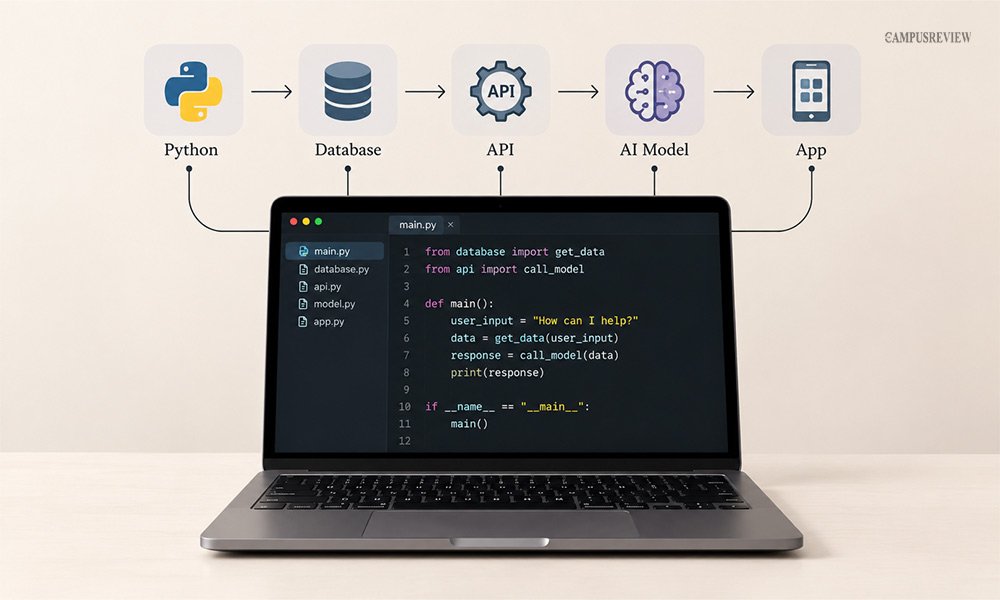
Programming means giving a computer step-by-step instructions to complete a task. In the AI era, this idea has not changed, but the job around it has. AI tools can now write a lot of routine code by themselves. So the real skill is no longer typing every line yourself. It is understanding how different parts of a system fit together, and making sure the AI’s output does not break anything downstream.
What You Will Learn
You will learn Python, the programming language most commonly used to build AI systems, along with ways to make your programs run faster and handle several tasks at once. You will also learn how to store and organise data in a database, including databases that can search by meaning instead of matching exact words.
Many learners also pick up a second language for building websites and apps, plus tools that let an AI model send and receive information from other software. AI-assisted code editors are also common now, helping you write and fix code faster.
Career Opportunities
Common roles: AI Software Engineer, Backend AI Systems Engineer, Data Integration Specialist
| Career Stage | US Salary | India Salary |
| Entry-level | $90,000-$135,000 | ₹5-12 LPA |
| Experienced | $140,000-$210,000 | ₹15-35 LPA |
| Senior, with equity | $300,000+ | — |
Best For
Students, beginners, and professionals who enjoy coding and want to build AI-powered applications or work with AI systems.
2. Machine Learning and NLP
Machine learning is the process of training a computer to find patterns in data and make predictions, instead of giving it a fixed set of rules to follow.
Natural language processing, or NLP, is the part of machine learning focused on human language. It teaches computers to read, understand, and respond to text. Together, these two skills form the foundation of how today’s AI models actually work.
What You Will Learn
You will start with simpler prediction methods that are still widely used for tasks like detecting fraud or spotting customers who might leave a company. From there, you move into deep learning, a more advanced method that powers today’s AI chatbots and image tools.
You will learn how these models pay attention to different parts of a sentence to understand meaning, and how to adjust an existing large model so it works well for one specific company or task, without building it from scratch. Finally, you will learn how AI models are trained to give safer, more useful answers based on feedback from real people.
Career Opportunities
Common roles: Machine Learning Engineer, NLP Specialist, LLM Fine-Tuning Engineer
| Career Stage | US Salary | India Salary |
| Mid-level | $149,000-$219,000 | ₹8-25 LPA |
| Senior | $220,000-$300,000+ | ₹18-45 LPA (LLM specialists) |
Best For
People who enjoy working with data, building AI models, and want to develop a strong foundation in machine learning and AI.
3. Data Literacy
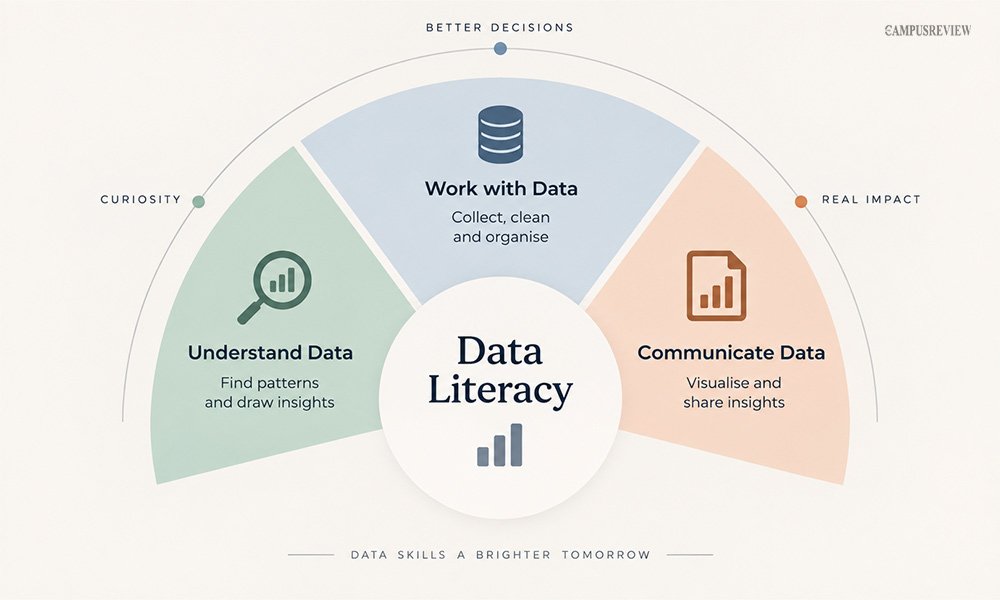
Data literacy means knowing how to read, clean, organise, and judge the quality of data. This matters a lot for AI, because an AI system is only as good as the data it learns from. Messy, incomplete, or poorly labelled data leads to AI that gives wrong or unreliable answers, a problem that costs companies an average of $12.9 million a year, according to Gartner research.
What You Will Learn
You will learn how to take messy, real-world files, like contracts, reports, or audio recordings, and turn them into clean, organised information an AI system can actually use.
You will also learn how AI systems search through large amounts of text to pull out relevant information, and how to check whether the data going into an AI system is fair, private, and free of major errors. You will also learn about the basic rules governments have started setting around how AI can use people’s data.
Career Opportunities
Common roles: Data Analyst, AI Knowledge Architect, Enterprise Data Steward
| Career Stage | US Salary | India Salary |
| General | $95,000-$155,000 | ₹6-20 LPA |
Best For
Anyone who works closely with data, including analysts, researchers, and content teams.
4. AI Deployment and Observability
Once an AI system is built, it needs to keep working correctly every day, for every user. Deployment is the process of putting that AI system into real use. AI Observability means constantly checking whether it is actually working the way it should, so problems like a confusing or wrong answer get caught before a real customer sees them.
What You Will Learn
In AI Deployment and Observability, you will learn how to track what an AI system is doing behind the scenes, step by step, so you can see exactly where something went wrong. You will also learn how to test AI answers automatically, checking if they are accurate and based on real facts, instead of checking every single answer by hand.
On the technical side, you will learn how to run AI systems on servers that can handle many users at once, and how to keep the cost of running these systems under control.
Career Opportunities
A few well-known tools in this space
| Tool | What It Helps With |
| Langfuse | Tracking what an AI system did, step by step |
| Arize Phoenix | Spotting problems in AI systems that search documents |
| LangSmith | Debugging AI systems that complete multi-step tasks |
| Pydantic Logfire | Watching AI activity inside a Python-based app |
| Braintrust | Automatically re-testing AI answers before release |
Common roles: MLOps Engineer, LLMOps Platform Specialist, AI Site Reliability Engineer
| Career Stage | US Salary | India Salary |
| Mid-career | $145,000-$220,000 | ₹22-55 LPA |
| Senior platform lead | $280,000+ | — |
Best For
People who want to work with AI systems after they are built and learn how to deploy, monitor, test, and maintain them in real-world use.
5. Prompt Engineering
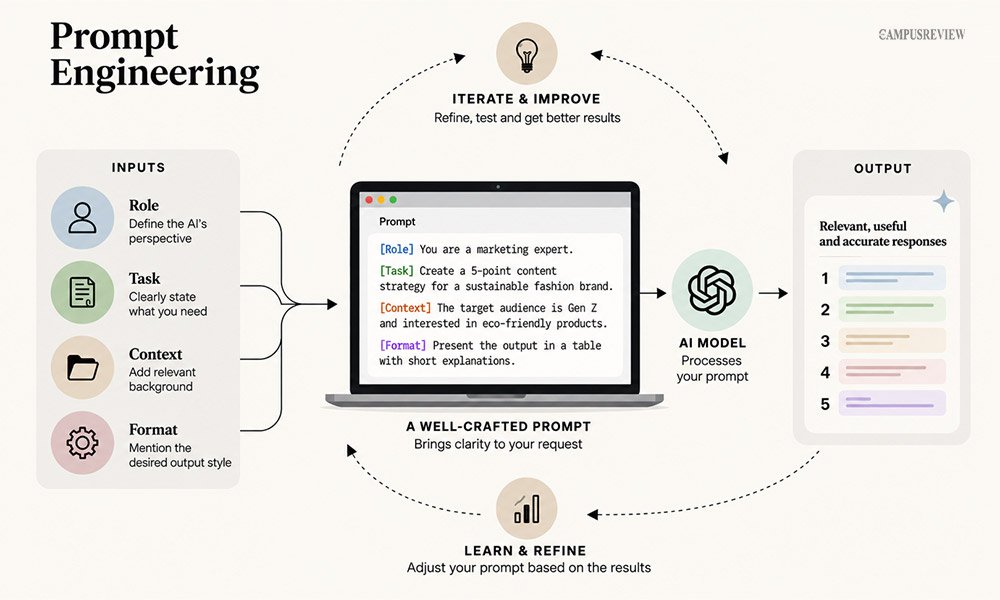
A prompt is simply the instruction or question you give to an AI model. Prompt engineering is the skill of writing these instructions clearly and carefully, so the AI gives you the answer you actually need, instead of a vague or incorrect one.
What You Will Learn
You will learn different ways to structure your instructions, such as giving the AI examples of what a good answer looks like, or asking it to explain its thinking step by step before giving a final answer. You will also learn how to protect your instructions from being tricked or manipulated by someone trying to make the AI misbehave.
A useful, practical skill here is learning how to make an AI return its answer in a fixed, predictable format, so that answer can be used directly by another piece of software.
Career Opportunities
Common roles: Context Engineer, Enterprise Prompt Architect, Generative Systems Designer
| Career Stage | US Salary | India Salary |
| Early-career | $80,000-$135,000 | — |
| Senior context engineer | Up to $180,000 | ₹15-40 LPA |
Best For
Beginners, students, and professionals who want to use AI effectively, improve AI outputs, and build practical skills without needing advanced coding knowledge.
6. AI Agent Workflows
A basic AI tool answers one question at a time. An AI agent is different.
AI Agent Workflows break a task into steps, decide what to do next, use other tools along the way, and keep working until the task is done, much like a junior employee following a project through to completion. Gartner predicts that 33% of enterprise software will use this kind of system by 2028.
What You Will Learn
You will learn how to design these multi-step AI systems, including how to let an agent branch off into different paths depending on what it finds, or loop back and try again if something fails in AI agent Workflows.
You will also learn how AI agents can connect safely to a company’s databases and other software, so they can take real actions, not just talk about them. Because agents can make mistakes when left alone, you will also learn how to add checkpoints where a human reviews the AI’s work before it goes further.
Career Opportunities
Common roles: Agentic Systems Architect, Multi-Agent Software Engineer, Autonomous Workflow Developer
| Career Stage | US Salary | India Salary |
| Mid-level | $165,000-$240,000 | ₹12-20 LPA (junior) |
| Senior architect | $340,000-$550,000 | ₹50-80 LPA |
Best For
People who want to build AI agents, automate multi-step tasks, and work with AI systems that can use tools and take actions.
7. Human-AI Collaboration
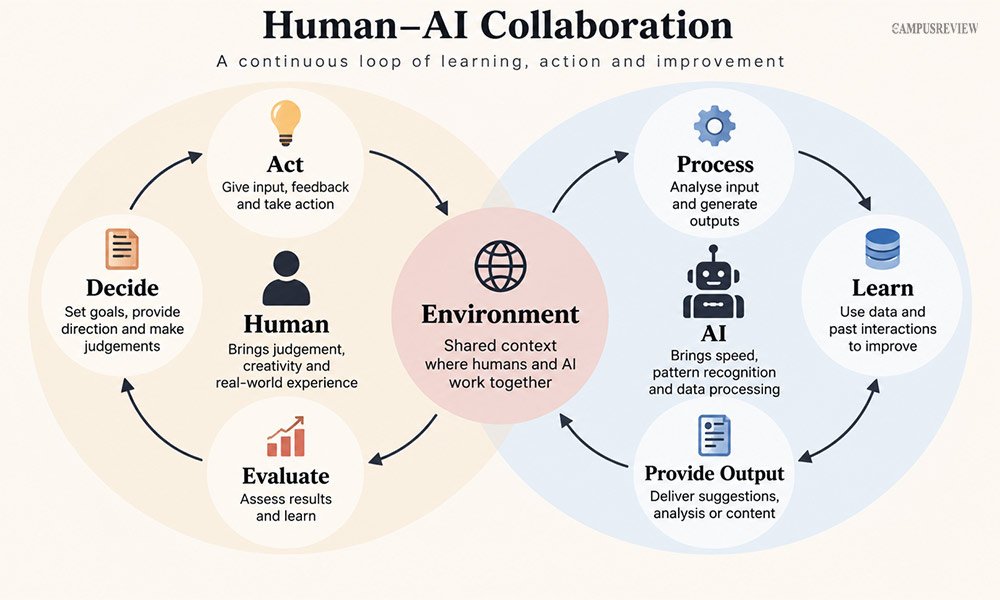
This is not a technical skill. Human-AI Collaboration is the ability to work well alongside AI, deciding what to hand off to it and what still needs a human. It also means using good judgment to catch what AI tools tend to miss, like a small legal risk or a decision that could upset a customer.
Roles that combine strong human judgment with AI tools are growing twice as fast, and pay is growing 42% faster than roles focused purely on manual work, according tolabour market research.
What You Will Learn
You will learn in Human-AI collaboration how to look at a task and decide clearly whether AI can handle it well, or whether it truly needs human judgment and accountability. You will also practise spotting the kind of risks a computer program would not naturally notice, such as how a decision might look to customers, the public, or regulators.
Finally, you will practise explaining AI-generated findings in plain language, so other people can trust and act on them.
Career Opportunities
Common roles: AI Transformation Manager, Hybrid Workflow Strategist, AI Product Manager, Chief AI Officer
| Career Stage | US Salary | India Salary |
| Product/manager roles | $140,000-$230,000 | ₹20-50 LPA |
| Executive (CAIO) | — | ₹60 LPA+ |
Best For
Managers, team leads, and People who want to work alongside AI, make better decisions with AI tools, and apply human judgment to AI-generated results.
8. AI Problem-Solving and Automation
AI Automation means setting up a system to do a repetitive task automatically, without a person doing it by hand every time. Older automation tools often break when they receive messy or unexpected information. Adding AI to automation lets the system read and understand messy, real-world input, like a customer email, and still complete the task correctly.
What You Will Learn
You will learn to use simple, visual tools that connect different apps together without writing much code, so information can move automatically from one place to another.
You will also learn how AI can read documents like invoices or forms and pull out the important details on its own.
A practical habit you will build is designing a fallback rule, so a task goes to a human whenever the AI is unsure, instead of letting it guess and get something wrong.
Career Opportunities
Common roles: AI Automation Specialist, Business Process Automation Architect, Low-Code Systems Consultant
| Career Stage | US Salary | India Salary |
| Full-time | $110,000-$165,000 | — |
Best For
Working professionals in non-technical roles who want to automate repetitive tasks, connect different tools, and use AI to make everyday business workflows more efficient.
9. AI Application Building
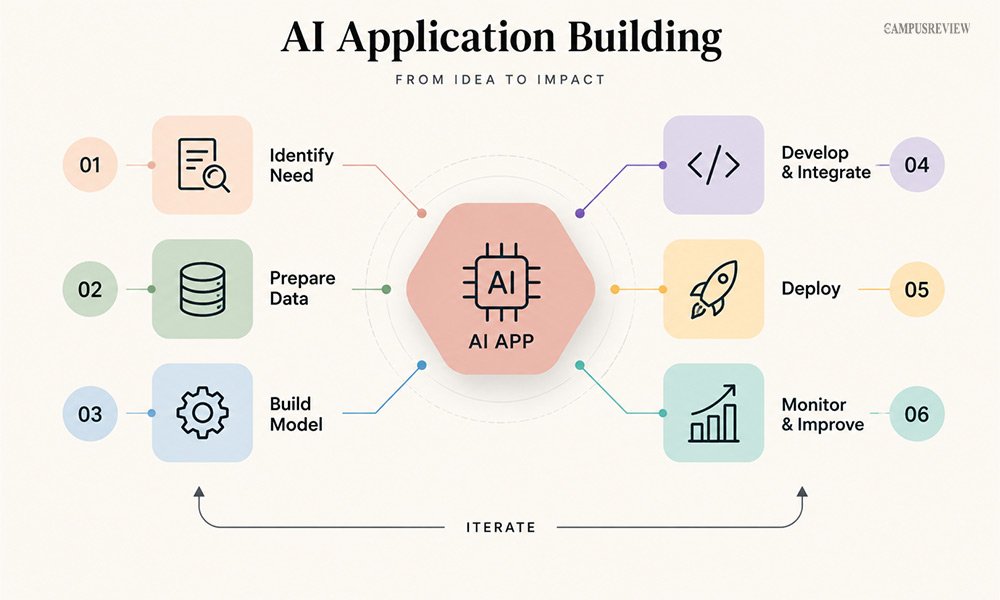
AI Application building is the skill of building the actual products people use, like an AI chatbot on a website or an AI writing assistant inside an app. It combines the part of a website users see, the logic that runs behind the scenes, and the connection to the AI model itself into one working product.
What You Will Learn
You will learn how to build the visible part of a website or app, including how to show an AI’s response as it is being generated, word by word, instead of making users wait for the full answer. You will also learn how to set up a database that can search by meaning rather than exact matching words, so your app can find relevant information quickly.
On top of this, you will learn how to add basic features every product needs, like user logins and payment processing.
Career Opportunities
Common roles: Full-Stack AI Developer, Product Engineer, Technical Founder
| Career Stage | US Salary | India Salary |
| Mid-level | $140,000-$185,000 | ₹15-42 LPA |
| Senior | $220,000-$280,000 | — |
Best For
Full-stack developers and founders who want to build AI-powered websites, apps, chatbots, and other products that use AI models.
10. AI Verification and Responsible Use
As AI is used more widely, it also needs stronger checks. AI Verification means testing and confirming that an AI system gives safe, fair, and accurate answers before it reaches real users. Responsible use means following the growing set of laws and guidelines that govern how companies are allowed to use AI, such as the EU AI Act.
What You Will Learn
You will learn how to set up safety filters that stop an AI system from producing harmful, biased, or clearly wrong answers.
You will also learn how to actively test an AI system by trying to make it fail or misbehave on purpose, so the problem gets fixed before someone else finds it. Finally, you will learn about the main rules and frameworks regulators use to judge whether an AI system is being used responsibly.
Career Opportunities
Common roles: AI Safety Engineer, AI Governance and Compliance Officer, AI Security Analyst
| Career Stage | US Salary | India Salary |
| General | $145,000-$225,000 | ₹16-38 LPA |
Best For
Compliance, legal, and safety-focused professionals who want to test AI systems, improve their safety and accuracy, and understand how AI can be used responsibly.
How to Choose Which AI Skills to Learn
The right artificial intelligence skill depends on where you stand today, not on what sounds impressive. Use this table to find your starting point, then read the short plan below it.
Learner profile and recommended starting point
| Profile | Priority Skills | Time to Competence |
| Beginners | Prompt Engineering, Data Literacy, Human-AI Collaboration | 1-3 months |
| Students | Programming, Machine Learning & NLP, AI Problem-Solving | 6-12 months |
| Working Professionals | AI Automation, Human-AI Collaboration, Domain AI Applications | 2-4 months |
| Technical Careers | AI Agent Workflows, AI Deployment, AI Application Building | 4-8 months |
For Beginners
AI skills for beginners can start with prompt engineering. Learn to write clear instructions using role-based prompts and examples. Practice with free AI tools you already have access to.
At the same time, build basic data literacy and learn to spot when AI may give incorrect information. Avoid sharing private information with public AI tools. This foundation can take one to three months and does not require a coding background.
For Students
AI for students can include both foundational learning and practical experience. Start with maths and probability, then build knowledge of programming, algorithms, and deep learning. Work on small AI projects and add relevant work to an online portfolio. When applying for internships or jobs, include these projects and related AI experience on your resume.
For Working Professionals
If you work in marketing, HR, finance, or operations, skip deep coding. Focus on workflow automation instead.
Find one repetitive task in your job, like sorting applications or building reports, and automate it using a simple no-code tool. This hands-on project proves value fast and takes about two to four months.
For Technical Careers
Engineers and architects should aim straight at production skills: multi-agent workflows, deployment observability, and full-stack AI apps. This path takes four to eight months but leads to the highest-paying AI roles.
How to Monetize AI Skills in 2027
The right artificial intelligence skill depends on where you are in your career, not just what sounds impressive. Use this table to find a starting point and identify AI skills for the future that match your goals.
Monetization models at a glance
| Model | Deliverables | Pricing |
| Freelance AI Services | Data pipelines, document parsers | $50-$150/hr or $1,500-$5,000/project |
| Prompt Engineering Services | Prompt libraries, eval suites | $75-$175/hr or $2,500-$10,000/deployment |
| AI Consulting | Readiness audits, AI roadmaps | $150-$350/hr or $5,000-$25,000/retainer |
| AI Automation for Businesses | Workflow automation, invoicing bots | $3,000-$15,000 setup + $1,500-$5,000/mo |
| AI-Powered Side Projects | Micro-SaaS tools | $10-$99/month per user |
| AI-Enhanced Digital Services | SEO research, localization | $2,000-$8,000/month flat fee |
| Upskilling for a Raise | Internal automation, process redesign | 20%-45% pay increase |
Freelance AI Services: Best if you like variety. Start with one clear offer, like building simple document parsers for small clinics.
Prompt Engineering Services: Many companies have AI instructions that break in production. Offer to audit and fix them.
AI Consulting: Works best once you have real project experience. Companies pay for judgment, not just tool knowledge.
AI Automation for Businesses: Start with one small business. Automate their customer queries or invoicing, then use it as your case study.
AI-Powered Side Projects: Pick one narrow problem, like transcript search for lawyers, instead of a general-purpose AI tool.
AI-Enhanced Digital Services: Combine AI speed with human quality checks. This lets you charge agency prices at a fraction of agency cost.
Upskilling for a Raise: Automate one painful task at your current job. Bring the result, not just the idea, to your next salary talk.
Final Word
AI skills to learn include technical knowledge, workflow skills, and human judgment. You do not need to learn all ten skills at the same time. Choose a skill that matches your career stage, spend time developing it, and apply what you learn through a practical project. This can help you build experience and understand how the skill applies to real-world work.
Frequently Asked Questions
1. What are the most in-demand AI skills in 2027?
The most in-demand AI skills in 2027 are AI agent workflows, AI deployment and observability, machine learning and NLP fine-tuning, full-stack AI application building, and AI verification and governance.
2. What AI skills should I learn first?
Start with prompt engineering and basic data literacy. Neither needs a coding background, and both teach you how AI actually works. Once you are comfortable, move into simple automation tools before you touch programming.
3. Which AI skills will matter most in the future?
AI agent orchestration, human-AI collaborative leadership, and AI verification will matter most long-term. As AI handles more routine execution, the real value shifts to people who can design, judge, and safeguard these systems.
4. Do I need coding skills to learn AI?
Not every AI skill requires coding. Skills such as prompt engineering, human-AI collaboration, and AI-powered automation can be learned with little or no coding. Programming becomes more important for building and deploying AI systems.
5. What AI skills will be valuable across different industries?
AI skills such as data literacy, AI problem-solving, automation, and human-AI collaboration can be useful across industries because they support tasks beyond traditional technology roles.