Which institution can truly claim the title of the biggest university in the world? Is it a traditional campus filled with thousands of students, or a massive educational network serving millions across multiple regions? The answer may surprise many readers. Modern higher education no longer depends solely on physical campuses. Instead, distance learning platforms, affiliated college systems, and multi-campus networks now educate student populations larger than some countries.
This article explores the ten largest universities in the world by total enrollment. It examines their student populations, educational models, historical development, and global significance. In addition, it compares their scale, highlights remarkable achievements, and explains how these institutions continue to expand access to higher education for millions of learners worldwide.
Here are the 10 biggest universities in the world
| Rank | University Name | Country | Type / Model | Total Enrollment |
| 1 | Indira Gandhi National Open University (IGNOU) | India | Public (Open / Distance) | 7,140,000 |
| 2 | California Community Colleges System | USA | Public (State System) | 1,850,000 |
| 3 | National University of Bangladesh | Bangladesh | Public (Affiliated Network) | 2,097,182 |
| 4 | Anadolu University | Turkey | Public (Dual / Distance) | 1,974,343 |
| 5 | Allama Iqbal Open University (AIOU) | Pakistan | Public (Open / Distance) | 1,027,000 |
| 6 | Islamic Azad University | Iran | Semi-Private (Multi-Campus) | 1,000,000 |
| 7 | Savitribai Phule Pune University | India | Public (Affiliated Network) | 665,000 |
| 8 | Bangladesh Open University | Bangladesh | Public (Distance) | 650,000 |
| 9 | Universitas Terbuka | Indonesia | Public (Distance) | 646,467 |
| 10 | National Technological Institute of Mexico | Mexico | Public (In-Person / Multi) | 620,000 |
Indira Gandhi National Open University (IGNOU)
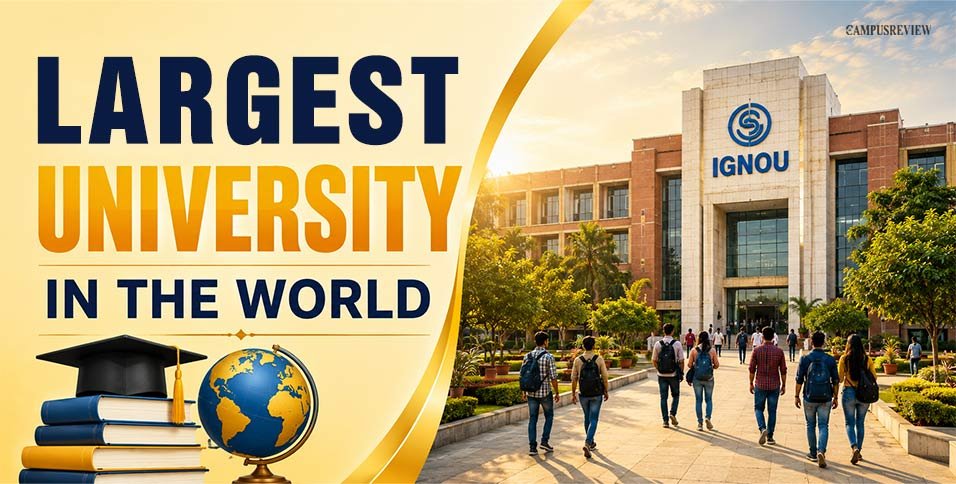
When people ask which institution deserves the title of the biggest university in the world, one name dominates the discussion. Indira Gandhi National Open University, commonly known as IGNOU, serves an astonishing 7.14 million students. Established in 1985, this Indian public university transformed access to higher education through its open and distance learning model. As a result, students from cities, towns, and remote regions can pursue degrees without relocating.
Moreover, IGNOU represents far more than a large enrollment figure. The university has expanded educational opportunities across India while influencing distance learning systems worldwide. Its flexible structure allows working professionals, homemakers, and lifelong learners to continue their education. Compared with traditional universities, its reach remains unmatched. Therefore, IGNOU stands as a powerful example of how technology and accessibility can reshape higher education on a global scale.
California Community Colleges System
The California Community Colleges System ranks among the largest higher education networks globally, serving approximately 1.85 million students. Founded in 1967, the system includes numerous community colleges across California. Unlike a single university campus, it operates as a statewide educational network that provides affordable pathways into higher education and workforce development.
Furthermore, the system plays a critical role in the American education landscape. Many students begin their academic journeys here before transferring to four-year institutions. In addition, the colleges support career training, technical education, and continuing education programs. While it differs structurally from traditional universities, its enormous enrollment highlights the growing demand for accessible education. Consequently, it remains one of the most influential public education systems in the United States.
National University of Bangladesh
The National University of Bangladesh serves more than 2.09 million students through an extensive affiliated college network. Established in 1992, the institution coordinates academic programs across hundreds of colleges throughout Bangladesh. This model allows students to receive university-recognized education while studying closer to home.
Its scale places it among the world’s largest educational institutions. In discussions about the biggest university in the world, the National University of Bangladesh often receives attention because of its remarkable enrollment. Additionally, the university supports national development by expanding educational access across urban and rural regions. Compared with many traditional universities, its affiliated structure enables extraordinary reach. Therefore, it plays a vital role in strengthening Bangladesh’s higher education system and workforce.
Anadolu University
Founded in 1958, Anadolu University has become one of Turkey’s most influential educational institutions. Today, it enrolls approximately 1.97 million students through a combination of traditional and distance learning programs. This dual model allows the university to serve learners both on campus and across international locations.
Moreover, Anadolu University pioneered large-scale open education in Turkey. Its distance education programs have attracted students from numerous countries, increasing its global impact. The university demonstrates how flexible learning models can support massive student populations without sacrificing accessibility. As a result, it consistently appears in rankings of the world’s largest universities. Its success also reflects the growing importance of technology-driven education in the modern era.
Allama Iqbal Open University (AIOU)
Allama Iqbal Open University, established in 1974, enrolls more than 1.02 million students. Named after Pakistan’s renowned philosopher and poet, the university became one of Asia’s earliest institutions dedicated to distance education. Its mission focuses on making higher education available to learners regardless of location or socioeconomic background.
In many conversations about the biggest university in the world, AIOU emerges as a notable example of educational inclusion. Furthermore, the university serves students in remote regions where traditional campus access remains limited. Through distance learning, teacher training, and professional development programs, AIOU continues to shape Pakistan’s educational landscape. Consequently, its influence extends beyond enrollment numbers and into long-term national development.
Islamic Azad University
Islamic Azad University ranks among Iran’s most significant higher education institutions, serving around 1 million students. Established in 1982, the university operates through a vast multi-campus structure spread across the country. This extensive network allows students to access education closer to their communities.
Additionally, Islamic Azad University has played an important role in expanding higher education opportunities throughout Iran. Unlike many centralized universities, its distributed campus model supports large-scale enrollment while maintaining local accessibility. The institution also offers diverse academic disciplines, attracting students from various educational backgrounds. Therefore, it remains one of the most recognized examples of a large multi-campus university system operating at a national scale.
Savitribai Phule Pune University
Established in 1949, Savitribai Phule Pune University serves approximately 665,000 students through a broad affiliated college network. Located in Maharashtra, India, the university oversees hundreds of colleges and research institutions. Its academic reputation extends well beyond its home region.
Although many people associate the biggest university in the world with distance learning institutions, affiliated university systems also achieve enormous enrollment. Savitribai Phule Pune University illustrates this reality effectively. Moreover, the university has produced notable researchers, professionals, and public leaders over several decades. Its combination of academic excellence and large-scale reach makes it one of India’s most respected higher education institutions.
Bangladesh Open University
Bangladesh Open University serves approximately 650,000 students through a distance education model. Established in 1992, the institution focuses on expanding educational opportunities for learners who may face geographical or financial barriers. Consequently, it has become a key pillar of Bangladesh’s educational system.
Furthermore, the university provides programs ranging from school-level education to advanced degrees. This broad educational scope helps learners continue their studies at different stages of life. Compared with traditional universities, its flexible delivery model reaches a much wider audience. Therefore, Bangladesh Open University demonstrates how open learning can support national educational goals while serving hundreds of thousands of students.
Universitas Terbuka
Universitas Terbuka, founded in 1984, is Indonesia’s leading distance education university. The institution currently serves approximately 646,467 students across the country’s vast archipelago. Because Indonesia spans thousands of islands, distance education plays a crucial role in ensuring educational accessibility.
In discussions surrounding the biggest university in the world, Universitas Terbuka often appears among the leading examples of successful large-scale distance learning. Moreover, the university uses technology and flexible study systems to connect students across diverse regions. Its achievements highlight how innovative educational models can overcome geographical challenges. As a result, it remains one of Southeast Asia’s most influential higher education institutions.
National Technological Institute of Mexico
The National Technological Institute of Mexico serves approximately 620,000 students through a large network of campuses and technological institutes. Established in 2014 through organizational consolidation, it became one of Latin America’s largest public higher education systems. Its primary focus involves engineering, technology, and applied sciences.
Additionally, the institution supports Mexico’s industrial and economic development by producing technically skilled graduates. Unlike distance-focused universities, it relies heavily on in-person education across multiple campuses. This structure demonstrates that large enrollment figures can emerge through various educational models. Consequently, the institute occupies an important position among the world’s largest higher education systems while contributing significantly to workforce development.
End Note
These ten institutions prove that higher education can reach millions through different models. Some rely on distance learning, while others depend on affiliated colleges or multi-campus networks. However, each institution expands educational access on an extraordinary scale. IGNOU remains the clear leader with 7.14 million students, reinforcing its claim as the biggest university in the world. Meanwhile, the remaining universities demonstrate how innovation, accessibility, and organizational scale can transform education. Together, they highlight a powerful reality: the future of higher education depends not only on academic excellence but also on the ability to reach learners wherever they are.
Also Read: 10 Top Undergraduate Business Schools Worldwide (2025)
Tejas Tahmankar