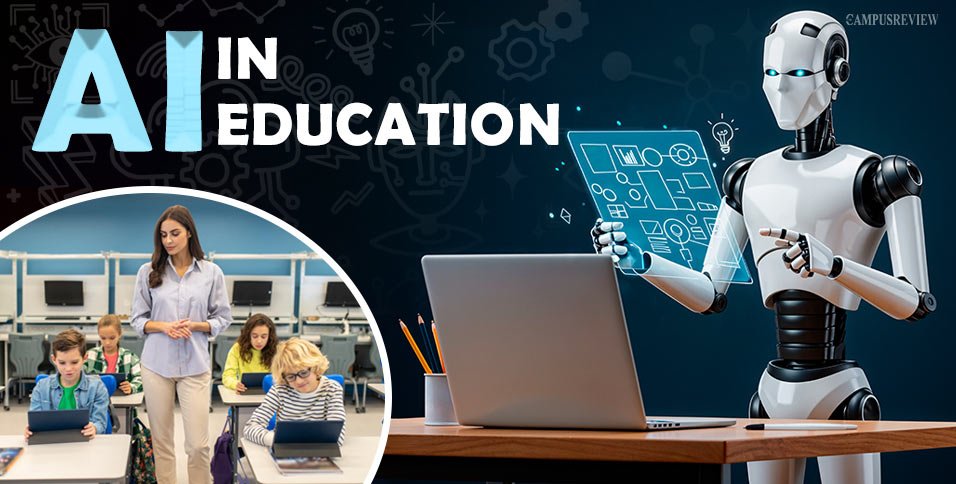
A teacher sits down to prepare tomorrow’s lesson. There is a chapter to cover, questions to prepare, activities to organise, and a classroom full of students who may not all learn in the same way.
Then comes a tempting thought: Could AI make some of this easier?
Perhaps it could suggest a lesson plan, create discussion questions, explain a difficult concept in simpler language, or prepare a quick classroom quiz. Within seconds, the teacher has something to work with.
But another set of questions follows.
- Is the information accurate?
- Is the material appropriate for the students?
- Does it fit the curriculum?
- What needs to be checked or changed before it reaches the classroom?
As AI becomes easier to access, these questions are becoming part of the teaching conversation. Teachers are beginning to experiment with AI in education by preparing lessons and other everyday tasks, while schools are considering how these tools can fit into existing educational practices.
Yet one part of the conversation deserves just as much attention: who is helping teachers understand how to use AI well?
AI Is Becoming Part of Classroom Preparation
Teaching involves much more than standing in front of a class. Lesson planning, preparing questions, creating activities, reviewing material, and handling other responsibilities all require time. AI can help with some of these tasks by providing ideas or creating a first draft that a teacher can work from.
Imagine a science teacher preparing a Grade 6 lesson on the solar system. Instead of starting with a blank page, she asks an AI tool for a few classroom activities and discussion questions. The tool produces several suggestions almost immediately, giving her material to consider rather than requiring her to create everything from scratch.
That does not mean the lesson is finished. The teacher still has to look at the suggestions and decide what works for her students. One activity may be too difficult, another may not fit the time available, and a question may need to be rewritten in simpler language.
“The AI provides ideas, but the teacher provides the context.”
That distinction matters when AI can produce polished-looking material so quickly. A response may appear ready to use, but the teacher is still the person who understands the classroom, the curriculum, and the student needs.
Teachers Need Guidance, Not Just Access
Giving teachers access to an AI tool is only the first step. Knowing when to use it, how to use it, and how to evaluate its output is more important. A teacher may know how to ask AI to create a quiz but still be unsure whether the questions are suitable for the age group. Another may generate a lesson plan and need to check whether the information actually aligns with the learning objectives.
This is where practical AI guidance for teachers becomes valuable. Teachers do not need to become technology specialists to use AI effectively. They need a working understanding of what the technology can help with, where its limitations lie, and what should be reviewed before its output is used.
That guidance can begin with practical questions:
- What makes a useful prompt?
- How should AI-generated information be checked?
- What student information should not be entered into an AI system?
- How can teachers use AI without allowing it to take over decisions that require professional judgement?
These are not simply technology questions. They are questions about teaching and the judgement that comes with it.
A Better Prompt Can Change the Starting Point
One of the simplest ways to make AI more useful is to be specific about what is needed.
For instance:
Prompt 1: “Give me a science lesson plan.”
Prompt 2: “Create a Grade 6 lesson plan on ‘The Solar System.’ Include a simple introduction, key concepts, two classroom activities, five practice questions, and a short Q&A section using language suitable for Grade 6 students.”
The second prompt gives the AI more context. It explains the subject, level, topic, structure, and audience, making it more likely to produce a response suited to the teacher’s requirements.
But a detailed prompt does not guarantee that every part of the response is accurate or appropriate. The teacher still needs to read the material, check the information, make changes, and decide what belongs in the lesson.
A good prompt can lead to a better response, but it does not replace the teacher’s judgement. What AI produces still needs to be checked, adapted, and evaluated before it enters the classroom.
The Teacher Still Sets the Direction
AI can produce a lesson outline, generate questions, and suggest activities. But teaching is not simply a process of producing educational material.
A teacher may notice that a student is confused even when the student has not said anything. They may realise that an explanation is not working and change it halfway through a lesson. They may decide to drop a planned activity because the class needs more time with the basic concept.
These decisions come from knowing the students and understanding the classroom. They involve observation, experience, communication, and judgement, all of which shape how a lesson develops in real time.
This is where AI has a clear limitation. It can work with the information provided to it, but it does not experience the classroom. The teacher remains responsible for deciding what is relevant, what needs to change, and what is appropriate for the students.
The technology can support the process. It should not determine the direction.
Preparing Teachers for an AI-Aware Classroom
If AI is becoming part of education, teachers need opportunities to understand it in practical terms. Rather than simply introducing another digital platform, schools could allow teachers to experiment with familiar classroom tasks and observe how AI performs in real-world settings.
A teacher might use AI to create a lesson outline, examine the response, identify what needs correcting, and adapt it for a particular group of students. Through this process, teachers can become familiar with both the possibilities and the limitations of the technology.
From Using AI to Understanding It
The education conversation does not need to become a race to put AI in education activities.
Teachers need the freedom to experiment with it, question its output, adapt what it produces, and decide when a different approach is better.
A teacher might find AI useful for brainstorming ideas but prefer to prepare the final lesson independently. An AI-generated quiz might save time on preparation, while a classroom discussion may be better handled without technology. Sometimes, the most appropriate decision may simply be not to use AI.
That kind of decision-making requires more than access to technology. It requires understanding.
As AI tools continue to change, teachers will encounter new possibilities and new limitations. Some AI tools may genuinely make preparation easier, while others may create more work than they save. Helping teachers recognise that difference is an important part of preparing them for an AI-aware education environment.
AI Can Assist the Teacher. The Teacher Still Guides the Classroom.
The most useful conversation about AI in education may not be about whether it can replace teachers. It is about whether teachers are being given enough guidance to decide where it belongs.
AI can help a teacher move from a blank page to a first idea. It can suggest questions, organise information, or offer a different way of explaining a topic. But the teacher decides what is accurate, relevant, suitable, and worth bringing into the classroom.
That may be the balance AI in education needs as it becomes more common. The goal should not be to use AI everywhere, but to understand it well enough to know where it can genuinely contribute.
Because AI may be able to produce an answer in seconds, but the teacher is still the one who decides whether that answer belongs in the classroom.
The Way Forward
AI can make teaching preparation easier, but its value depends on how thoughtfully it is used. Teachers still need to evaluate, adapt, and guide what AI produces based on their students, curriculum, and classroom needs. As AI in education continues to evolve, proper guidance can help teachers understand not only how to use these tools, but also when to question, adapt, or step back from them.
The future of AI in Education is not about replacing the teacher; it is about helping teachers use new tools with confidence, context, and professional judgement. When educators understand both the possibilities and limitations of AI, they can make informed decisions about where the technology genuinely adds value.
As AI continues to reshape education, the conversation must move beyond access to understanding.
Gurushanth S Jatti