The Campus Review
August 17, 2026
Jason Arday, a former University of Cambridge professor, was found unresponsive at a property in Battersea, south London, on August 14, 2026. He was 41 years old. Emergency services pronounced him dead at the scene. The Metropolitan Police stated the death was unexpected but was not being treated as suspicious. The cause of death has not been publicly established.
His death occurred just days after he resigned from the University of Cambridge amid intense public and media scrutiny. His career had followed an unusual path, taking him from significant learning challenges in childhood to a professorship at one of the world’s most prestigious universities. His final weeks have raised urgent questions about academic scrutiny, institutional support, and the pressures facing university staff.
Key Details at a Glance
| Detail | Fact |
| Full Name | Professor Jason Arday |
| Age | 41 |
| Recent Position | Professor of Sociology of Education, University of Cambridge |
| Status | Death treated as unexpected; not considered suspicious |
| Resignation | August 2026, amid public scrutiny |
Jason Arday’s Journey to Cambridge
Arday faced significant learning challenges as a child. University records and biographical accounts noted that he did not speak until age 11 and did not learn to read and write until his late teens.
He later pursued physical education and academic studies before earning a doctorate. He held academic posts at Roehampton, Durham University, and the University of Glasgow before joining the University of Cambridge in 2023.
At age 37, he became the youngest Black professor in the university’s history. His appointment carried wider significance, as Black professors remain notably underrepresented in British higher education.
His Memoir Was Released the Same Week He Died
Arday’s memoir, Great and Unfortunate Things, was released in the United States in the same week as his death. The book recounts his personal journey through education and the obstacles he overcame to build an academic career.
| Period | Milestone |
| Childhood | Faced major learning challenges; did not speak until age 11 |
| Early Career | Worked in education while pursuing academic degrees |
| 2021 | Appointed Professor of Sociology of Education at Glasgow |
| 2023 | Joined Cambridge as Professor of Sociology of Education |
| August 2026 | Resigned from Cambridge; found unresponsive in Battersea |
Why Jason Arday Became an Important Figure
Arday’s research asked why race and representation remained major issues inside UK universities. His work examined the experiences of minority students and staff and the barriers they faced in academic institutions, focusing on:
- Racial inequality: How Black and minority ethnic students experience British higher education.
- Academic representation: Why UK universities employ few Black professors and leaders.
- Mental health: Experiences and mental health support for minority ethnic staff and students in academic settings.
- Curriculum reform: Practical strategies for universities to create inclusive learning environments.
What Happened Before His Death?
Questions about Arday’s academic background intensified in the weeks before his death. Allegations were raised that parts of his 2015 PhD thesis had been plagiarised, which Arday denied. The scrutiny later expanded to other aspects of his academic work, career claims, and personal history, including his charitable and athletic achievements.
Liverpool John Moores University had previously reviewed the plagiarism allegations and upheld its decision to award Arday a PhD. Cambridge initially said it had investigated the claims and found no wrongdoing; it later announced a fresh inquiry after receiving new information about his qualifications and career. Arday’s family subsequently stated that he had faced a sustained campaign of abuse and misinformation following his appointment.
What Did Cambridge Investigate?
The University of Cambridge opened a fresh inquiry into Arday’s appointment and tenure after stating it had received “new information” about his qualifications. An investigation is an institutional review of claims, not a confirmed finding of wrongdoing. Following Arday’s death, Cambridge confirmed that it had paused the inquiry. The university may decide later whether to reopen it.
What Did Jason Arday Say Before Resigning?
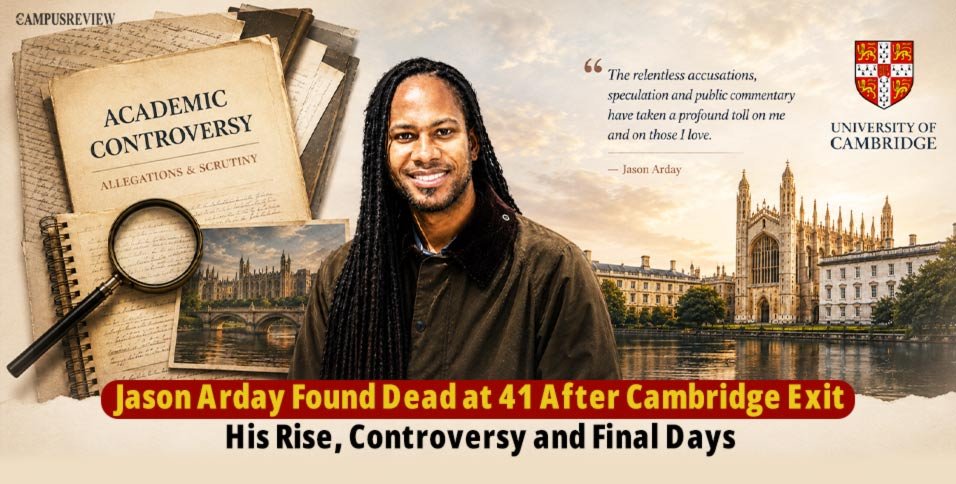
Arday submitted his resignation from Cambridge and Jesus College in early August 2026. In his resignation statement, he noted that the “relentless accusations, speculation, and public commentary” had taken a profound toll on him and his family.
Why Has Jason Arday’s Death Sparked Wider Debate?
Arday’s death has prompted broader debate about media scrutiny, race, academic accountability, and the responsibility universities have toward staff facing intense public criticism.
UK Prime Minister Andy Burnham called the death a “tragedy on so many levels,” urging a “moment for reflection” and cautioning against rushing to judgment. Arday’s family has described the treatment he received as a “campaign of harassment,” a claim that forms part of the wider debate over the scrutiny he faced before his death.
What Support Did Cambridge Say It Provided?
Following Arday’s death, the University of Cambridge defended the support it provided during the period of intense scrutiny. The university stated that support continued after his resignation and included:
- Physical security: The installation of panic alarms at his residence.
- Communication screening: The university said it actively screened and filtered racist or hostile emails and posts.
- Mental-health support: The university said it provided mental health and staff support during the period of scrutiny, including after his resignation.
Jason Arday’s Legacy
Jason Arday’s story cannot be reduced to a single headline. He built an unusual academic career after facing significant learning challenges and became an important figure in discussions about race and representation in UK higher education. His final weeks brought a very different kind of attention. For students, the story offers a reminder that a person’s career can contain both remarkable achievements and difficult chapters.
It also shows why universities need clear systems for academic accountability, staff support, and responding to intense public scrutiny.