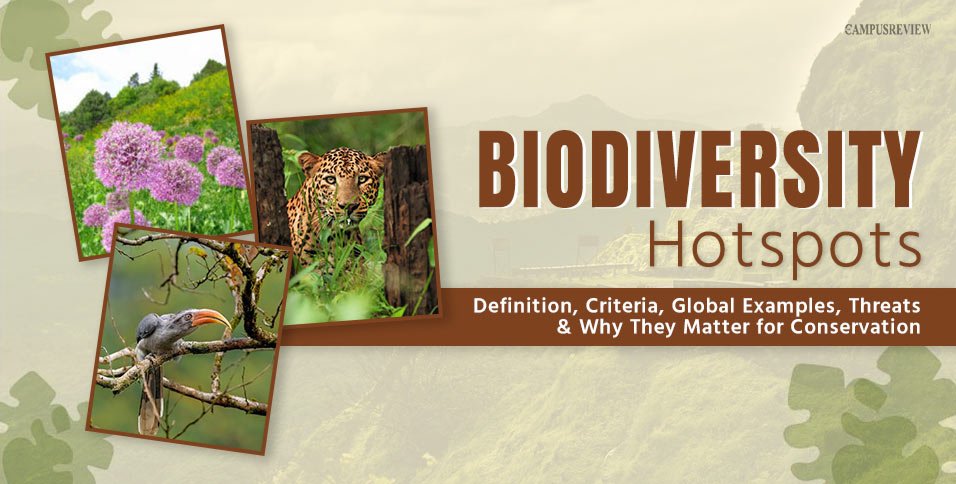
Just 2.5% of Earth’s land contains nearly 60% of the world’s plant, bird, mammal, reptile, and amphibian species. These fragile regions are called biodiversity hotspots.
A biodiversity hotspot has many unique species but has also lost most of its natural habitat. Conservation International recognizes 36 hotspots that need urgent protection.
This guide explains the biodiversity hotspot definition, key criteria, examples, and why these regions matter for conservation.
What Is a Biodiversity Hotspot?
A biodiversity hotspot is a biogeographic region with a very high number of unique species that faces severe habitat destruction. Each word in that definition matters, so let us break it down.
- Biogeographic region: a large area that shares a similar climate history, similar plant communities, and similar wildlife. Hotspots ignore country borders, so many of them cross several nations.
- High concentration of unique species: the region holds species that live naturally nowhere else on Earth.
- Severe threat: farming, logging, mining, and city growth have already destroyed most of the original natural vegetation.
In short, a hotspot is both rich and in danger. That mix makes it a top priority for species conservation.
Where Did the Hotspot Idea Come From?
British ecologist Norman Myers introduced the biodiversity hotspot concept in 1988 to identify areas where conservation efforts could protect the most species. Conservation International adopted the approach in 1989. In 1999 and 2000, Myers and other researchers established stricter criteria and identified 25 hotspots. The number later grew to 36, following the addition of the Forests of East Australia in 2011 and the North American Coastal Plain in 2016.
What Are the Two Criteria for a Biodiversity Hotspot?
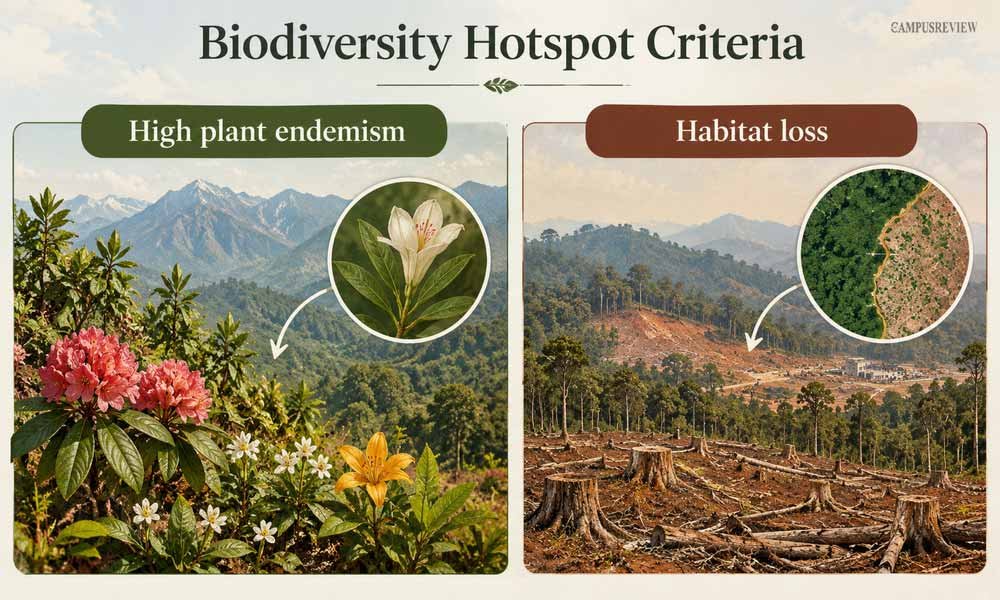
Conservation International uses two strict rules to decide how a biodiversity hotspot is identified. A region must pass both rules. One rule measures how special the plants are. The other measures how much habitat is gone.
| Criterion | Required Threshold | Why It Matters |
| High plant endemism | At least 1,500 endemic vascular plant species, which is more than 0.5 percent of all plant species worldwide | Proves the region holds life that nature cannot replace elsewhere |
| Habitat loss | At least 70 percent of the original natural vegetation lost, so 30 percent or less remains | Shows the region is under real threat right now |
Criterion 1: High Endemism
An endemic species is an organism that lives naturally in one place and nowhere else on Earth. Wild lemurs show this well. They live only on Madagascar. If their forests disappear, the species disappears forever.
Plants set the first rule, and vascular plants are the measuring stick. Vascular plants have tiny tubes called xylem and phloem that move water and food through the plant. Trees, shrubs, flowering plants, and ferns all count. Mosses do not.
Why do scientists count plants and not animals? There are three reasons.
- Plants form the base of the food web. They make oxygen, build soil, and feed and shelter insects, birds, and mammals.
- Scientists hold better data on plants than on tiny animals such as insects or soil fungi.
- A region with many unique plants almost always holds many unique animals too.
Criterion 2: Habitat Loss
Natural vegetation is native forest, grassland, scrubland, or wetland that develops with little human disturbance over long periods. These habitats form different types of ecosystems, each supporting its own plants, animals, and environmental conditions. Habitat loss occurs when human activities such as farming, logging, mining, and urban development destroy or replace natural vegetation.
Why is habitat loss a hotspot criterion?
It measures danger. A pristine rainforest can hold thousands of unique plants, but if nobody threatens it, it does not need emergency action. Scientists place such intact areas in a separate group called High-Biodiversity Wilderness Areas. The hotspot label is for regions where unique species face a real extinction risk now.
How Many Biodiversity Hotspots Are There?
The world has 36 biodiversity hotspots. Together, they cover only 2.5 percent of Earth’s land surface. Even so, Conservation International reports that they hold over half of the world’s plant species as endemic. They also hold nearly 43 percent of the endemic bird, mammal, reptile, and amphibian species.
This count includes two later additions, so older textbooks may list fewer hotspots.
Where Are Biodiversity Hotspots Found?
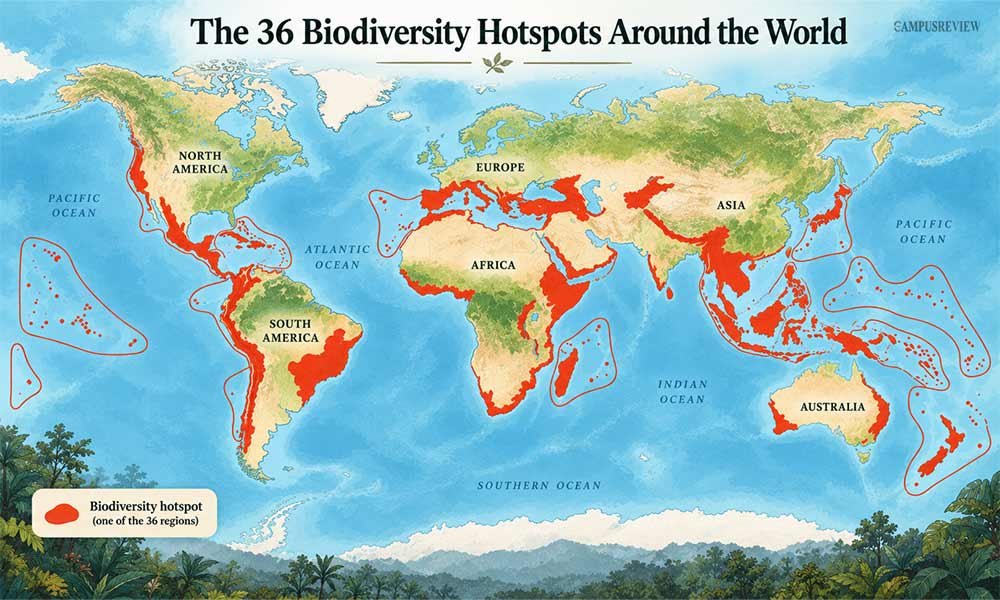
Hotspots appear on every continent except Antarctica. Tropical regions hold the most because warm weather, steady sunlight, and plenty of rain help new species form. Still, hotspots also exist in temperate zones, Mediterranean shrublands, and coastal plains. Here are the global biodiversity hotspots, grouped by world region.
- North and Central America: California Floristic Province, Madrean Pine-Oak Woodlands, Mesoamerica, and North American Coastal Plain.
- The Caribbean: The Caribbean Islands hotspot, with rare reptiles, plants, and birds.
- South America: Tropical Andes, Atlantic Forest, Cerrado, Chilean Winter Rainfall-Valdivian Forests, and Tumbes-Chocó-Magdalena.
- Africa: Cape Floristic Region, Succulent Karoo, Madagascar and the Indian Ocean Islands, Guinean Forests of West Africa, and Eastern Afromontane.
- Europe and Central Asia: Mediterranean Basin and Mountains of Central Asia.
- Asia-Pacific: Western Ghats, Indo-Burma, Sundaland, Wallacea, the Philippines, New Caledonia, and Southwestern Australia, among others.
Threats to Biodiversity Hotspots
Biodiversity hotspots face several threats that can push unique species toward extinction:
- Habitat destruction: Farming, logging, mining, and urban growth replace natural habitats.
- Climate change: Rising temperatures, droughts, wildfires, and changing rainfall patterns make survival harder.
- Overexploitation: Hunting, fishing, and illegal wildlife trade reduce vulnerable populations.
- Invasive species: Non-native species can compete with or prey on native species.
- Pollution: Chemicals, plastic, and wastewater can damage ecosystems and wildlife.
Because hotspot species often have small ranges, losing even a limited area of habitat can have serious consequences.
Examples of Biodiversity Hotspots
These six biodiversity hotspot regions show how different hotspots can look.
| Hotspot | Location | Iconic Species | Main Threat |
| Himalaya | Nepal, Bhutan, and parts of India, Pakistan, China, and Myanmar | Snow leopard, red panda | Forest clearing, overgrazing, climate change |
| Indo-Burma | Mainland Southeast Asia | Saola, Eld’s deer, giant ibis | Commercial farming, dams, wire snares |
| Western Ghats and Sri Lanka | Southwestern India and Sri Lanka | Lion-tailed macaque, Nilgiri tahr | Plantations, dams, urban growth |
| Madagascar | East African coast | Ring-tailed lemur, indri, aye-aye, baobab | Slash-and-burn farming, charcoal |
| Tropical Andes | Venezuela to Bolivia | Spectacled bear, Andean condor | Agriculture, mining, highways |
| Mediterranean Basin | Lands around the Mediterranean Sea | Iberian lynx, Barbary macaque | Urban growth, wildfires |
Standouts: Indo-Burma keeps only about 5 percent of its original vegetation, and the saola, nicknamed the “Asian unicorn,” survives there.
The Tropical Andes hold more than 15,000 endemic plant species. Madagascar split from other land long ago, so its wildlife evolved alone. India holds parts of four hotspots, including the Himalaya, Indo-Burma, and the Western Ghats.
Why Are Biodiversity Hotspots Important?
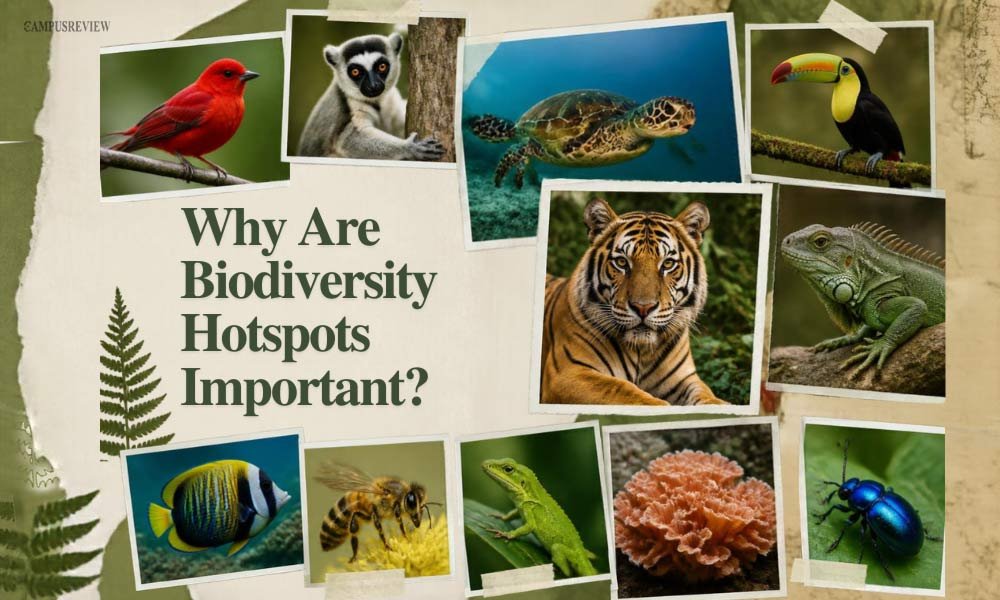
Biodiversity hotspots matter because they protect the most unique life on Earth and the services that people need to live. Here are six clear reasons.
1. They Protect Species Found Nowhere Else
Endemic species cannot live anywhere else. When a hotspot loses habitat, the world loses those species for good. Protecting a small area saves a large share of global species diversity.
2. They Supply Clean Water, Air, and Soil
Healthy forests catch rain, filter water, and release it slowly into rivers. Roots hold soil on steep slopes. Billions of people downstream rely on this free service.
3. They Help Control Climate
Intact forest canopies absorb carbon dioxide and release water vapor. This process cools the air and keeps local rainfall steady. The United Nations calls biodiversity one of our strongest natural defenses against climate change.
4. They Hold Natural Medicines
Many modern drugs come from plant chemicals. The rosy periwinkle grows naturally in Madagascar. It gives us vinblastine and vincristine, two drugs that doctors use to treat childhood leukemia and Hodgkin lymphoma. Each lost plant could mean a lost cure.
5. They Protect the Future of Our Food
Wild relatives of coffee, cocoa, maize, and potatoes grow in these fragmented habitats. Plant breeders use their genetic diversity to develop crops that can better handle heat, drought, and disease.
6. They Support Jobs and Give the Best Return on Conservation Money
Donors cannot fix every problem at once. Hotspots show them where each dollar saves the most species. The UN also notes that over half of global economic output depends on healthy nature. Local families who earn income from ecotourism and sustainable farming then become the strongest guardians of their forests.
How Does Climate Change Threaten Biodiversity Hotspots?
Climate change adds a second wave of pressure on top of habitat loss. Warmer temperatures change where species can live, when they breed, and whether they survive.
- Extinction risk: The Intergovernmental Panel on Climate Change (IPCC) warned that 20 to 30 percent of assessed species face a higher risk of extinction if global temperatures rise by 1.5 to 2.5 degrees Celsius. One study on hotspot endemics projects that severe warming could push up to 43 percent of them toward extinction.
- Range shifts: Plants and animals move uphill or toward the poles to find cooler homes. Farms, roads, and cities block their path. Mountain species climb until they reach the peak and have nowhere left to go.
- Timing mismatch: Scientists call the timing of seasonal events phenology. Warm springs can make flowers bloom before their insect pollinators hatch. Both groups then suffer.
- Fire and heat: Long droughts fuel wildfires in Mediterranean and temperate shrublands. Slow animals such as reptiles and amphibians often cannot escape.
Habitat corridors help here. A corridor is a strip of protected land that links two habitat patches. It lets wildlife move, breed, and adapt without getting trapped.
How Do Biodiversity Hotspots Help Conservation?
The hotspot model gives conservation a clear plan. It tells donors, governments, and communities where to act first. Biodiversity hotspot conservation works through five main actions.
- Habitat protection: Groups buy, manage, or guard key forests, wetlands, and grasslands before bulldozers arrive.
- Endangered species conservation: Teams track rare animals, stop poaching, and breed threatened species when needed.
- Protected areas: Governments use hotspot maps to set up national parks, reserves, and conservation areas. They also regulate mining and timber leases nearby.
- Restoration of degraded habitats: Workers replant native trees and rebuild damaged land. They also link forest patches with wildlife corridors.
- Preventing further habitat loss: Communities and companies shift to sustainable farming and forestry, so new land does not fall to the plow.
Local and Indigenous communities sit at the center of this work. When families earn a fair living from intact forests, they protect them. CEPF funds community forestry and ecotourism for this reason.
How Can You Learn More or Take Action?
You do not need a science degree to start. Try these steps.
- Open the CEPF hotspot map and find the hotspot nearest to you.
- Explore Global Forest Watch and view forest loss in your own country.
- Record local plants and animals on a citizen science app such as iNaturalist.
Final Thoughts
Biodiversity hotspots are regions rich in unique species but under severe threat from habitat loss. To qualify, a region must have at least 1,500 endemic vascular plant species and have lost at least 70% of its original natural vegetation. Protecting these areas means conserving habitats, reducing further loss, and helping species adapt to changing conditions.
Pranjal Kharche
FAQs
1. What is the difference between a biodiversity hotspot and a biodiversity-rich area?
A biodiversity hotspot is both rich in unique species and severely threatened by habitat loss, while a biodiversity-rich area may not face the same level of habitat destruction.
2. Can a biodiversity hotspot recover after losing most of its natural vegetation?
Yes. Habitat restoration, native tree planting, protected areas, and wildlife corridors can help damaged ecosystems recover.
3. How can local communities help protect biodiversity hotspots?
Local communities can protect habitats through sustainable farming, responsible forestry, ecotourism, wildlife monitoring, and preventing illegal hunting.