THE CAMPUS REVIEW
22 JULY 2026,
On July 17, 2026, a three-judge panel of the U.S. Court of Appeals for the Ninth Circuit unanimously rejected the U.S. Department of Education’s attempt to extend key decision deadlines.
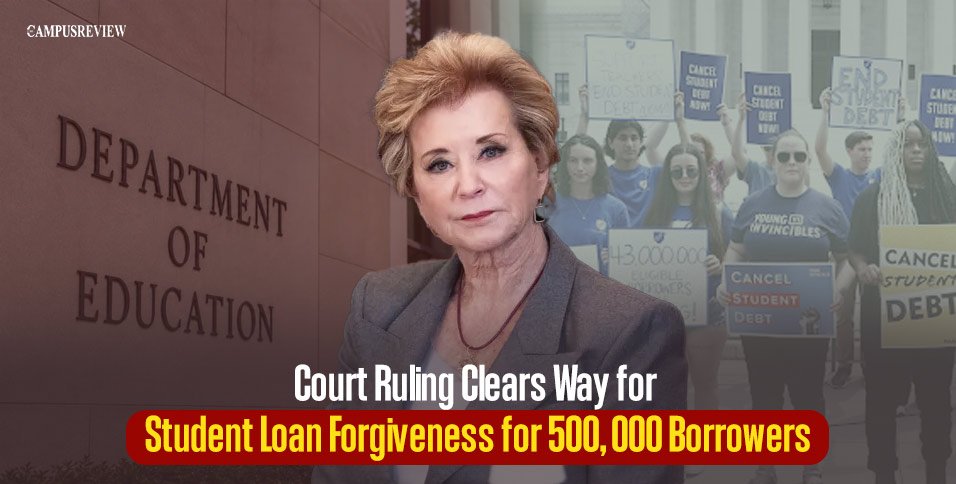
The ruling upholds strict enforcement of the landmark Sweet v. McMahon borrower defense settlement, which provides student loan forgiveness for 500,000 borrowers overall across the nation.
By dismissing the government’s request for additional time, the decision ensures that over 170,000 “post-class” applicants receive full settlement relief after the Department missed its court-mandated adjudication deadlines.
In total, the underlying settlement agreement secures at least $23 billion in federal student loan debt cancellation for defrauded students.
The Ninth Circuit Ruling at a Glance
Here is a breakdown of the court ruling and its legal framework:
| Category | Legal Details & Case Facts |
| Case Name | Sweet v. McMahon (formerly Sweet v. Cardona) |
| Court Authority | U.S. Court of Appeals for the Ninth Circuit |
| Total Impacted Borrowers | 500,000+ federal student loan borrowers overall |
| Total Settlement Value | $23 Billion+ in federal student debt relief |
| Primary Issue | Department of Education’s request to delay post-class decision deadlines |
| Outcome | Extension request denied; court-ordered deadlines enforced |
Understanding the Legal Background: A Quick Breakdown for Students
If all the legal terms like “Ninth Circuit Appeals,” “Rule 60(b),” and “Post-Class Applicants” sound confusing, here is what is actually happening:
- The Root Problem: Thousands of students took out federal loans for career colleges that lied about job placement rates, salaries, and program value. Federal law says if a school scams you, your federal loans should be canceled (a rule called Borrower Defense).
- The 2022 Agreement: The government ignored these claims for years, leading students to file the Sweet v. McMahon lawsuit. The government settled the suit in 2022, agreeing to process applications by strict 2026 deadlines or automatically grant full debt relief.
- The Missed Deadlines: When early 2026 arrived, the Department of Education missed those deadlines for over 170,000 late applicants and asked the courts for an 18-month extension.
- The July 17 Court Ruling: A federal appeals court rejected the extension, ruling that the government must stick to its original agreement.
Why the Court Rejected the Education Department’s Extension Request
The Department of Education sought to modify the settlement terms to extend its deadline for evaluating post-class borrower defense to repayment claims, citing the heavy volume of applications received in late 2022.
However, the Ninth Circuit panel concluded that the government failed to show the required changed circumstances under Federal Rule of Civil Procedure 60(b). The court noted that officials were aware of the post-class volume when signing the original settlement agreement and could not justify evading those obligations.
“Once again, the courts have rejected the Department’s attempts to evade its obligations to borrowers who have waited far too long for the relief they are owed.“
- Eileen Connor, President and Executive Director of the Project on Predatory Student Lending
Because the Department missed its required deadlines (January 28, 2026, for Exhibit C schools and April 15, 2026, for non-Exhibit C schools), eligible post-class applicants are entitled to full settlement relief under the terms of the agreement.
How Borrower Defense to Repayment Supports Student Loan Forgiveness for 500,000 Borrowers
The core mechanism behind this court-ordered student loan forgiveness is the federal borrower defense rule.
This rule allows federal student loan discharge when a school misleads students or violates state law regarding job placements, credit transfers, program costs, or other education-related expenses, including those associated with study abroad.
Borrower submits a defense claim → Education Department misses the decision deadline → Ninth Circuit enforces the agreement → Eligible borrower receives settlement relief
Who Receives Settlement Relief?
The Sweet v. McMahon class structure divides impacted individuals into two groups:
- Class Members: Borrowers who submitted borrower defense applications on or before June 22, 2022.
- Post-Class Applicants: Borrowers who submitted claims between June 23, 2022, and November 15, 2022. Because the Department failed to issue decisions by the court-ordered deadlines, eligible post-class applicants trigger full settlement relief under the agreement.
What Full Settlement Relief Includes for Eligible Borrowers
For borrowers qualifying for full student loan settlement relief under the court order, the settlement agreement mandates comprehensive financial updates from federal loan servicers:
| Relief Component | Action Required by Federal Settlement |
| Loan Balance Reset | Direct and FFEL federal loans tied to the claim are reduced to a zero balance. |
| Payment Reimbursements | Direct cash refunds are issued for payments previously made on those specific loans. |
| Credit Record Cleanup | Negative credit reporting trade lines tied to the discharged loans are removed. |
Next Steps for Post-Class Applicants
The Ninth Circuit decision about student loan forgiveness for 500,000 borrowers reinforces the implementation timeline for notifications and relief delivery.
The ruling comes as the U.S. student loan system undergoes other major changes in 2026, including new repayment options and interest rate reduction.
- Eligibility Notifications: Exhibit C post-class applicants received confirmation emails from noreply@studentaid.gov around March 30, 2026. Non-Exhibit C post-class applicants received their notices by June 15, 2026.
- Servicer Account Processing: Loan servicers process accounts in administrative forbearance while adjusting balances and calculating refunds.
- One-Year Delivery Window: Under settlement rules, loan servicers must deliver total loan discharge, refunds, and credit updates within one year from the date of each borrower’s relief notice.