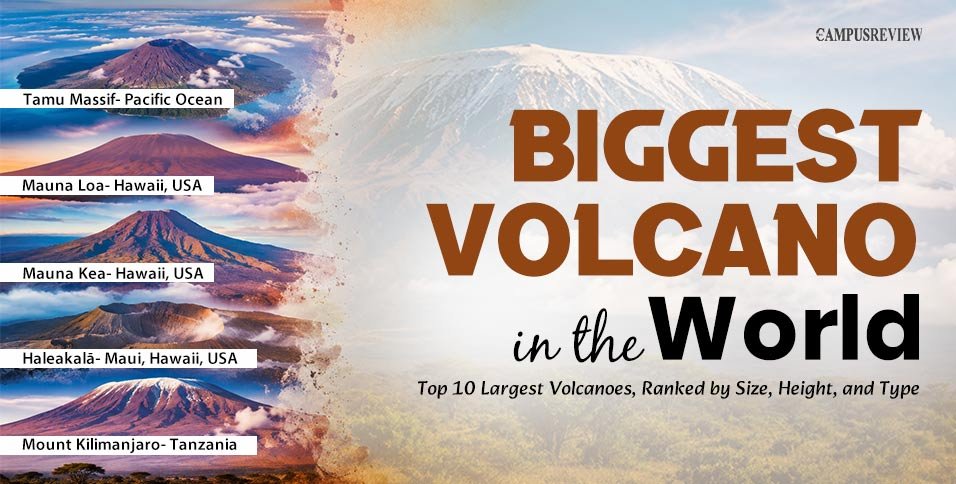
The Biggest Volcano in the World can be identified in different ways depending on how scientists measure its size. Some volcanoes stand thousands of meters above sea level, while others remain hidden beneath the ocean. Scientists can compare volcanoes by their height, area, volume, or overall structure.
From massive shield volcanoes to enormous underwater volcanic formations, the world is home to some extraordinary geological giants. This guide explores the top 10 biggest volcanoes in the world, including their locations, size, type, and the features that make each one unique.
What Is the Biggest Volcano in the World?
The biggest volcano in the world by footprint is Tamu Massif, an extinct volcano located beneath the Pacific Ocean. It covers one of the largest areas ever attributed to a single volcano on Earth. Scientists believe Tamu Massif has been inactive for millions of years, meaning it poses no current eruption threat.
If you only count volcanoes that are still active, the answer changes. Mauna Loa in Hawaii is the biggest active volcano in the world. The United States Geological Survey (USGS) confirms this.
Here are its quick facts:
| Fact | Detail |
| Location | Hawaii, United States |
| Height | 4,169-4,170 m above sea level |
| Type | Shield volcano |
| Volume | At least 75,000 km³ |
| Surface area | About 5,100 km² |
| Most recent eruption | 2022 |
Mauna Loa builds itself the way all shield volcanoes do. Thin, runny lava flows spread out layer after layer over thousands of years. This creates a wide, gently sloped mountain instead of a tall, steep cone. Mauna Loa sits next to its taller neighbour, Mauna Kea, and together they make up most of Hawaii’s Big Island.
Top 10 Biggest Volcanoes in the World
The list below ranks volcanoes by overall size and geological scale, mixing active, dormant, and extinct volcanoes. Here is a quick-reference table, followed by a short explanation for each one.
| Rank | Volcano | Location | Key Stat |
| 1 | Tamu Massif | Pacific Ocean (near Japan) | 310,800 km² footprint |
| 2 | Mauna Loa | Hawaii, USA | 75,000+ km³ volume |
| 3 | Mauna Kea | Hawaii, USA | 10,200+ m base to summit |
| 4 | Haleakalā | Maui, Hawaii, USA | 30,000 km³ volume |
| 5 | Mount Kilimanjaro | Tanzania | 5,895 m elevation |
| 6 | Mount Etna | Sicily, Italy | 3,357 m elevation |
| 7 | Mount Elbrus | Russia (Caucasus) | 5,642 m elevation |
| 8 | Mount Fuji | Japan | 3,776 m elevation |
| 9 | Mount Rainier | Washington, USA | 4,390 m elevation |
| 10 | Popocatépetl | Mexico | 5,393 m elevation |
1. Tamu Massif
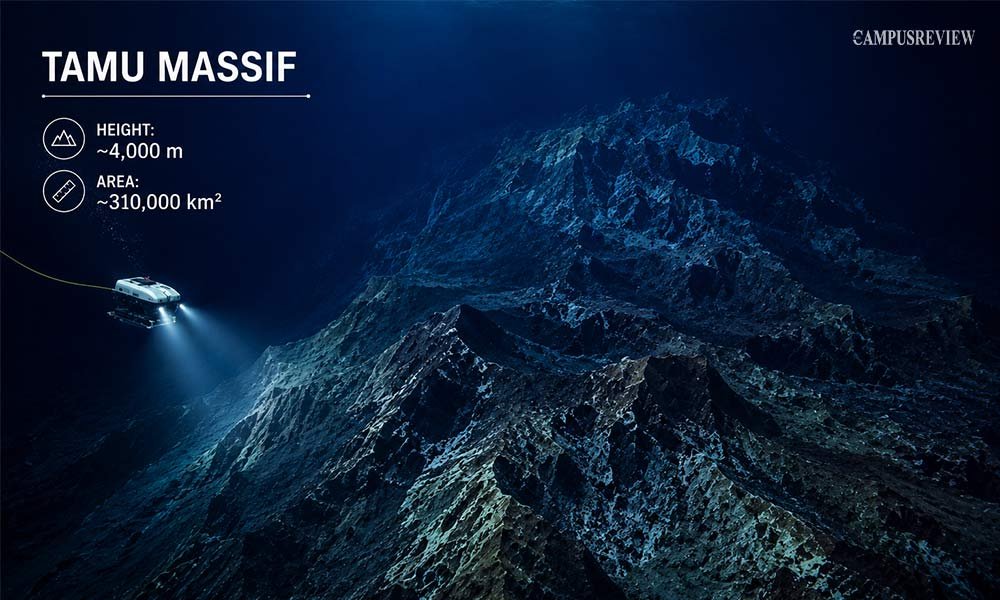
Tamu Massif ranks first by sheer footprint. It sits about two kilometres below the Pacific Ocean surface, part of the Shatsky Rise. Its dome-shaped body spans 450 by 650 km, over 50 times bigger than Mauna Loa. It formed from lava that poured out where three tectonic plate ridges met, about 145 million years ago. Scientists once debated whether it was one volcano or several joined together.
A 2013 study led by geophysicist William Sager settled the question, calling it the biggest single shield volcano ever found on Earth. It has been extinct for millions of years, so it poses no eruption risk today, and it remains about a quarter the size of Olympus Mons, the largest volcano in the solar system, found on Mars.
2. Mauna Loa
Mauna Loa ranks first among active volcanoes. It holds more lava rock by volume than any other volcano that still erupts. Its last eruption happened in 2022, sending lava flows toward Hilo before the activity stopped after about two weeks. USGS monitors it closely because it sits near populated parts of Hawaii’s Big Island.
Mauna Loa means ‘Long Mountain’ in Hawaiian, a fitting name for its broad, sloping shape. It shares the island with Kīlauea, one of the world’s most frequently erupting volcanoes, and together the two make Hawaii’s Big Island one of the most closely watched volcanic regions on Earth. Visitors can explore both from Hawaii Volcanoes National Park, a UNESCO World Heritage Site.
3. Mauna Kea
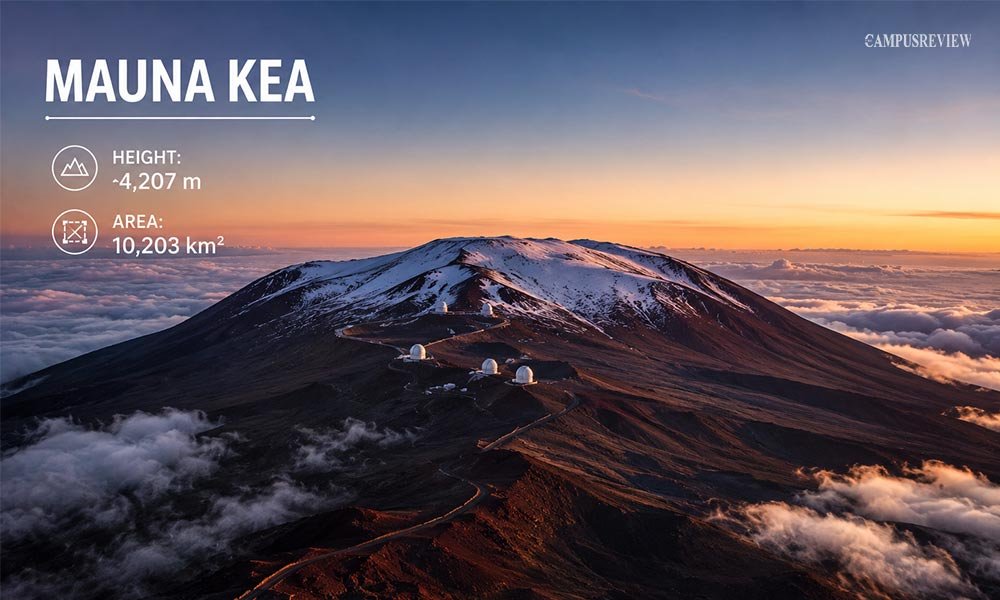
Mauna Kea stands right next to Mauna Loa, and it wins a different record. Measured from its base on the ocean floor to its summit, it stands over 10,200 meters tall, taller than Mount Everest. Above sea level, it only reaches 4,207 meters. It is dormant, with its last eruption dated to roughly 4,500 to 6,000 years ago.
Its name means ‘White Mountain’ in Hawaiian, a nod to the snow that caps its summit in winter. Because the peak sits above most of Earth’s atmosphere and away from city lights, it hosts several of the world’s leading astronomical observatories. The mountain also holds deep cultural and spiritual significance for Native Hawaiians.
4. Haleakalā
Haleakalā forms more than 75 percent of the island of Maui. It is a shield volcano with a volume of about 30,000 km³, though 97 percent of that sits below the ocean surface. Its last eruption happened sometime between 1480 and 1600. Its summit crater draws visitors who come to watch the sunrise from Haleakalā National Park, a spectacle that has drawn writers and travelers for well over a century.
The ‘crater’ is technically not a volcanic crater at all. Geologists say it formed mostly through erosion, as two valleys slowly merged into one giant depression. The rare silversword plant grows only near this summit, nowhere else on Earth.
5. Mount Kilimanjaro
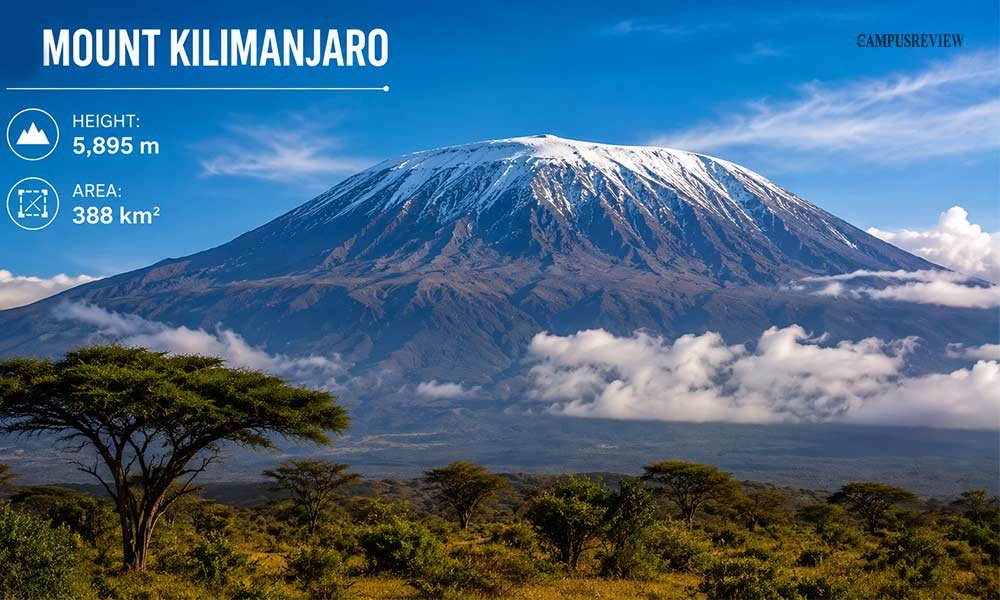
Kilimanjaro is Africa’s highest mountain and the world’s tallest free-standing volcano, meaning it does not belong to a mountain range. It consists of three cones: Kibo, Mawenzi, and Shira. Kibo, the tallest, last erupted between 150,000 and 200,000 years ago, so the volcano is considered dormant.
Its snowcapped peak makes it one of the most recognized volcanoes in the world, though its glaciers have shrunk sharply over the last century due to rising temperatures. Hans Meyer and Ludwig Purtscheller made the first recorded ascent in 1889. Today, Kilimanjaro is part of the Seven Summits challenge and draws tens of thousands of climbers every year, most of whom need no technical climbing gear to reach the top.
6. Mount Etna
Etna is Europe’s tallest active volcano, currently standing at about 3,357 meters. Its height changes often because it erupts so frequently, sometimes several times a year, adding or removing material from its summit cones. It sits in eastern Sicily, Italy, and is a UNESCO World Heritage Site. Records of its eruptions go back over 2,500 years, making it one of the most closely documented volcanoes on Earth.
Scientists monitor it constantly because of its unpredictable, frequent activity, though most eruptions are effusive rather than explosive, which keeps the risk to nearby towns relatively low. Etna’s fertile volcanic soil also supports vineyards and orchards on its lower slopes.
7. Mount Elbrus
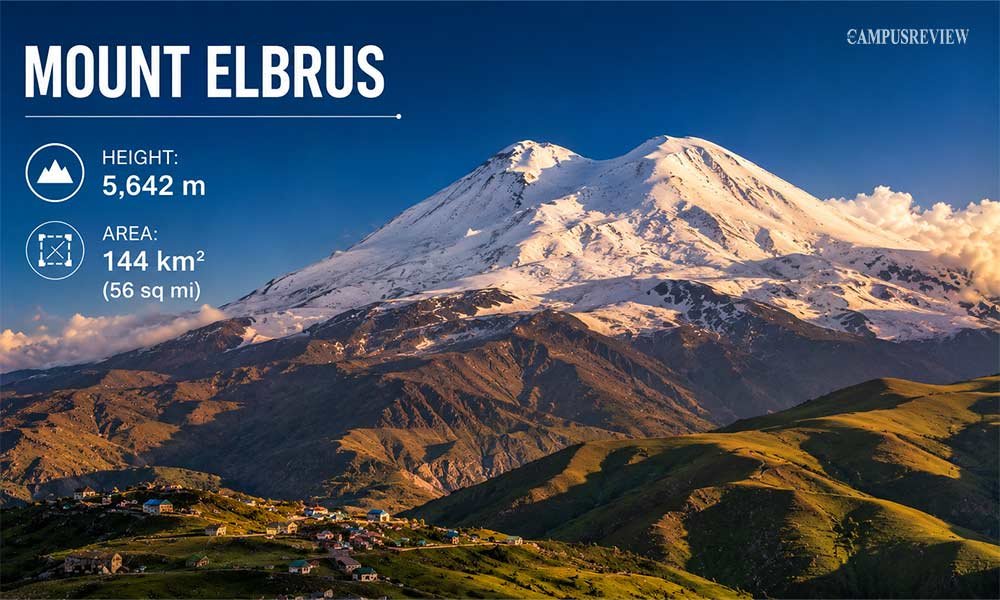
Elbrus is the tallest peak in Europe, sitting in Russia’s Caucasus Mountains at 5,642 meters. It is a dormant stratovolcano with two summits and a crater that has filled with snow and ice over time. Its last known eruption happened around 50 AD. Its glaciers feed several rivers in the region, including the Kuban and Malka, which supply water to nearby communities.
Elbrus is part of the Seven Summits and Volcanic Seven Summits lists, drawing mountaineers from around the world each year. The mountain sits almost exactly on the geological boundary between Europe and Asia, adding to its symbolic status as a natural landmark.
8. Mount Fuji
Fuji is Japan’s tallest mountain and its most iconic volcano, standing at 3,776 meters. Its symmetrical cone shape makes it one of the most photographed mountains in the world. It last erupted in 1707, but geologists still classify it as active. It sits about 100 km from Tokyo and is a UNESCO World Heritage Site, visible from the city on clear days.
Fuji’s crater spans roughly 780 meters across at the summit, and its base stretches about 40 to 50 km wide. The mountain holds deep cultural meaning in Japan, appearing in centuries of art, literature, and even on Japanese currency, and thousands of climbers scale it every summer.
9. Mount Rainier
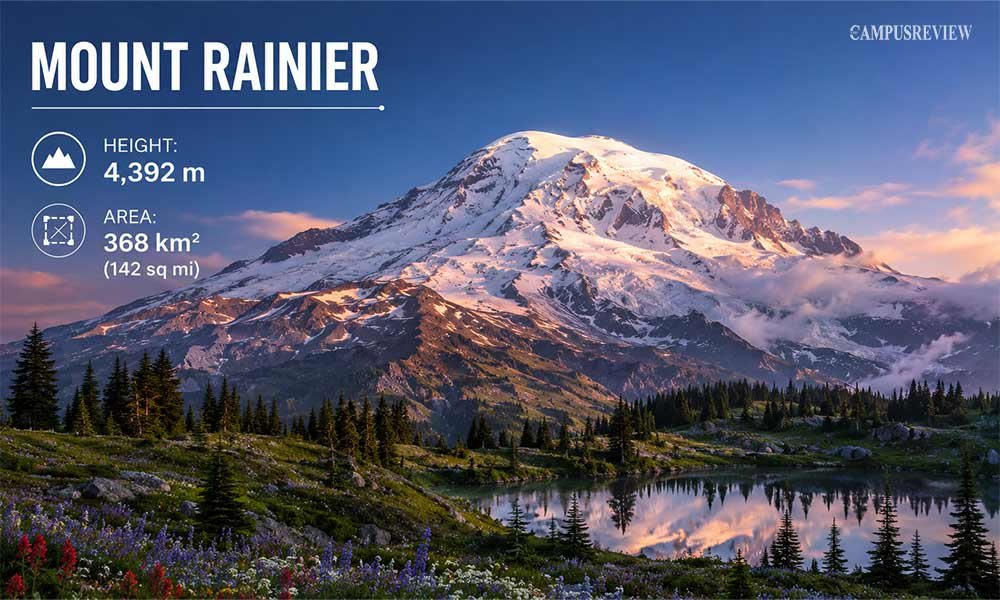
Rainier is the tallest volcano in the Cascade Range at 4,390 meters. It sits close to the Seattle metropolitan area, which makes it one of the most closely watched volcanoes in the world. It holds Decade Volcano status, a label given to volcanoes with high eruption risk near dense populations.
Its last major eruption occurred around 1450, but its real danger lies less in lava and more in lahars, fast-moving mudflows made of melted glacier ice and volcanic debris that could reach nearby valleys quickly. Rainier carries more glacier ice than any other single mountain in the contiguous United States, and it sits at the center of Mount Rainier National Park.
10. Popocatépetl
Popocatépetl’s name means ‘smoking mountain’ in Nahuatl, and it lives up to that name. Standing at 5,393 meters, it is Mexico’s second-highest peak, just behind Pico de Orizaba. It sits only 70 km from Mexico City, so authorities monitor it around the clock. It has erupted as recently as 2024, making it one of the most active volcanoes on this list.
Its current eruptive phase began back in 1994 and continues today, marked by regular ash emissions, minor explosions, and glowing rock at the crater. It stands beside its twin volcano, Iztaccíhuatl, and the two are linked by a high mountain pass called Paso de Cortés.
What Is the Highest Volcano in the World?
The highest volcano in the world is Nevados Ojos del Salado, standing at 6,879 meters according to the Smithsonian Global Volcanism Program (other sources place it as high as 6,893 meters). It sits on the border between Chile and Argentina. Being the highest is different from being the biggest.
Ojos del Salado rises only about 2,000 meters above its own base, while Mauna Loa rises nearly 9,000 meters above the ocean floor. Ojos del Salado just happens to sit on a very high plateau in the Andes, so its summit reaches farther above sea level.
Ojos del Salado is a stratovolcano with active fumaroles near its summit, though it has not had a confirmed eruption since around 750 CE. It also holds the record for the world’s highest lake, a crater lake sitting at about 6,390 meters.
Biggest Active Volcanoes in the World
An active volcano is one that has erupted recently or shows signs it could erupt again. Here are some of the biggest active volcanoes on Earth today:
| Volcano | Location | Why It Stands Out |
| Mauna Loa | Hawaii, USA | Biggest active volcano by volume |
| Kīlauea | Hawaii, USA | One of the world’s most frequently erupting volcanoes |
| Mount Etna | Sicily, Italy | Europe’s biggest active volcano |
| Popocatépetl | Mexico | Active near a major capital city |
| Ojos del Salado | Chile-Argentina | World’s highest active volcano |
| Barren Island | India (Andaman Sea) | India’s only confirmed active volcano |
Barren Island deserves a special mention. It is the only confirmed active volcano in India, rising 354 meters above the Andaman Sea from a base that sits about 2,250 meters below the water. It has erupted several times since 1991 and remains uninhabited due to its ongoing activity.
Biggest Volcano Eruption in the World
Volcano size and eruption size are two different things. A volcano can be huge but erupt gently, while a smaller volcano can produce a massive, destructive blast. There are a few ways to measure the ‘biggest’ eruption:
- Largest volume of material ejected
- Highest score on the Volcanic Explosivity Index (VEI)
- Greatest area affected by ash or lava
- Most powerful explosive blast
The biggest eruption in recorded human history happened at Mount Tambora in Indonesia in 1815. It ejected about 150 cubic kilometres of ash and rock, scored a VEI of 7, and dropped the mountain’s height from about 4,300 meters to roughly 2,850 meters. The eruption killed over 70,000 people directly and through the famine that followed. It also cooled global temperatures enough to cause the ‘Year Without a Summer’ in 1816.
Going further back, prehistoric eruptions dwarf even Tambora. Yellowstone’s Huckleberry Ridge eruption, about 2.1 million years ago, released around 2,450 cubic kilometres of material, a VEI 8 ‘super-eruption’. Yellowstone sits above a supervolcano system with a caldera measuring roughly 45 by 75 km. No VEI 8 eruption has happened anywhere on Earth in the last 10,000 years.
Final Thoughts
The ‘biggest volcano in the world’ does not have one single answer. Tamu Massif wins on footprint. Mauna Loa wins among active volcanoes. Ojos del Salado wins on height. Each record tells a different story about how volcanoes grow, from slow-building shield volcanoes in Hawaii to towering stratovolcanoes in the Andes.
Understanding these differences helps you answer almost any volcano trivia question with confidence and gives you a clearer picture of how much power sits beneath Earth’s surface.
FAQs
1. What is the biggest volcano in Europe?
Mount Etna in Sicily, Italy, is Europe’s biggest active volcano at about 3,357 meters.
2. What is the largest volcano in India?
Barren Island in the Andaman Sea. It is also India’s only confirmed active volcano.
3. Which country has the biggest volcanoes?
The United States has some of the largest by volume (Mauna Loa, Mauna Kea, Yellowstone), thanks to Hawaii’s shield volcanoes and the Yellowstone supervolcano.
4. Is Yellowstone the biggest volcano in the world?
No. Yellowstone is a large volcanic system and caldera, but it is not classified as the world’s biggest individual volcano.