The Campus Review
August 4, 2026
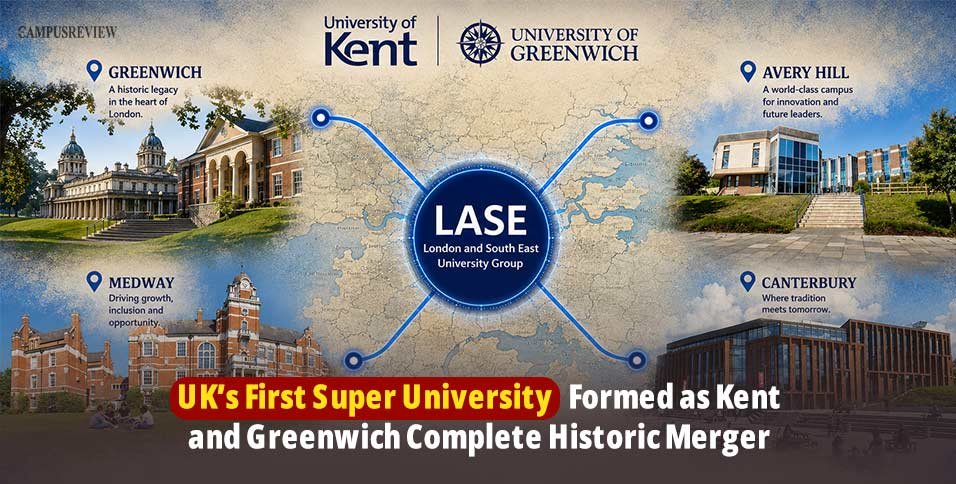
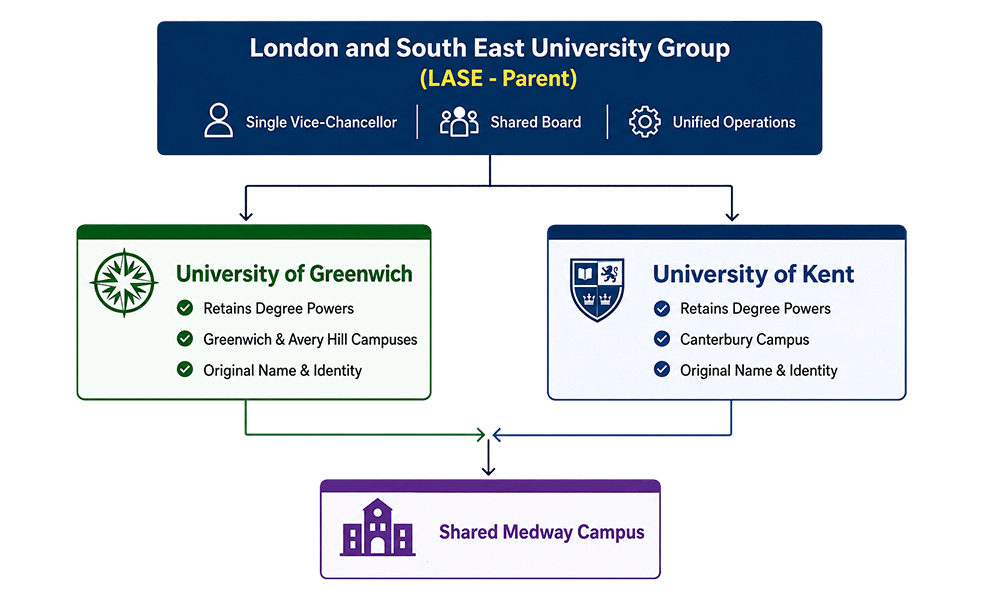
The University of Greenwich and the University of Kent have officially completed their historic merger as of August 1, 2026, creating the first UK super university. Operating under the parent corporate entity known as the London and South East University Group (LASE), this structural model unites two prominent institutions under a single executive team, governing body, and vice-chancellor.
Despite this shared administrative umbrella, both individual universities preserve their distinct brand names, local degree-awarding powers, academic programs, and regional campuses. The creation of this LASE university group aims to improve long-term financial sustainability as many UK universities continue to face financial pressure.
Key Figures and Scale of the UK Universities Merger
By joining operational capacity, the official announcements confirm that the London and South East University Group becomes the third-largest higher education provider in the United Kingdom by student enrollment. Figures reported during sector discussions highlight the scale of this strategic partnership.
| Operational Metric | Group Figure / Benchmark |
| Total Enrolled Students | 50,000+ Students |
| Academic & Support Staff | Approx 2,500 Academic / 7,000 Total |
| Combined Operating Income | Approx £600 Million |
| Combined Expenditure | Approx £570 Million |
| Campus Network | 4 Main Campuses |
Why Did the University of Greenwich and University of Kent Merge?
Economic pressures on British universities have increased significantly. High inflation, frozen domestic tuition fees, and fluctuating international student recruitment have strained institutional budgets across the country.
The University of Kent merger decision follows structural deficits that required long-term solutions to maintain academic delivery. Meanwhile, the University of Greenwich merger plan brought operational stability and a complementary geographical footprint.
Key strategic drivers behind the partnership include:
- Long-Term Sustainability: Combining financial foundations helps cushion both institutions against broader higher education volatility.
- Proven Track Record: The two universities have successfully operated the joint Medway School of Pharmacy for over two decades.
- Enhanced Research Capabilities: Joint faculties strengthen regional applications for major research grants in health, environmental sciences, and technology. Aligning with wider UK investment in innovation, including GSK’s £400 million Cambridge R&D project.
- Operational Efficiencies: Sharing administrative software, procurement channels, and executive leadership reduces redundant costs.
What The UK Super University Deal Means for Students and Staff
For current and incoming students, as well as university personnel, the transition focuses on operational continuity.
Impact on Students
- No Reapplication Needed: Current students do not need to reapply or transfer. They remain enrolled in their existing degree pathways without interruption.
- Degrees and Qualifications: Degrees continue to be awarded under the distinct authority of either the University of Greenwich or the University of Kent.
- Admissions Process: Prospective students apply through UCAS directly to Greenwich or Kent using established institutional course codes.
- Resource Access: Students benefit from access to shared library networks, specialized labs, and facilities across South East London and Kent.
Impact on University Staff
- Central Employer Structure: Staff across both partner universities are legally employed under the broader LASE group framework.
- Executive Leadership: Professor Jane Harrington, former Vice-Chancellor of Greenwich, serves as the founding Vice-Chancellor and CEO of the LASE group.
- Staff Union Engagement: While trade unions have raised questions about operational overlap, leadership emphasizes that group efficiency helps safeguard core academic roles.
Leadership Statements on the Historic Launch
Key leadership figures highlight a clear vision for this multi-university approach.
“There has been tireless work over the last year developing a new university model that has never been done before. It gives us a smooth transition, a strong senior executive team, and clear direction as the UK’s first super university.”
- Professor Jane Harrington, Founding Vice-Chancellor and CEO of LASE
“This collaboration harnesses the combined power of two ambitious universities to ensure we remain sustainable, impactful, and able to make a bigger difference to our communities.”
- Professor Georgina Randsley de Moura, Senior Deputy Vice-Chancellor
Regulatory bodies, including the Office for Students and the Department for Education, have welcomed the structural innovation. Regulators note that alliance models could provide a useful blueprint for other institutions addressing financial pressures.
Timeline of the UK Super University Formation
| Date | Key Event |
| September 2025 | Greenwich and Kent publicly announce their intention to explore a joint merger. |
| February 2026 | Both university boards complete due diligence and sign legal agreements. |
| August 1, 2026 | LASE legally comes into force as an official university group entity. |
| September 7, 2026 | Official ceremonial launch planned across all four group campuses. |
End Note
The formation of the London and South East University Group marks a significant moment for UK higher education. By combining executive leadership and operations while preserving each university’s individual identity, Greenwich and Kent are testing a practical model for institutional collaboration.
As universities across the country navigate evolving financial and demographic challenges, the long-term success of this UK super university approach will be closely watched by sector leaders, policymakers, and prospective students alike.