The Campus Review
August 31, 2026
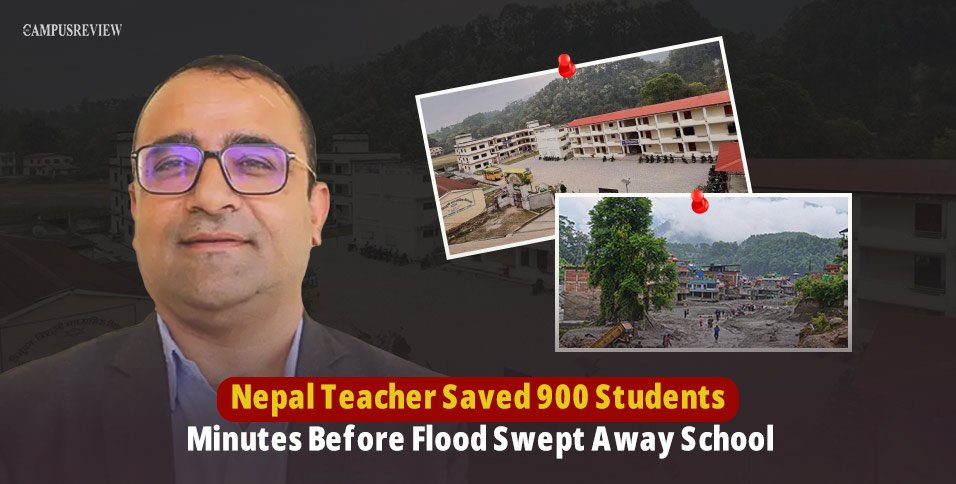
The story of how a Nepal teacher saved students from devastating flash floods began with an urgent warning at Tribhuvan Trishuli Secondary School in Nuwakot. Rajendra Dawadi, the school principal, immediately sounded the alarm and ordered students to move to higher ground.
Teachers moved students toward higher ground as floodwaters and debris swept through the valley. The flood later swept away the school, but the quick evacuation helped protect the children from the disaster.
What Happened at the Nepal School?
Tribhuvan Trishuli Secondary School serves students in Nepal’s Trishuli Valley. The campus was preparing to begin its regular morning lessons when news of an upstream flood arrived.
The school had more than 1,600 students enrolled, while approximately 900 had already arrived when the evacuation began. Other students were reportedly still travelling to school when Dawadi ordered buses to turn back.
| Key Fact | Reported Detail |
| School Name | Tribhuvan Trishuli Secondary School |
| Location | Trishuli Valley, Nuwakot District, Nepal |
| School Principal | Rajendra Dawadi (47-year-old English teacher) |
| Total Enrollment | 1,643 students |
| Students on Campus at Alarm | Approximately 900 pupils |
| Evacuation Destination | Higher ground ridge under a bodhi tree |
What Triggered the Nepal Flash Floods?
A massive ice-and-rock avalanche from the Langtang Lirung area plunged into the Lhende Khola river, triggering a destructive surge of water, mud, and debris. The resulting floods in Nepal devastated communities along the river system across the mountain region.
The Warning That Triggered the Evacuation
The school building stood roughly 60 meters above the riverbed, which initially led staff to believe they were at a safe elevation. At around 9:10 to 9:20 am, Principal Rajendra Dawadi began receiving urgent warnings. A friend called from Betrawati, a settlement roughly five miles upstream, warning that the river had swept away local buildings and was surging downstream.
The Nepal teacher saved students by acting on these warnings immediately. A worried parent soon arrived at the campus reporting that the river was climbing at a dangerous pace. Dawadi received four separate warnings from local contacts within several minutes. He recognised the immediate danger and acted without waiting for further instructions.
“I decided I shouldn’t delay any more. Even if the flood was not coming, it was just a matter of a single day’s classes. If we had made the decision 10 minutes later, all of us, including the students and me, would not be able to speak to you today.”
Rajendra Dawadi, Principal (to the BBC)
How the Nepal Teacher Saved Students
Dawadi coordinated with staff and transport drivers to execute a rapid evacuation:
- Sounding the Alarm: Dawadi rang the school bell repeatedly and directed teachers to clear classrooms immediately.
- Turning Inbound Buses Around: He telephoned drivers to instruct incoming buses to turn back and steer clear of the lower valley paths.
- Guiding Students Upward: Faculty members assembled students into groups and guided them along trails leading uphill.
- Assisting Distressed Pupils: Staff helped a student who suffered a panic attack by transporting her uphill on a motorbike.
- Securing Higher Elevation: School teachers kept pupils assembled on the ridge under shelter until the situation could be evaluated.
How Students Escaped the Floodwaters
The quick decision to clear the campus gave pupils and staff just enough time to reach safe ground before the torrent inundated the town area.
Eyewitness accounts from students described how quickly the river entered the surrounding area once the warning arrived:
“I, along with my friends, survived by just 10 seconds. Within no time, the bazaar was swept away in front of my eyes.”
Yunisha, 16-year-old student survivor
While students reached safety, the school community experienced tragic losses among its staff. Social studies teacher Santos Pariyar and school janitor Sultan Lama were also reported to have died after returning toward the riverside premises during the disaster.
What Happened to the School?
The surging water and debris settled shortly after the evacuation was underway:
- Destruction of Campus: The torrent swept away and destroyed the school buildings, leaving heavy mud and ruins on the valley floor.
- Damaged Infrastructure: Surrounding roads, access paths, and nearby structures sustained major impacts from the torrent.
- Safe Assembly: The elevated ground remained secure, allowing staff to coordinate with local volunteers and safely reunite children with their families.
Nepal Floods Disrupt Schools and Communities
The disaster has caused widespread disruption across affected mountain communities in Nepal:
- Impact on Education: Humanitarian assessments by Save the Children indicate that dozens of schools have sustained damage or halted classes, affecting thousands of children in the region.
- Infrastructure Disruption: Raging river levels have damaged local roads, bridges, and nearby hydroelectric facilities in the Trishuli corridor.
- Emergency Response: Disaster management authorities and local rescue teams continue recovery and relief operations in affected river basins.
What Schools Can Learn From the Rescue
The response at Tribhuvan Trishuli Secondary School highlights several critical principles for emergency preparedness:
- Rely on Local Community Warnings: Immediate phone calls from upstream settlements provided actionable time when every minute counted. Schools can also use smart campus technology to improve safety and communication.
- Prioritise Life Over Property: The administration halted lessons without delay, leaving books and belongings behind to speed up movement.
- Manage Inbound Transport: Direct communication with transport drivers stopped commuting students from entering vulnerable valley corridors.
- Enforce Strict Evacuation Discipline: Once an evacuation begins, strict protocols must prevent anyone from returning to buildings to lock doors or retrieve belongings.
End Note
The swift evacuation in Nuwakot shows how decisive school leadership can make a difference in the face of a sudden disaster. The Nepal teacher saved students by acting quickly, giving students and staff crucial time to move to higher ground before floodwaters reached the school.