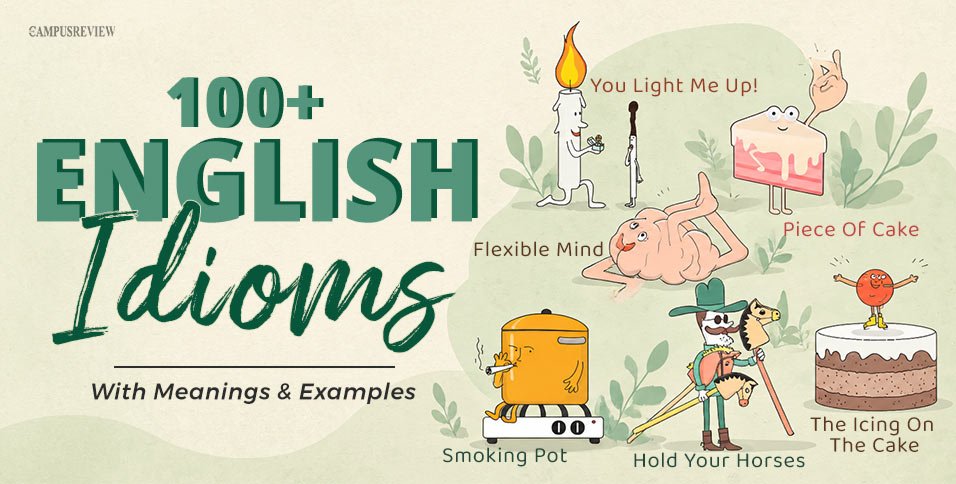
Idioms make English more expressive and help speakers communicate ideas in creative ways. However, their meanings are not always obvious, making them tricky for learners. This guide covers 100+ idioms with meanings and examples in simple English, helping you understand common and unique idioms, learn how to use them correctly, and improve your vocabulary for everyday conversations and competitive exams.
What Is an Idiom?
Cambridge Dictionary defines an idiom as a group of words in a fixed order that has a particular meaning, different from the meanings of each word on its own. Experts at Cambridge English describe idioms as code for another meaning. You cannot take them literally.
Take the idiom “It is raining cats and dogs.” Nobody sees animals fall from the sky. The words have a literal meaning, but speakers use them for a figurative meaning. This is figurative language, which also includes figures of speech such as metaphors, similes, and personification.
| Idiom | Literal Meaning | Figurative Meaning |
| It is raining cats and dogs | Cats and dogs fall from the sky | It is raining very heavily |
| Break the ice | Crack a block of ice | Start a friendly talk with new people |
You can also download the free PDF of 100+ idioms with meanings and examples to revise them anytime and improve your English vocabulary.
50 Common English Idioms With Meanings and Examples
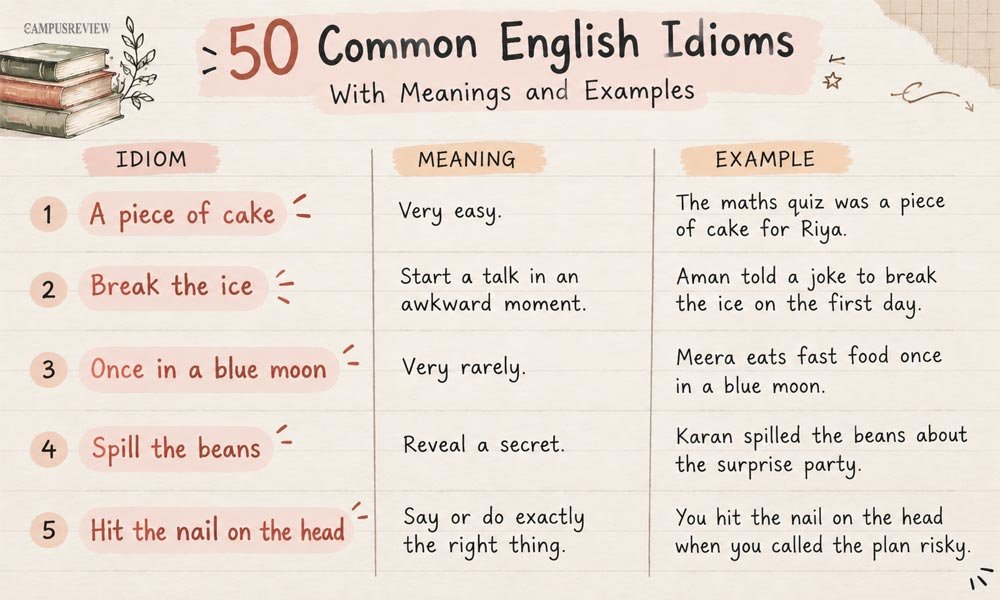
These common idioms appear in school books, films, and daily chats. Learn them ten at a time. New learners can start with the first 30 and come back for the rest.
1. A piece of cake
- Meaning: Very easy.
- Example: The maths quiz was a piece of cake for Riya.
2. Break the ice
- Meaning: Start a conversation in an awkward moment.
- Example: Aman told a joke to break the ice on the first day.
3. Once in a blue moon
- Meaning: Very rarely.
- Example: Meera eats fast food once in a blue moon.
4. Spill the beans
- Meaning: Reveal a secret.
- Example: Karan spilled the beans about the surprise party.
5. Hit the nail on the head
- Meaning: Say or do exactly the right thing.
- Example: You hit the nail on the head when you called the plan risky.
6. Let the cat out of the bag
- Meaning: Reveal a secret by mistake.
- Example: Sana let the cat out of the bag about the gift.
7. Beat around the bush
- Meaning: Avoid the main point.
- Example: Stop beating around the bush and tell me your marks.
8. Call it a day
- Meaning: Stop work for the day.
- Example: We finished the poster and called it a day.
9. Cut corners
- Meaning: Do a job in the easiest or cheapest way.
- Example: The builder cut corners, and the wall cracked.
10. Get cold feet
- Meaning: Feel too nervous to go ahead.
- Example: Rohit got cold feet before his first speech.
11. Barking up the wrong tree
- Meaning: Look in the wrong place or blame the wrong person.
- Example: If you think I took your pen, you are barking up the wrong tree.
12. Burn the midnight oil
- Meaning: Work or study late at night.
- Example: Nisha burned the midnight oil before her board exam.
13. Bite off more than you can chew
- Meaning: Take on too much work.
- Example: Dev joined five clubs and bit off more than he could chew.
14. Back to square one
- Meaning: Start again from the beginning.
- Example: The file crashed, so we are back to square one.
15. By the skin of your teeth
- Meaning: Only just, with a tiny margin.
- Example: Ali passed the test by the skin of his teeth.
16. Cry over spilt milk
- Meaning: Feel sad about something you cannot change.
- Example: The match is over. Do not cry over spilt milk.
17. Add fuel to the fire
- Meaning: Make a bad situation worse.
- Example: His angry reply added fuel to the fire.
18. Go the extra mile
- Meaning: Make more effort than people expect.
- Example: Our teacher goes the extra mile to help weak students.
19. Kill two birds with one stone
- Meaning: Solve two problems with one action.
- Example: She walks to school and kills two birds with one stone: she saves money and gets exercise.
20. Jump on the bandwagon
- Meaning: Join something because it is popular.
- Example: Everyone jumped on the bandwagon when the new game launched.
21. Pull someone’s leg
- Meaning: Joke with someone.
- Example: Relax, I am only pulling your leg.
22. Rule of thumb
- Meaning: A simple guide that works most of the time.
- Example: As a rule of thumb, revise each topic three times.
23. Speak of the devil
- Meaning: Said when the person you discuss arrives.
- Example: Speak of the devil! Here comes Tara.
24. The ball is in your court
- Meaning: It is your turn to act or decide.
- Example: I sent my offer. Now the ball is in your court.
25. Throw in the towel
- Meaning: Give up.
- Example: He threw in the towel after the third failed attempt.
26. Miss the boat
- Meaning: Lose a chance by acting too late.
- Example: Apply today, or you will miss the boat.
27. Hit the sack
- Meaning: Go to bed.
- Example: I am tired, so I will hit the sack early.
28. In hot water
- Meaning: In trouble.
- Example: Ravi landed in hot water for copying homework.
29. Keep your fingers crossed
- Meaning: Hope for good luck.
- Example: I am keeping my fingers crossed for my result.
30. Make a long story short
- Meaning: Tell something in brief.
- Example: To make a long story short, we missed the bus.
31. On the fence
- Meaning: Unable to decide.
- Example: Jia is on the fence about joining the debate team.
32. Out of the blue
- Meaning: Suddenly and without warning.
- Example: My cousin called me out of the blue.
33. Pay through the nose
- Meaning: Pay far too much.
- Example: We paid through the nose for those concert tickets.
34. Play it by ear
- Meaning: Decide as things happen.
- Example: We have no plan, so we will play it by ear.
35. Steal the show
- Meaning: Get the most attention.
- Example: The youngest dancer stole the show.
36. Take it with a grain of salt
- Meaning: Do not believe it fully.
- Example: Take that rumour with a grain of salt.
37. Think outside the box
- Meaning: Think in a new and creative way.
- Example: The team thought outside the box and built a free app.
38. Up in the air
- Meaning: Not yet decided.
- Example: Our trip plan is still up in the air.
39. Wild goose chase
- Meaning: A useless search.
- Example: The missing key turned into a wild goose chase.
40. Full of beans
- Meaning: Very lively.
- Example: My little brother is full of beans today.
41. Hit the road
- Meaning: Start a journey.
- Example: We hit the road at five in the morning.
42. Right as rain
- Meaning: Perfectly healthy or fine.
- Example: After a good sleep, I felt right as rain.
43. Sleep like a log
- Meaning: Sleep very deeply.
- Example: I slept like a log after the trek.
44. A dime a dozen
- Meaning: Very common and cheap.
- Example: Pens like these are a dime a dozen.
45. Go back to the drawing board
- Meaning: Start planning again after a failure.
- Example: The design failed, so we went back to the drawing board.
46. Hold your horses
- Meaning: Wait and slow down.
- Example: Hold your horses! Read the full question first.
47. In the same boat
- Meaning: In the same difficult situation.
- Example: We all failed the quiz, so we are in the same boat.
48. Make ends meet
- Meaning: Earn just enough money for basic needs.
- Example: Her parents work two jobs to make ends meet.
49. Off the hook
- Meaning: Free from blame or duty.
- Example: The teacher let Arun off the hook this time.
50. Take a rain check
- Meaning: Say no now, but offer to accept later.
- Example: I cannot come today, but I will take a rain check.
20 Unique and Less Common Idioms With Meanings
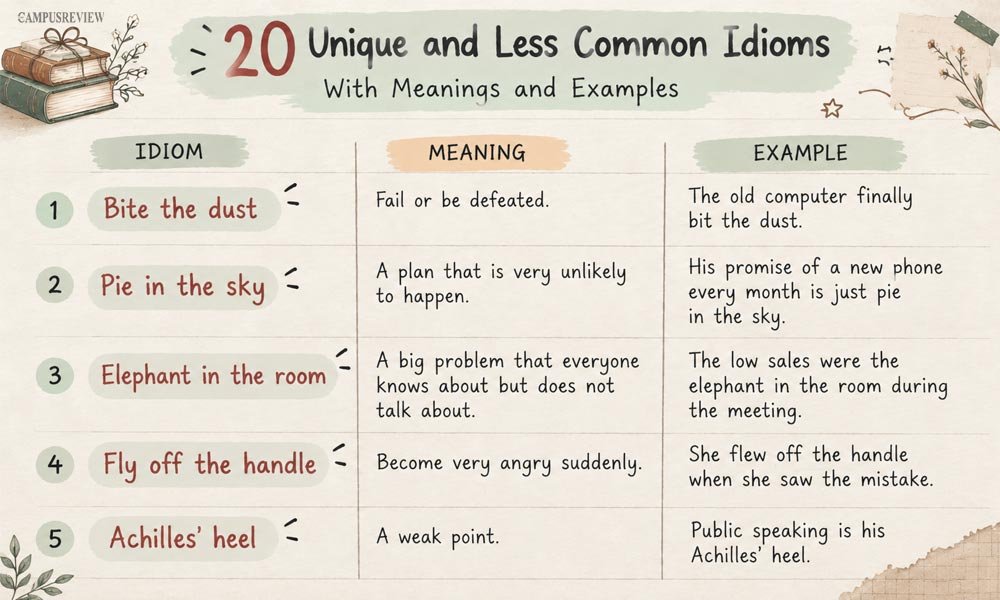
These unique idioms may not appear in every beginner lesson, but they sound great in stories, speeches, and essays. Use them with care and only when they fit.
1. Bite the dust
- Meaning: Fail, stop working, or die.
- Example: My old phone finally bit the dust.
2. Pie in the sky
- Meaning: A hope that will probably never happen.
- Example: Winning without practice is pie in the sky.
3. Elephant in the room
- Meaning: A big problem nobody wants to discuss.
- Example: Low marks were the elephant in the room at the meeting.
4. Under your belt
- Meaning: Already achieved or learned.
- Example: She has two internships under her belt.
5. Cut the mustard
- Meaning: Be good enough.
- Example: He could not cut the mustard as team captain.
6. Fly off the handle
- Meaning: Lose your temper suddenly.
- Example: Dad flew off the handle when he saw the broken glass.
7. The lion’s share
- Meaning: The biggest part.
- Example: Rhea did the lion’s share of the project work.
8. A blessing in disguise
- Meaning: Something good that first looks bad.
- Example: Missing that bus was a blessing in disguise. I met my best friend on the next one.
9. Achilles’ heel
- Meaning: A weak point.
- Example: Spelling is my Achilles’ heel.
10. Crocodile tears
- Meaning: Fake sadness.
- Example: He cried crocodile tears when he lost, but he did not really care.
11. Give someone the cold shoulder
- Meaning: Ignore someone on purpose.
- Example: She gave me the cold shoulder after our fight.
12. Red herring
- Meaning: A clue that misleads you.
- Example: The muddy shoes were a red herring in the story.
13. Throw someone under the bus
- Meaning: Blame someone to save yourself.
- Example: He threw his partner under the bus to avoid trouble.
14. Burn bridges
- Meaning: Ruin a relationship so you cannot go back.
- Example: Do not burn bridges with your old employer.
15. A chip on your shoulder
- Meaning: A long anger about unfair treatment.
- Example: He has a chip on his shoulder about being left out.
16. Wear your heart on your sleeve
- Meaning: Show your feelings openly.
- Example: Mia wears her heart on her sleeve, so we always know her mood.
17. Steal someone’s thunder
- Meaning: Take attention away from someone else’s success.
- Example: Another student announced his result first and stole his thunder.
18. Skeleton in the closet
- Meaning: A shameful secret.
- Example: Many old families have a skeleton in the closet.
19. Hang by a thread
- Meaning: Be in a very risky position.
- Example: The match hung by a thread until the last over.
20. An ace up your sleeve
- Meaning: A hidden advantage.
- Example: The coach kept an ace up his sleeve: a fast bowler.
What is the story behind some of these idioms?
- Achilles’ heel: Greek myth says the warrior Achilles had one weak spot, his heel. The idiom now means any weak point.
- Crocodile tears: An old belief said crocodiles weep while they eat their prey. The idiom now describes fake sadness.
20 Idioms Used in Everyday English Conversations
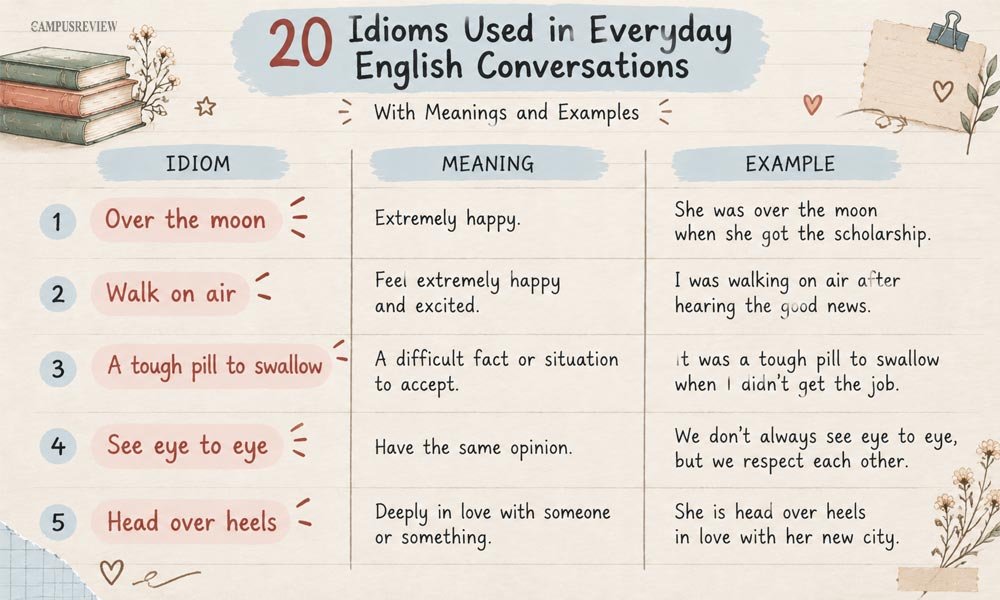
These idioms work in spoken English every day. Pick the group that matches your mood or situation.
Idioms for Happiness and Excitement
1. Over the moon
- Meaning: Extremely happy.
- Example: I was over the moon when I saw my result.
2. On cloud nine
- Meaning: Very happy.
- Example: She is on cloud nine after winning the prize.
3. Jump for joy
- Meaning: Show great happiness.
- Example: The kids jumped for joy when school closed.
4. Walk on air
- Meaning: Feel light and very happy.
- Example: He walked on air after his first job offer.
5. Tickled pink
- Meaning: Very pleased.
- Example: Grandma was tickled pink with the card.
Idioms for Difficult Situations
1. Between a rock and a hard place
- Meaning: Facing two bad choices.
- Example: Sports or exams? Jay felt between a rock and a hard place.
2. In over your head
- Meaning: In a situation too hard to handle.
- Example: Maya took on three jobs and is in over her head.
3. The last straw
- Meaning: The final problem that ends your patience.
- Example: Late again? That is the last straw.
4. Hit rock bottom
- Meaning: Reach the lowest point.
- Example: After he lost his job, he hit rock bottom.
5. A tough pill to swallow
- Meaning: A hard fact to accept.
- Example: Failing the final was a tough pill to swallow.
Idioms for Friendship and Relationships
This group includes love idioms in English, such as “head over heels” and “tie the knot.”
1. Through thick and thin
- Meaning: In good times and bad times.
- Example: Tina stood by me through thick and thin.
2. See eye to eye
- Meaning: Agree with someone.
- Example: My brother and I rarely see eye to eye on music.
3. Bury the hatchet
- Meaning: End a quarrel and make peace.
- Example: The two friends buried the hatchet and shook hands.
4. Head over heels
- Meaning: Deeply in love.
- Example: He fell head over heels for his classmate.
5. Tie the knot
- Meaning: Get married.
- Example: My cousins tied the knot last winter.
Idioms for Work and Studies
1. Learn the ropes
- Meaning: Learn how a job or task works.
- Example: The new intern is learning the ropes this week.
2. On the same page
- Meaning: Share the same understanding.
- Example: Let us meet, so we are all on the same page.
3. Get the ball rolling
- Meaning: Start something.
- Example: Who will get the ball rolling on the group project?
4. Burn the candle at both ends
- Meaning: Work or play too hard with too little rest.
- Example: He burns the candle at both ends during exam week.
5. Pull an all-nighter
- Meaning: Stay up all night to study or work.
- Example: Priya pulled an all-nighter to finish her report.
10 Important Idioms and Phrases for Competitive Exams
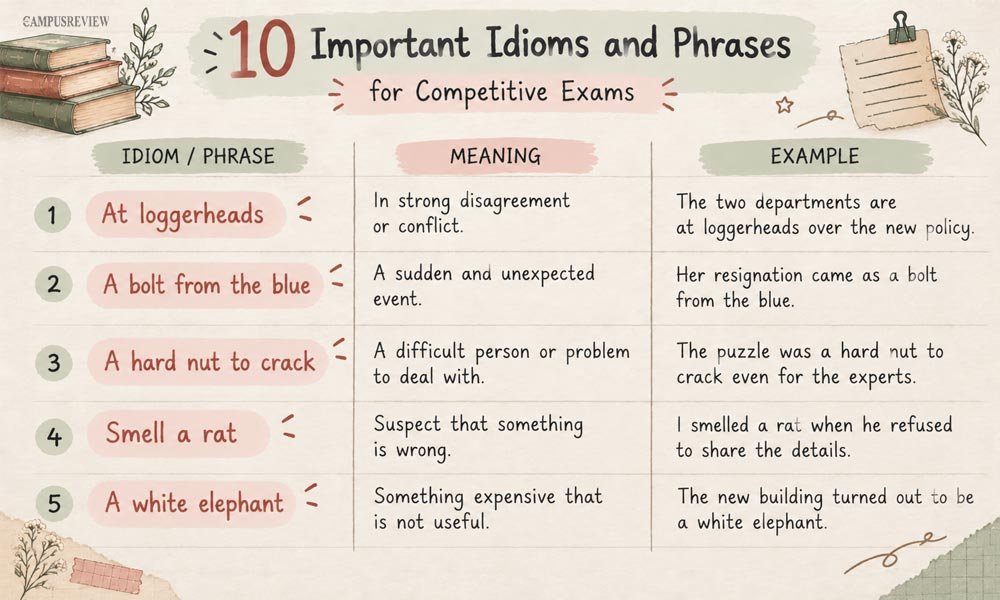
Many English sections ask you to choose the meaning of an idiom. These ten are good ones to practise first. Always check your own exam’s past papers to confirm the pattern.
Commonly Tested Idioms
1. At loggerheads
- Meaning: In strong disagreement.
- Example: The two leaders are at loggerheads over the budget.
2. A bolt from the blue
- Meaning: A complete surprise.
- Example: The news of the strike came as a bolt from the blue.
3. A hard nut to crack
- Meaning: A difficult problem or person.
- Example: The last maths question was a hard nut to crack.
4. Cry wolf
- Meaning: Give a false alarm.
- Example: Stop crying wolf, or no one will help you.
5. Eat humble pie
- Meaning: Admit a mistake and say sorry.
- Example: He ate humble pie after his claim proved false.
6. Turn a blind eye
- Meaning: Ignore something on purpose.
- Example: The guard turned a blind eye to the late entry.
7. Smell a rat
- Meaning: Suspect that something is wrong.
- Example: I smelled a rat when the deal looked too easy.
8. Apple of one’s eye
- Meaning: A much-loved person.
- Example: Little Anu is the apple of her father’s eye.
9. A white elephant
- Meaning: A costly thing with little use.
- Example: The empty stadium became a white elephant.
10. Take the bull by the horns
- Meaning: Face a problem bravely.
- Example: She took the bull by the horns and talked to the principal.
Need more exam practice?
How to Answer Idiom-Based Questions
- Read the full sentence. The sentence shows the mood and the topic.
- Guess the tone. Decide if the idiom feels positive, negative, or neutral.
- Be careful with literal options. An option that matches the words of the idiom is often a trap.
- Test each option. Put the meaning into the sentence and check if it sounds right.
- Pick the closest meaning. Choose the option that fits both the tone and the situation.
Practice Questions on Idioms and Phrases
Choose the correct meaning of the idiom in bold. The answers follow the questions.
1. The two neighbours are at loggerheads over the parking space.
(a) in full agreement (b) in strong disagreement (c) very friendly (d) out of town
2. Please do not cry wolf.
(a) cry loudly (b) give a false alarm (c) tell the truth (d) ask for help
3. I smell a rat in this offer.
(a) notice a bad smell (b) like the offer (c) suspect something is wrong (d) feel hungry
4. The old bridge is now a white elephant.
(a) a famous place (b) a costly thing with little use (c) a safe structure (d) a new attraction
5. Tara is the apple of her grandfather’s eye.
(a) a fruit seller (b) a much loved person (c) someone he dislikes (d) a tired child
Answers: 1 (b), 2 (b), 3 (c), 4 (b), 5 (b)
How to Learn and Remember English Idioms
You remember idioms best when you meet them in real situations and use them yourself. Follow these five steps.
- Learn idioms in context. Read short stories, news, and comics. Watch shows with subtitles. When you spot an idiom, copy the whole sentence into a notebook, not just the idiom.
- Write your own example sentences. Write two sentences about your own life for every new idiom. “I burned the midnight oil for my science test” sticks better than a sentence from a book.
- Group idioms by theme. Keep one page for money idioms, one for feelings, one for work. Themes give your brain a map.
- Revise on a schedule. Use the plan in the table below.
- Speak them aloud. Use one new idiom in a chat or voice note every day.
| When | What to Do |
| Day 1 | Learn 5 new idioms and write 2 sentences for each |
| Day 3 | Cover the meanings and test yourself |
| Day 7 | Use 3 of them in a talk or a short paragraph |
| Day 30 | Review all of them once more and drop the ones you know well |
How to Use Idioms in Sentences
Follow three rules to use any idiom correctly.
Know the meaning. Check it in a good dictionary such as Cambridge Dictionary or Oxford Learner’s Dictionaries.
Keep the words in order. Do not swap or add words.
Match the tone. “Hit the sack” suits a chat with friends, not a job application.
Example: Maya asked about my favourite song to break the ice at the party.
Final Thoughts
Idioms turn plain English into lively English. You now have 100+ idioms with meanings and examples, plus a clear plan to remember them. Start small. Learn five idioms today, write two sentences for each, and revise them in three days. Soon you will use idioms without stopping to think.
Pranjal Kharche
Frequently Asked Questions
1. How many idioms are there in English?
Nobody knows the exact number, because new idioms keep appearing. The Cambridge International Dictionary of Idioms alone explains around 7,000.
2. Can I use idioms in formal writing and exams?
Yes, you can use idioms in formal writing but use them sparingly. Idioms suit speeches, stories, and friendly emails. In formal reports and letters, plain words work better. In exams such as IELTS, check the marking guide and use only idioms that fit naturally.
3. Can overusing idioms hurt my English?
Yes. A study of learner writing in the Cambridge Learner Corpus found that learners often overuse new idioms and make errors with them. One well-placed idiom beats five forced ones.
4. Do British and American English use the same idioms?
Most common idioms work in American and British english. Some differ. “A ballpark figure” sounds more American, and “Bob’s your uncle” sounds more British. Check your dictionary’s label if you feel unsure.