The Campus Review
August 31, 2026
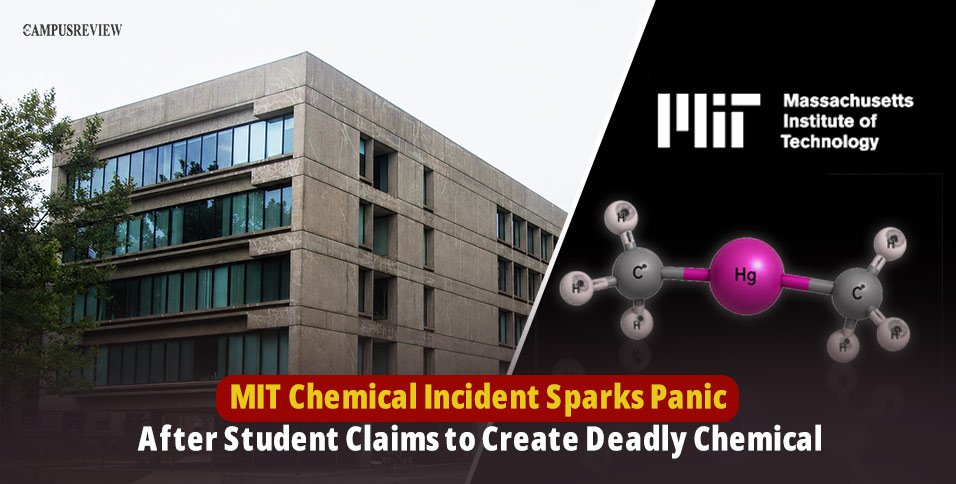
An MIT chemical incident prompted a hazmat response and the closure of Building 18 after a graduate student reported possible exposure to a hazardous chemical. The student went to a local emergency room and claimed to have synthesized dimethylmercury, an extremely toxic mercury compound, while working in an MIT laboratory.
MIT later said emerging information called into question whether the compound had actually been synthesized. As reported by The Boston Globe and The Tech, the student’s initial blood test showed no sign of mercury exposure, although the student remained under medical supervision.
As a precaution, MIT began specialized decontamination of Building 18, also known as the Dreyfus Building, where the reported incident occurred. The university stated that the risk of secondary or tertiary exposure to the wider MIT community remained very low.
What Happened Inside the Dreyfus Building
The incident unfolded on Wednesday night, August 26, when emergency responders and campus safety officials received reports concerning Building 18 on Ames Street.
The graduate student sought medical evaluation at a Boston-area hospital after reporting potential contact with a toxic substance. Because the student identified the substance as dimethylmercury, the report prompted a precautionary emergency response from campus and municipal teams.
| Key Fact | Reported Detail |
| Institution | Massachusetts Institute of Technology (MIT) |
| Facility Affected | Building 18 (Camille Dreyfus Building) |
| Reported Substance | Purported dimethylmercury (under evaluation) |
| Primary Individual | One MIT graduate student (initial blood test negative) |
| Key Responders | Cambridge Fire Department, Boston Fire Hazmat, Pro EMS, MIT EHS |
| Current Campus Status | Building 18 closed for precautionary decontamination |
MIT Chemical Incident Prompts Precautionary Response
Initial reports generated immediate concern across the campus community due to the hazardous properties associated with the chemical named by the student. However, subsequent university notices clarified that key claims remained unverified.
In a written communication sent to the chemistry department, department head Matthew D. Shoulders addressed the unapproved nature of the substance:
“The reported use of dimethyl mercury was unauthorized. The Department does not allow the purchase or synthesis of dimethyl mercury.”
Matthew D. Shoulders, Head of the MIT Chemistry Department
While the student reported making the substance, follow-up information led university officials to question whether the chemical had indeed been produced.
Understanding the Risks Associated With Dimethylmercury
Dimethylmercury is recognized in chemical research as a high-hazard organomercury compound. Academic institutions strictly regulate or prohibit its synthesis and acquisition:
- High Toxicity: The chemical is hazardous in very small quantities and can cause serious neurological harm upon significant exposure.
- Permeation Risk: Dimethylmercury rapidly penetrates standard disposable laboratory gloves, such as latex and nitrile.
- Delayed Effects: Dimethylmercury poisoning can have a delayed onset, which has made the compound an important example in laboratory safety discussions.
- Strict Regulation: Most university chemistry departments strictly bar the unauthorized handling or synthesis of the compound.
Timeline of the Response
| Day | Event / Action Taken |
| Wednesday, Aug. 26 | Emergency responders mobilize following a report involving possible chemical exposure at Building 18. |
| Wednesday Night | The graduate student seeks medical evaluation at a Boston-area hospital. |
| Thursday Onward | MIT restricts access to Building 18 and begins precautionary safety measures. |
| Following Days | Specialized decontamination work continues while officials assess the situation. |
MIT Building 18 Closure and Decontamination
Even though university officials questioned whether the substance was successfully synthesized and initial medical tests were negative, MIT Environment, Health, and Safety (EHS) teams took precautionary measures to reduce any potential risk to the campus community.
- Restricting Access: MIT suspended access to the Dreyfus Building, preventing researchers, students, and staff from entering the area.
- Specialized Cleaning: Certified hazardous material contractors were brought in to perform thorough laboratory decontamination.
- Evaluating Community Risk: According to university health officials, the risk of secondary or tertiary exposure to the surrounding community remained very low.
- Extended Building Closure: MIT stated that Building 18 would remain closed until specialized decontamination was complete.
What Academic Laboratories Can Learn
The handling of this reported incident offers critical takeaways for university research environments:
- Enforce Oversight on Chemical Synthesis: Clear administrative checks are vital to prevent unauthorized chemical experiments in shared research spaces.
- Prioritize Prompt Medical Reporting: Seeking immediate medical evaluation gives first responders and medical teams actionable time to assess potential hazards.
- Apply Precautionary Response Protocols: Treating unverified chemical reports with conservative safety measures protects campus facilities while facts are established.
- Maintain Clear Public Communication: Transparent updates from department leadership help separate confirmed test results from initial claims and support effective campus communication during emergencies.
End Note
The response following the reported MIT chemical incident highlights the importance of rapid precautionary protocols in research settings. While officials continue to evaluate the circumstances and the student’s initial tests showed no sign of mercury exposure, the university’s cautious steps helped minimize disruption and protect the wider campus.