Your body runs 11 teams at the same time, and you never have to give an order. Right now, your heart pumps blood, your lungs swap gases, and your brain reads this sentence.
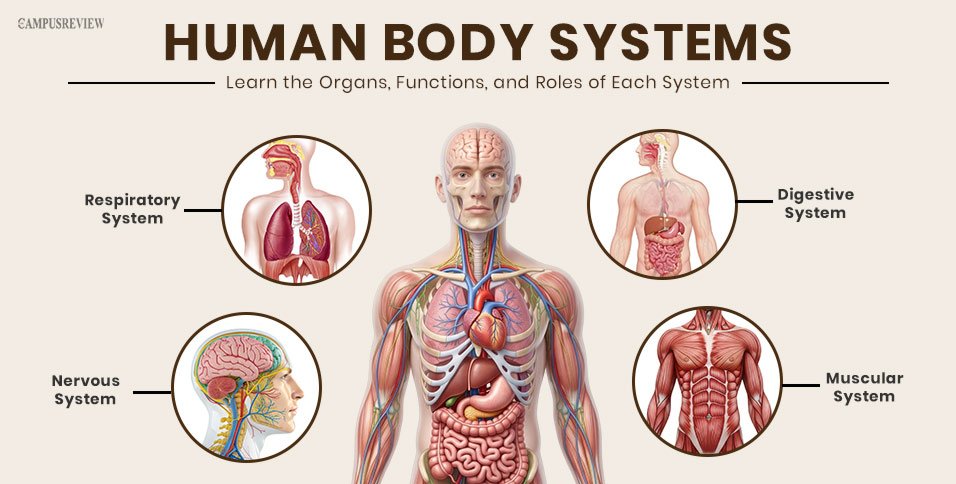
The human body has 11 major organ systems. Each system is a group of organs that work together on one big job. The 11 human body systems are cardiovascular, respiratory, digestive, nervous, muscular, skeletal, endocrine, urinary, integumentary, lymphatic, and reproductive.
They share blood, signals, and nutrients all day long. This guide explains what the human body systems do, which organs belong to each one, and how they team up. You will also find easy examples, simple daily habits for each system, and a quick chart to revise from.
What Are Human Body Systems?
Human body systems are groups of organs that work together to keep you alive and healthy. Scientists also call them organ systems. Each system handles a set of tasks, such as moving blood, breaking down food, or sending signals.
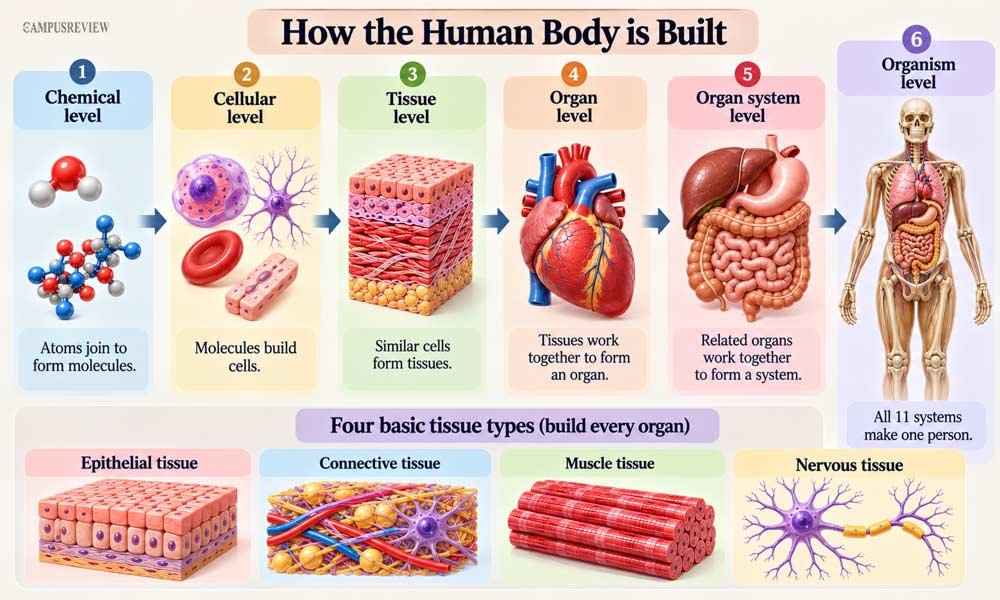
To see how a system forms, start small. The body builds itself in six levels, from tiny to big.
- Chemical level: atoms join to form molecules such as water and proteins.
- Cellular level: molecules build cells, the smallest living units. An adult body has more than 200 types of cells.
- Tissue level: similar cells team up to form tissues.
- Organ level: two or more tissue types join to form an organ, such as the heart or stomach.
- Organ system level: related organs join forces to form a system.
- Organism level: all 11 systems together make one living person.
Every organ is built from four basic tissue types. This is the base of human anatomy and physiology.
| Tissue | What it does | Where you find it |
| Epithelial | Covers surfaces, lines cavities, and forms glands | Skin surface, gut lining |
| Connective | Supports, binds, and protects other tissues | Bone, blood, fat, tendons |
| Muscle | Contracts to create movement | Biceps, heart, stomach wall |
| Nervous | Sends fast electrical signals | Brain, spinal cord, nerves |
Good to know: some organs work for more than one system. The ovaries and testes belong to the reproductive system and the endocrine system, because they make sex cells and hormones. The breastbone (sternum) belongs to the skeletal system, yet its marrow also makes blood cells. So the boundaries are useful for learning, but the body does not follow them strictly.
The 11 Major Human Body Systems
Here is what each system contains and does. Each part ends with a real-life example and a simple habit that helps that system.
1. Cardiovascular System
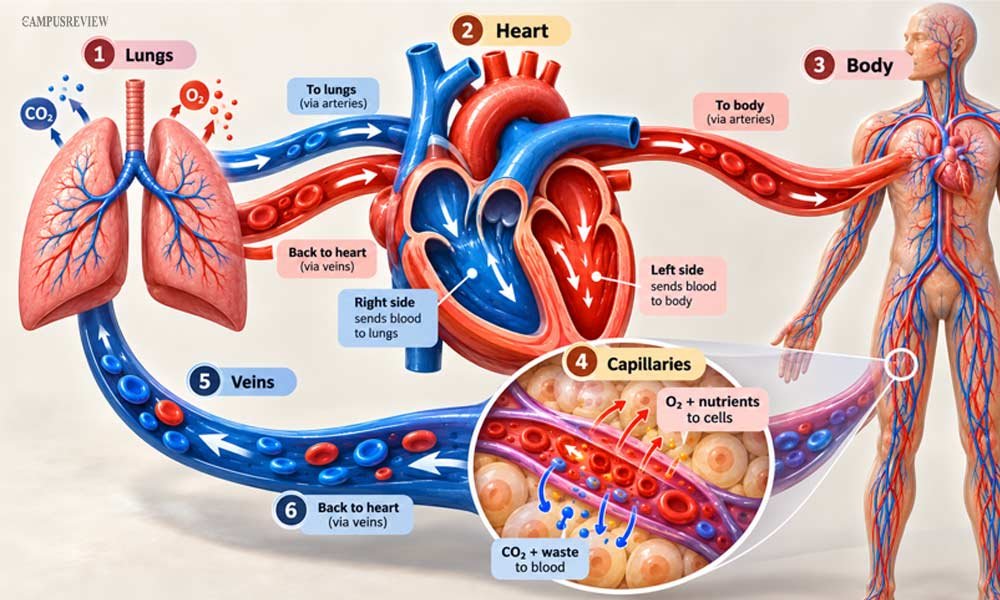
The cardiovascular system moves blood around your body. The heart works as a pump with two sides. The right side sends blood to the lungs to pick up oxygen. The left side sends that fresh blood to the rest of the body. Blood carries oxygen, sugar, and hormones to your tissues, and it picks up waste such as carbon dioxide on the way back. Tiny vessels called capillaries do the actual exchange, because their walls are very thin.
- Main organs: Heart, blood, arteries, veins, and capillaries.
- Example: When you run, your heart beats faster because your muscles need more oxygen right away.
- Healthy habit: Walk or move for about 30 minutes most days.
2. Respiratory System
The respiratory system brings oxygen in and sends carbon dioxide out. Air enters through the nose, travels down the windpipe, and reaches tiny air sacs in the lungs called alveoli. Oxygen passes through the thin alveoli walls into the blood. Carbon dioxide moves the other way and leaves when you breathe out.
The diaphragm, a dome-shaped muscle under the lungs, does most of the work of breathing. This system also helps keep your blood balanced by changing how fast you clear carbon dioxide.
- Main organs: Nose, pharynx, larynx, trachea, bronchi, lungs, and diaphragm.
- Example: After a fast sprint, you breathe hard because your body wants to remove extra carbon dioxide quickly.
- Healthy habit: Avoid smoke and dust, and practice slow belly breathing.
3. Digestive System
The digestive system turns food into fuel your cells can use. Your teeth and stomach break food into small pieces. Enzymes then split it into sugars, amino acids, and fats. The small intestine absorbs these nutrients into your blood. The large intestine takes back water and forms waste. The liver, gallbladder, and pancreas help by making bile and digestive juices. Friendly gut bacteria also help finish the job.
The digestive system does more than break down food. The gut microbiome also plays an important role in digestion, nutrient production, and immune support.
- Main organs: Mouth, esophagus, stomach, small intestine, large intestine, liver, gallbladder, and pancreas.
- Example: Nutrients from your lunch travel straight to the liver first. The liver checks and processes them before they reach the rest of the body.
- Healthy habit: Eat fiber-rich foods and drink enough water.
4. Nervous System
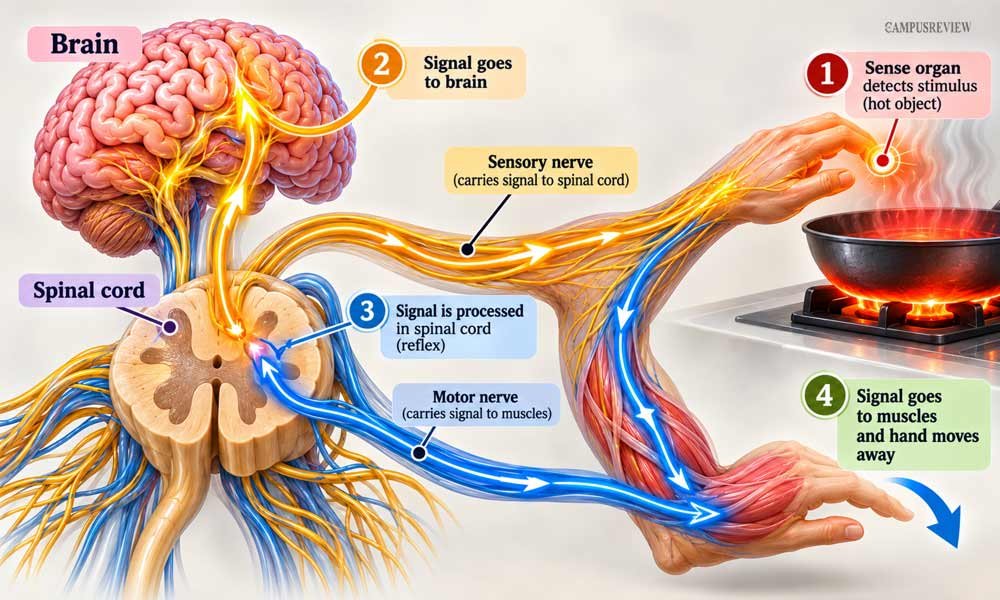
The nervous system is your body’s fast messaging network. It has two parts. The central nervous system includes the brain and spinal cord. The peripheral nervous system includes all the nerves and sense organs, such as the eyes and skin receptors. Nerve cells send electrical signals and pass chemical messages to each other. This lets you sense, think, remember, and react in a split second.
- Main organs: Brain, spinal cord, nerves, and sense organs.
- Example: You pull your hand from a hot pan before you even feel the pain. A quick reflex loop through the spinal cord makes that happen.
- Healthy habit: Sleep 7 to 9 hours and keep learning new things.
5. Muscular System
The muscular system moves your body and moves things inside your body. It has three muscle types. Skeletal muscles attach to bones, and you control them on purpose. Smooth muscles line the gut and blood vessels and work on their own. Cardiac muscle forms the heart and never gets a break. Muscles also make heat, which helps you stay warm.
- Main organs: Skeletal muscle, smooth muscle, and cardiac muscle.
- Example: Shivering in the cold is your muscles contracting quickly to make heat.
- Healthy habit: Do strength exercises and stretch regularly.
6. Skeletal System
The skeletal system gives your body shape and strength. An adult has 206 bones. Bones protect soft organs, such as the skull around the brain and the ribs around the heart and lungs. They also store calcium and phosphate. Red bone marrow inside some bones makes red blood cells, white blood cells, and platelets. Joints, cartilage, and ligaments let bones move smoothly.
- Main organs: Bones, cartilage, joints, ligaments, and tendons.
- Example: Jumping and walking put healthy stress on your bones, so they grow denser and stronger over time.
- Healthy habit: Get enough calcium and vitamin D, and stay active.
7. Endocrine System
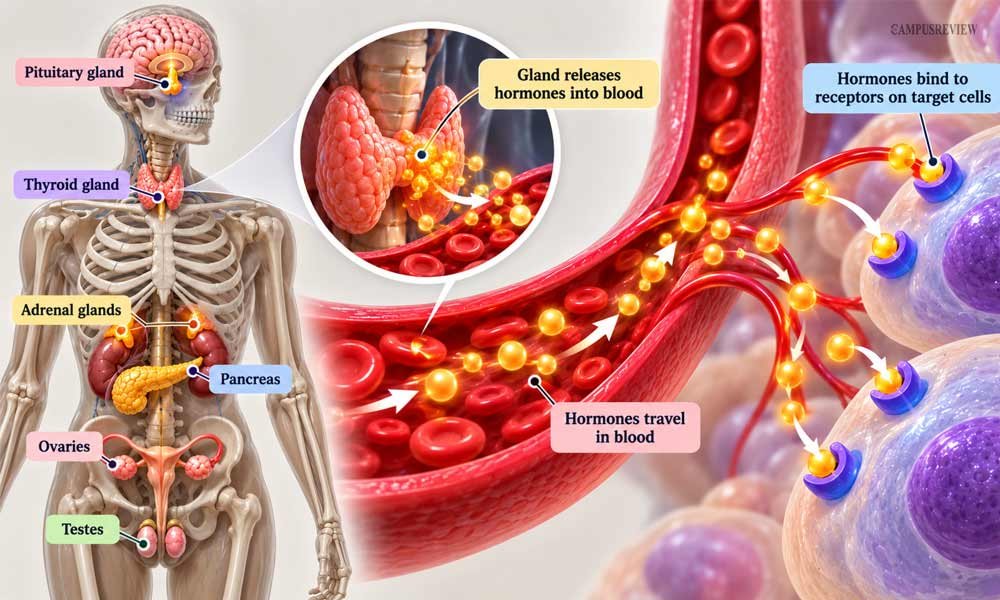
The endocrine system controls slow, long-term changes with chemical messengers called hormones. Glands release hormones straight into the blood. The hormones travel to target cells that have matching receptors. They guide growth, energy use, mood, sleep cycles, and puberty. The nervous system acts like a text message. The endocrine system acts more like a letter that takes longer to arrive but lasts longer.
- Main organs: Pituitary, pineal, thyroid, parathyroid, and adrenal glands, plus the pancreas, ovaries, and testes.
- Example: The pancreas releases insulin after a meal so your cells can take in sugar from the blood.
- Healthy habit: Keep regular sleep and meal times.
8. Urinary System
The urinary system cleans your blood and removes liquid waste. The kidneys filter blood, keep useful substances, and send waste out as urine. Urine then moves through the ureters to the bladder and leaves through the urethra. The kidneys also help control blood pressure, water balance, and salt levels.
- Main organs: Kidneys, ureters, urinary bladder, and urethra.
- Example: If you drink very little water, your urine turns darker because the kidneys save water and concentrate the waste.
- Healthy habit: Drink water through the day and limit extra salt.
9. Integumentary System
The integumentary system is your outer shield. Skin is the largest organ, and it blocks germs, sun rays, and injury. It stops your body from losing too much water. It also holds touch sensors and helps control temperature. When you get hot, sweat evaporates and cools you down.
- Main organs: Skin (epidermis and dermis), hair, nails, sweat glands, and oil glands.
- Example: Your face turns red after exercise because skin blood vessels widen to release extra heat.
- Healthy habit: Use sunscreen and keep your skin clean and moisturized.
10. Lymphatic System
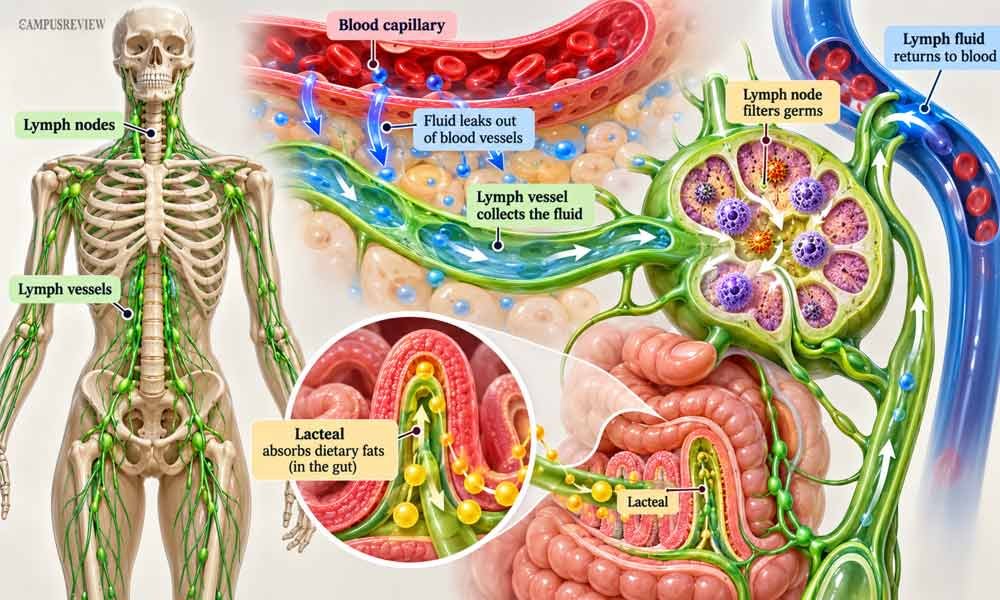
The lymphatic system drains extra fluid and helps defend your body. Small amounts of fluid leak out of blood vessels every day. Lymph vessels collect that fluid and return it to the blood, which prevents swelling. Lymph nodes act like filters. They trap germs and give white blood cells a place to fight them. Special vessels in the gut, called lacteals, also absorb dietary fats.
- Main organs: Lymph, lymph vessels, lymph nodes, thymus, spleen, and tonsils.
- Example: Your neck glands swell when you have a throat infection because the nodes are busy fighting germs.
- Healthy habit: Stay active, since movement helps lymph flow.
11. Reproductive System
The reproductive system creates new life. The male system makes and delivers sperm. The female system makes egg cells, supports a baby during pregnancy, and can feed the baby through the mammary glands. Both systems also make sex hormones, which links them to the endocrine system.
- Main organs: Male: testes, epididymis, vas deferens, seminal vesicles, prostate, and penis. Female: ovaries, fallopian tubes, uterus, vagina, and mammary glands.
- Example: Sex hormones also guide the changes that happen during puberty.
- Healthy habit: Follow safe practices and go for regular health checkups.
How Do Human Body Systems Work Together?
Human body systems work together by sharing blood, signals, and nutrients. No system can survive on its own. A simple stair climb shows this. Your brain sends the order, your muscles and bones move, your lungs and heart supply oxygen, and your skin sweats to cool you down. Here are five key partnerships.
Heart, Blood Vessels, and Lungs
Used-up blood returns to the right side of the heart. The heart pumps it to the lungs, where it drops off carbon dioxide and picks up oxygen. The fresh blood goes back to the left side of the heart, and the heart sends it to every tissue. This loop repeats all day.
Digestive System and Cardiovascular System
The small intestine absorbs sugars and amino acids into tiny blood vessels. These vessels lead to the liver through the hepatic portal vein. The liver stores, changes, or cleans the nutrients before they enter general circulation. Fats take a different route through the lymph vessels and join the blood near the collarbone. In return, blood delivers oxygen to the gut muscles so they can keep moving food.
Nervous System and Muscular System
A muscle only contracts when a nerve tells it to. A motor nerve releases a chemical called acetylcholine at the muscle. That chemical triggers the contraction. Sensors inside the muscle then report back to the brain about stretch and tension. This feedback keeps your posture steady and your movements smooth.
Skeletal System and Muscular System
Muscles pull on bones through strong cords called tendons, and bones act as levers. That is how a bend of the elbow lifts a bag. The partnership works both ways. Muscle stress makes bones stronger, and bones store the calcium that muscles need to contract.
Lymphatic System and Immune Defenses
Extra fluid from the blood enters lymph vessels and becomes lymph. Before it returns to the blood, it passes through lymph nodes. Cells there, such as macrophages and lymphocytes, catch germs and start an immune response. This is why the lymphatic system counts as both a drainage system and a defense system.
Human Body Systems at a Glance
Use this chart for quick revision. It covers the organs of the human body and the human body systems and functions in one view.
| System | Main organs | Main function |
| Cardiovascular | Heart, blood, blood vessels | Moves blood, oxygen, nutrients, and waste |
| Respiratory | Nose, trachea, lungs, diaphragm | Brings in oxygen and removes carbon dioxide |
| Digestive | Stomach, intestines, liver, pancreas | Breaks down food and absorbs nutrients |
| Nervous | Brain, spinal cord, nerves | Senses, thinks, and controls fast responses |
| Muscular | Skeletal, smooth, and cardiac muscle | Creates movement and body heat |
| Skeletal | Bones, joints, cartilage | Supports, protects, and makes blood cells |
| Endocrine | Thyroid, pituitary, adrenal glands | Uses hormones to guide growth and metabolism |
| Urinary | Kidneys, ureters, bladder | Filters blood and removes liquid waste |
| Integumentary | Skin, hair, nails, sweat glands | Protects the body and controls temperature |
| Lymphatic | Lymph nodes, thymus, spleen | Drains fluid and supports immunity |
| Reproductive | Testes, ovaries, uterus | Produces sex cells and supports pregnancy |
Why Are Organ Systems Important?
Organ systems keep your inside conditions steady. Body cells cannot survive when temperature, blood sugar, blood pressure, or oxygen swing too far. Scientists call this steady state homeostasis.
Think of a home thermostat. When the room gets too hot, the thermostat switches on the fan. When the room cools, it switches the fan off. Your body uses the same idea, called a negative feedback loop. It has three parts:
1. Sensor: a receptor notices a change, such as a rise in body temperature.
2. Control center: the brain or a gland compares the reading with the healthy range.
3. Effector: a muscle or gland acts. For heat, your skin widens its blood vessels and your sweat glands release sweat.
Once the reading returns to normal, the response stops. The body sometimes uses the opposite idea too, called positive feedback. It speeds a process up until it finishes. Labor contractions and blood clotting work this way.
End Note:
The 11 human body systems form one connected team. Each system has its own organs and job, yet all of them depend on one another to keep you healthy.
- Remember the number: the human body has 11 major organ systems.
- Learn the pairs: heart with lungs, brain with muscles, muscles with bones.
- Care for every system with movement, sleep, clean food, water, and regular checkups.
Start with the chart above, then test yourself by naming the organs of each system from memory.
FAQs
1. What is the difference between an organ and an organ system?
An organ is a body structure with a specific job, while an organ system is a group of organs that work together.
2. Why does the body need hormones?
Hormones act as chemical messengers that help regulate processes such as growth, metabolism, and mood.
3. What is the role of the skin in the human body?
The skin forms the body’s outer covering and helps protect it from external harm. It is part of the integumentary system, along with the hair and nails.
4. How do body systems change as a person grows?
Body systems develop and mature as a person grows, with organs becoming larger and their functions becoming more coordinated. These changes support growth, movement, reproduction, and the body’s changing needs throughout life.