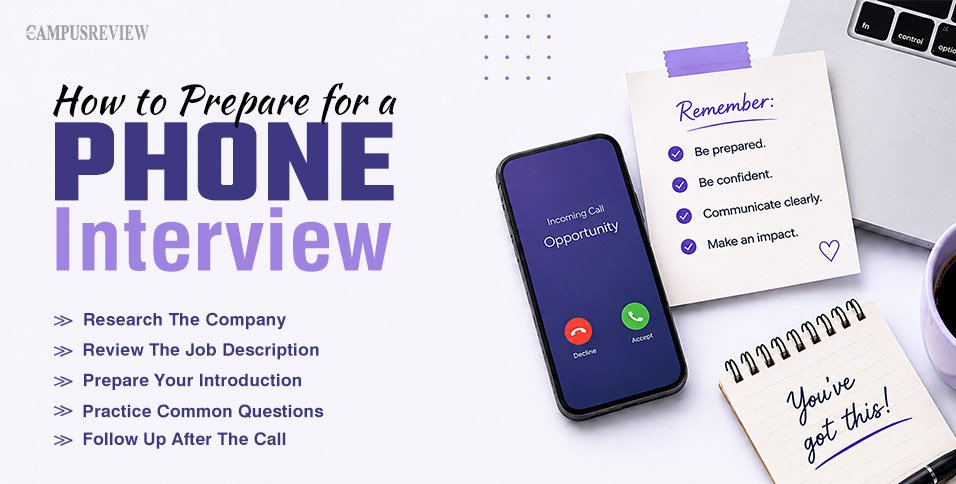
Your phone rings and you don’t recognise the number. Your heart jumps. This could be the recruiter calling about the job you applied for last week.
Do you know what to say?
A phone interview is often the first real test in the hiring process. Recruiters use this short call to filter out candidates before anyone reaches a hiring manager. Most applicants get screened out at this exact stage, so this call matters more than most students realise.
So how do you prepare for a phone interview and avoid being one of them?
Good news is that phone interview preparation is simple once you know what recruiters are actually listening for.
This guide covers practical phone interview tips, from company research to follow-up emails, so you know exactly how to prepare for a phone interview.
10 Tips to Impress Recruiters
These practical tips will help you feel prepared, communicate confidently, and make a strong first impression
1. Understand What a Phone Interview Is Really For
A phone interview, also called a phone screening interview, usually happens early in the hiring process. A phone interview normally lasts 15 to 30 minutes. The recruiter is not trying to decide if you are the perfect candidate yet. They just want to check a few basic things before passing you to the hiring manager.
Recruiters usually judge you on five things during this call:
| Recruiters Check | What Impresses Them | What Gets You Rejected |
| Basic fit (salary, location, availability) | Clear, honest expectations | Vague or unrealistic answers |
| Skills and experience | Specific examples with numbers | Generic, vague claims |
| Communication | Calm, clear, well-structured speech | Rambling or too many filler words |
| Culture fit | Understanding of the company’s work style | Criticising a past employer |
| Motivation | Real interest in the role and company | Generic answers, no research |
Once you understand what the recruiter is checking, preparing for a phone interview becomes much easier. You are not just chatting. You are answering a short mental checklist.
2. Know What to Do Before a Phone Interview
Before a phone interview, do three things: research the company, review the job description, and go over your own achievements.
Read the job description again and highlight the top three skills it asks for.
Check the company website and LinkedIn page for their mission and any recent news.
Reread your resume and cover letter so you remember your own achievements in detail.
Note two or three questions you want to ask the recruiter.
Keep a copy of the job posting open on your screen or printed out.
3. Use This Phone Interview Checklist to Set Up Your Space
Where you take the call matters as much as what you say. Use this quick phone interview checklist to get your space ready.
| What to Check | How to Do It | Why It Matters |
| Quiet room | Close the door, mute notifications, turn off the TV | Background noise distracts the interviewer and sounds unprofessional |
| Phone and network | Charge your phone fully and check signal strength or Wi-Fi calling | Prevents dropped calls and awkward silences |
| Notes ready | Keep your resume, cheat sheet, and a pen nearby | You can reference facts without sounding scripted |
| Water | Keep a glass of room-temperature water close | Prevents a dry mouth and keeps your voice clear |
| Timing | Be ready ten minutes early | Gives you time to calm down and focus |
4. Build a Simple Phone Interview Cheat Sheet
One big advantage of a phone interview is that no one can see your notes. Use this, but do it right. Reading from a full script makes you sound robotic and stiff. Instead, build a one-page cheat sheet with short bullet points and keywords, not full sentences.
Your cheat sheet should cover:
- Company snapshot: two or three facts about the company’s mission or recent news
- Your story: current role or course and certifications, one past achievement, and what you want next
- Key achievements: two or three number-based wins that match the job description
- Story bank: three short story titles you can expand into full answers if asked
- Questions to ask: your two or three prepared questions for the recruiter
Keep it to one page. A well-built cheat sheet prompts you with facts while letting your answers sound natural and spontaneous.
5. Prepare for Common Phone Interview Questions
Most phone interview questions follow a pattern. Once you know the pattern, you can prepare strong answers for almost any version of the question.
“Tell Me About Yourself”
This is usually the opening question. Recruiters want a summary of your background, not your full life story. Use the Present-Past-Future model:
1. Present: what you do now, or are studying
2. Past: one or two relevant achievements
3. Future: what you’re looking for next, and why this role fits
Keep your answer under 90 seconds.
Weak answer: “So um, I studied business, and then I worked a bit, and now I’m looking for something new, I guess.”
Strong answer: “I’m currently finishing my degree in business administration, where I led a student marketing project that grew our club’s social following by 40 percent. Before that, I interned at a local retail company handling customer data. I’m now looking for an entry-level marketing role where I can apply both my academic training and hands-on experience, which is why this position caught my eye.”
“Why Do You Want to Work Here?”
Recruiters want to know if you’ve done real research. Structure your answer in three steps: mention one specific thing about the company, connect it to something you personally value, and explain how you can contribute.
Other Common Questions
| Question | What They Want to Know | Quick Framework |
| Why are you leaving your current role or course? | Are you growth-focused, not just complaining? | Push-Pull: mention what you learned, then what you want next |
| What are your salary expectations? | Does your range fit their budget? | Give a researched range and stay flexible |
6. Master the STAR Method for Behavioural Questions
Behavioural questions usually start with “Tell me about a time when…” Recruiters use these to check real skills like teamwork, leadership, or problem-solving. The best way to answer is the STAR method:
- Situation: set the scene in one or two sentences
- Task: explain what you were responsible for
- Action: describe what you did, using “I” instead of “we”
- Result: share the outcome, with a number if possible
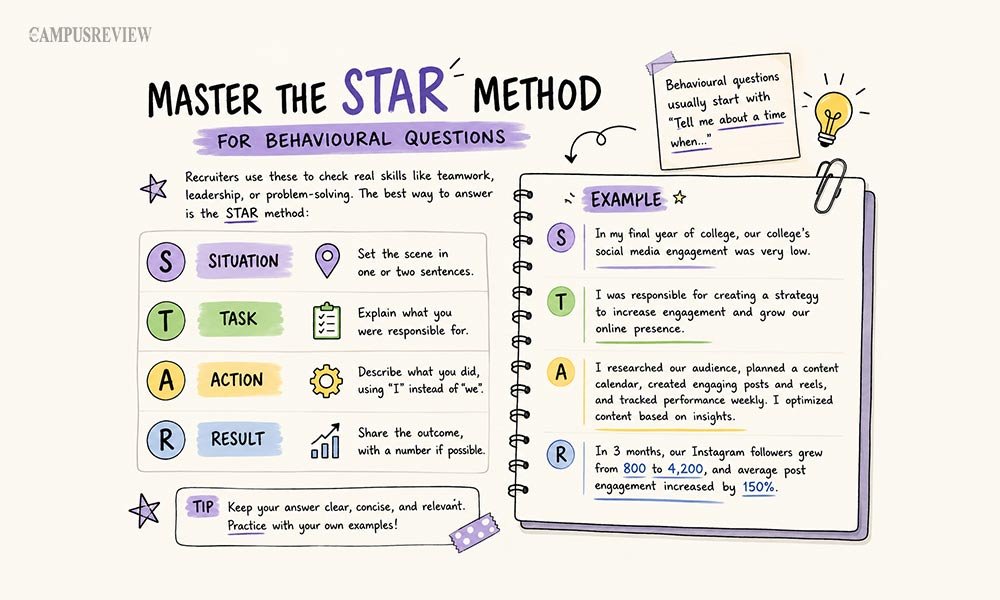
Prepare three to four STAR stories in advance. You can adapt the same story to answer different questions.
| Skill | Sample Story Idea |
| Teamwork | A group project where you resolved a scheduling conflict |
| Problem-solving | A mistake at a part-time job that you personally fixed |
| Leadership | A time you organised classmates or coworkers to hit a deadline |
Weak answer: “We had a group project and it was hard because people didn’t agree, but we finished it eventually.”
Strong answer: “During a group marketing project, two teammates disagreed on our campaign direction, and we were falling behind schedule. As the project lead, I set up a short call to hear both sides, then combined the best parts of each idea into one plan. We finished two days early and earned the highest grade in the class.”
7. Work on Your Tone and Speaking Pace
The interviewer cannot see your face, so your voice has to carry all your confidence. A few small habits make a big difference.
- Speak a little slower than normal, around 130 to 150 words a minute
- Smile while you talk. It naturally warms your tone, even on the phone
- Stand up if it helps you sound more confident
- Avoid filler words like “um” and “like”
- Pause briefly before answering. Don’t rush into your response
8. Prepare Smart Questions to Ask the Recruiter
Every phone screening interview ends with, “Do you have questions for me?” Always say yes.
| What to Ask About | Sample Question |
| The role | What does success look like in this role after six months? |
| The team | What are the biggest challenges the team is facing right now? |
| Growth | What does a typical career path look like from this position? |
Avoid asking about salary, vacation days, or benefits at this stage. Save those questions for later rounds.
9. Handle Surprise or Difficult Calls with Confidence
Sometimes recruiters call without warning. If you’re not ready, it’s okay to ask for a better time.
Sample script: “Thank you for calling. I’m very interested in this role, but I’m currently unavailable. Could we schedule a call later today or tomorrow?”
If the interviewer is late, follow this simple timeline instead of guessing what to do:
| Time Passed | What to Do |
| 0 to 10 minutes | Check your phone signal and confirm the time zone |
| 10 minutes | Send a short, polite email checking in |
| 15 to 20 minutes | Call once and leave a brief voicemail if you have a direct number |
| 30 minutes | Send a final email and step away |
10. Follow Up After the Call the Right Way
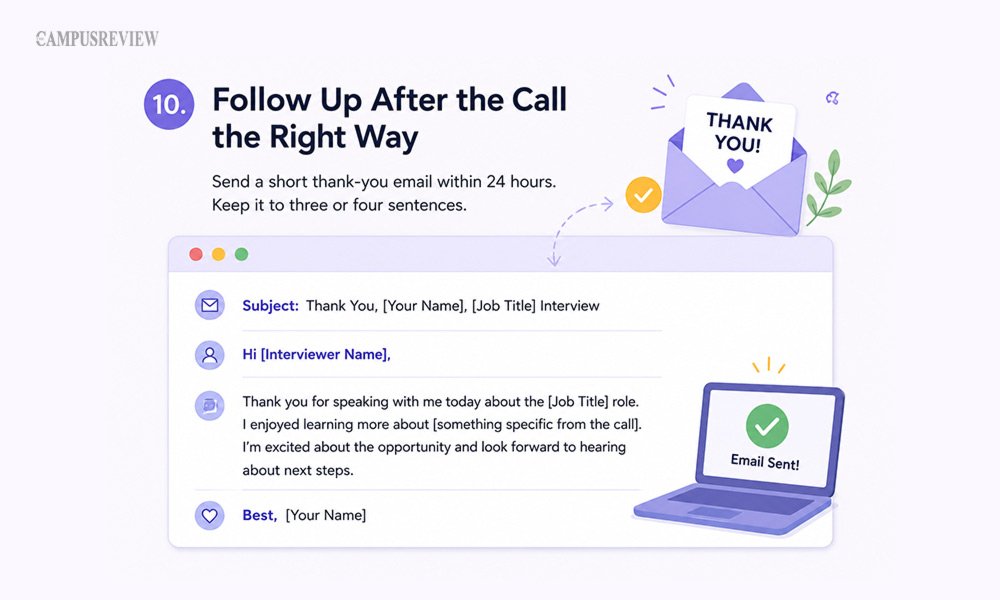
Send a short thank-you email within 24 hours. Keep it to three or four sentences.
Subject: Thank You, [Your Name], [Job Title] Interview
Hi [Interviewer Name],
Thank you for speaking with me today about the [Job Title] role. I enjoyed learning more about [something specific from the call]. I’m excited about the opportunity and look forward to hearing about next steps.
Best, [Your Name]
Final Thoughts
A phone interview might feel casual, but it decides whether you move forward. Research the company, set up a quiet space, build a simple cheat sheet, and practise your answers out loud. These phone interview tips work because they focus on what recruiters actually notice.
Once you know how to prepare for a phone interview the right way, you’ll know exactly how to ace a phone interview and walk into every call with more confidence than you thought possible.
FAQs
1. What should I wear for a phone interview?
Comfortable, neat clothing is fine since it’s audio-only, but many candidates dress smart-casual anyway. It helps you feel more focused and professional.
2. Is a phone screening interview different from a phone interview?
No, the two terms phone screening and phone interview mean the same thing. Both refer to a short introductory call before an in-person or video interview.
3. What if I miss the interview call?
If you miss an interview call, call back or email within the hour, apologise briefly, and ask to reschedule. Most recruiters will understand if you’re professional about it.