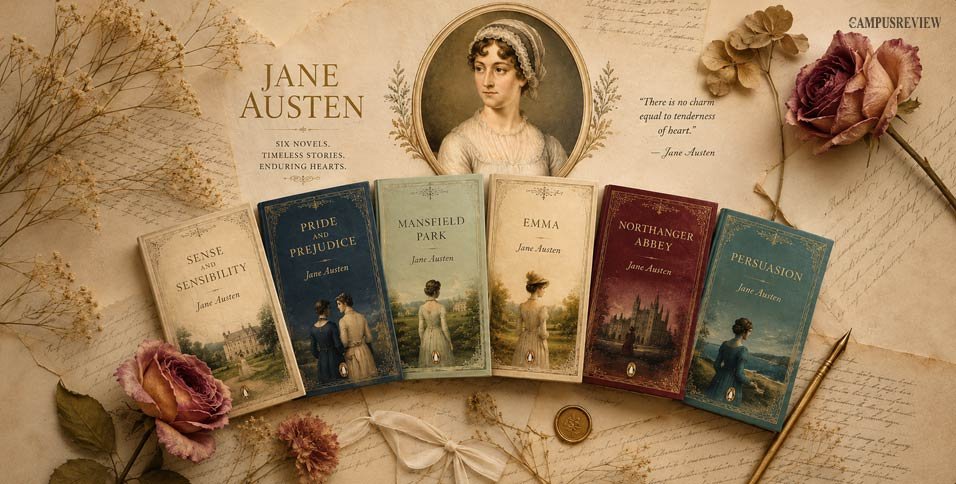
Sense and Sensibility, Pride and Prejudice, Mansfield Park, Emma, Northanger Abbey, and Persuasion are the six famous novels by Jane Austen. Each one is still widely read today for its wit, romance, and sharp look at love, money, and family.
This guide covers all six Jane Austen novels in order, with characters, themes, a summary, and a quick note on why each book is worth reading, so you can decide which one to pick up first.
About Jane Austen
Jane Austen was born in 1775 in Hampshire, England, and started writing as a teenager. She published her novels anonymously, and readers only learned her name after she died in 1817, at age 41.
Austen wrote in a time of strict social rules and limited choices for women. Her six novels follow smart young women finding their way through love, money, and family pressure, all told with sharp wit and gentle humor.
List of Novels by Jane Austen
Here is a quick Jane Austen novel list, so you can see every book at a glance.
This list of six novels by Jane Austen covers the title, the year it came out, the lead character, and the main ideas behind the story.
| Novel | Published | Themes |
| Sense and Sensibility | 1811 | Reason vs. emotion, money and family |
| Pride and Prejudice | 1813 | First impressions, class and marriage |
| Mansfield Park | 1814 | Manners vs. morals, family loyalty |
| Emma | 1815 (dated 1816) | Self-knowledge, matchmaking and class |
| Northanger Abbey | 1818 (published after her death) | Imagination vs. reality |
| Persuasion | 1818 (published after her death) | Second chances and personal merit |
Novels by Jane Austen still top classic-fiction reading lists today, more than two centuries after they first appeared.
1. Sense and Sensibility (1811)
Published in 1811. Set in Sussex and Devonshire, England. This was Austen’s first published novel.
Main Characters
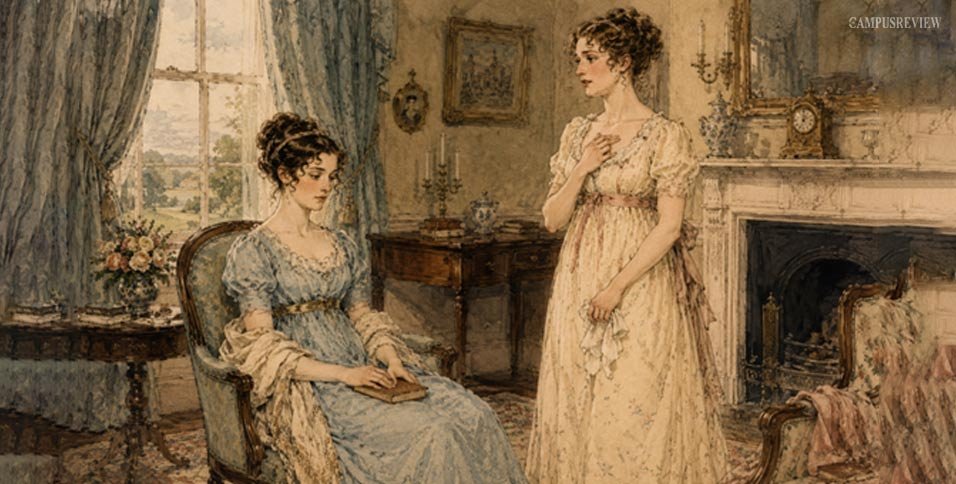
- Elinor Dashwood – The calm, sensible eldest sister. She hides her feelings to protect her family.
- Marianne Dashwood – Elinor’s younger sister. She feels everything deeply and shows it openly.
- Edward Ferrars – Elinor’s quiet love interest, held back by a secret engagement.
- John Willoughby – A charming man who wins Marianne’s heart, then breaks it for money.
- Colonel Brandon – An older, steady man who loves Marianne patiently.
Short Summary
When Mr. Dashwood dies, his estate passes to his son from an earlier marriage. His stepmother and half-sisters, Elinor and Marianne, are left with very little money. They move to a small cottage in Devonshire and start a new, humbler life.
Marianne falls hard for the charming John Willoughby. He seems perfect, until he suddenly leaves for London without explanation. Elinor, meanwhile, quietly loves Edward Ferrars, but he is secretly engaged to another woman.
In London, the sisters learn the painful truth. Willoughby has chosen to marry a wealthy woman instead of Marianne. Marianne falls seriously ill from heartbreak, and slowly recovers.
Edward’s secret engagement finally ends when his fiancée leaves him for his brother. Free at last, he proposes to Elinor. Marianne, older and wiser, comes to see the quiet, loyal love that Colonel Brandon has offered her all along, and she marries him.
Why Read Sense and Sensibility?
You should read Sense and Sensibility for its thoughtful exploration of reason and emotion. Through Elinor and Marianne’s contrasting experiences with love, heartbreak, and family, Austen shows the importance of finding balance while highlighting the strength of sisterhood.
2. Pride and Prejudice (1813)
Published in 1813. Set in Hertfordshire and Derbyshire, England. This is the most famous of all novels by Jane Austen.
Main Characters
- Elizabeth Bennet – Clever, witty, and quick to judge people.
- Mr. Darcy – Wealthy, proud, and misunderstood at first.
- Jane Bennet – Elizabeth’s sweet, gentle older sister.
- Mr. Bingley – Jane’s kind and easily swayed love interest.
- Mr. Wickham – A charming officer who is not what he seems.
- Mrs. Bennet – A mother obsessed with marrying off her five daughters.
Short Summary
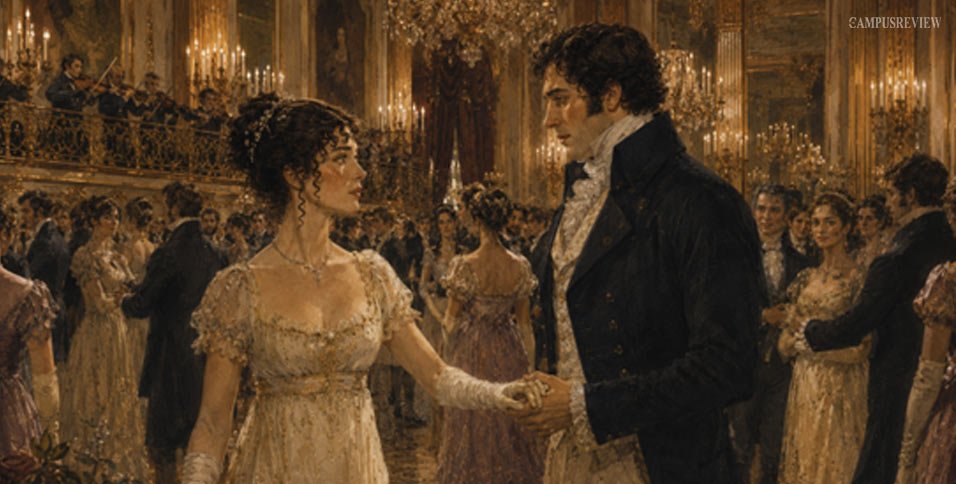
When the wealthy Mr. Bingley moves near the Bennet family, Mrs. Bennet is thrilled. She has five daughters to marry off, and no son to inherit the family estate. Bingley quickly falls for gentle Jane Bennet. His proud friend, Mr. Darcy, insults Elizabeth at a dance, calling her “not handsome enough to tempt me.”
Elizabeth’s dislike of Darcy grows when she meets the charming Mr. Wickham, who claims Darcy ruined his life. She rejects a marriage proposal from her cousin Mr. Collins, and later, to her shock, Darcy proposes to her too. She turns him down and accuses him of hurting both Jane and Wickham.
Darcy writes Elizabeth a letter that reveals the truth: Wickham is the dishonest one. Elizabeth’s opinion of Darcy slowly changes. When Elizabeth’s youngest sister Lydia runs off with Wickham, threatening to ruin the family’s reputation, Darcy secretly steps in to fix everything.
Elizabeth realizes she has misjudged him completely. Darcy proposes again, and this time, she says yes.
Why Read Pride and Prejudice?
You should read Pride and Prejudice for its witty dialogue, memorable characters, and timeless exploration of pride, first impressions, and personal growth.
Elizabeth Bennet’s journey shows how easily people can misjudge others and the importance of being willing to recognise when you are wrong.
3. Mansfield Park (1814)
Published in 1814. Set at a country estate in Northamptonshire, England. Considered Austen’s most serious novel.
Main Characters
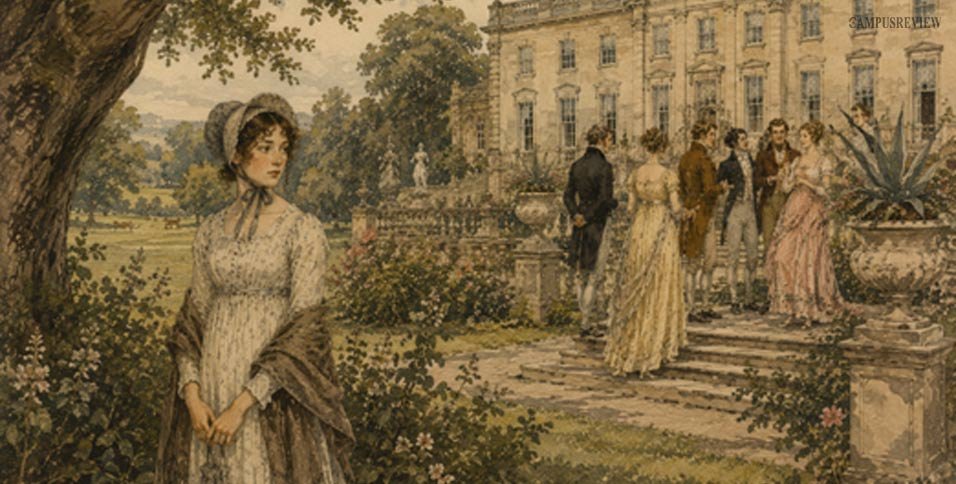
- Fanny Price – A quiet, poor relation raised among wealthy cousins. The story’s moral center.
- Edmund Bertram – Fanny’s kind cousin and closest friend.
- Sir Thomas Bertram – The strict head of Mansfield Park.
- Mary Crawford – Charming and witty, but shallow underneath.
- Henry Crawford – Mary’s brother, a flirt who treats love like a game.
- Mrs. Norris – Fanny’s cruel, gossiping aunt.
Short Summary
Ten-year-old Fanny Price is sent away from her poor family to live with her wealthy relatives at Mansfield Park. Her aunt, Mrs. Norris, treats her badly, but her cousin Edmund is always kind to her. As Fanny grows up, the glamorous Crawford siblings arrive from London and shake up the quiet household.
Henry Crawford flirts with Fanny’s cousins, even though one of them is already engaged. Edmund falls for Mary Crawford, despite her cold, mercenary attitude toward his plan to become a clergyman. Fanny alone refuses to join a scandalous play the young people put on while Sir Thomas is away.
Henry Crawford later decides to win Fanny’s heart for sport, but ends up falling for her for real. He proposes, and everyone expects Fanny to say yes. She refuses, sensing that his character is not to be trusted.
Sent home to her poor family as punishment, Fanny watches from a distance as her cousin Maria disgraces the family by running off with Henry. In the end, Edmund sees Mary Crawford’s true colors, and turns instead to Fanny, the one person who never wavered.
Why Read Mansfield Park?
You should read Mansfield Park if you enjoy thoughtful stories about morality, personal values, and staying true to yourself under pressure.
Although the story moves more slowly than some of the novels by Jane Austen, Fanny Price’s quiet strength makes it a rewarding read.
4. Emma (1815)
Published December 1815 (dated 1816). Set in the fictional village of Highbury, England.
Main Characters
- Emma Woodhouse – Rich, clever, and a little too confident in her matchmaking skills.
- Mr. Knightley – Emma’s honest, older friend and neighbor.
- Harriet Smith – A sweet, naive young woman Emma tries to “improve.”
- Frank Churchill – Charming, but hiding a secret.
- Jane Fairfax – Talented and reserved, often overshadowed by Emma.
- Miss Bates – A kind, talkative, and poor older woman in the village.
Short Summary
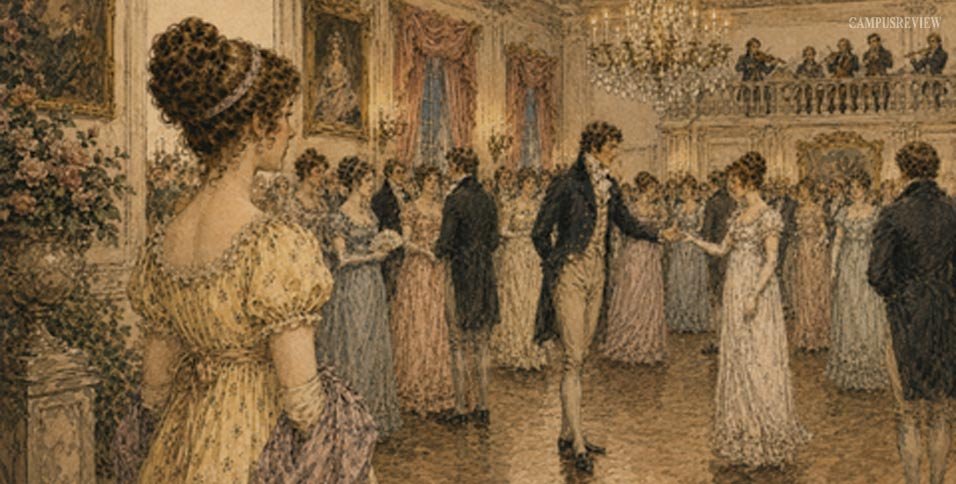
Emma Woodhouse is rich, smart, and sure she does not need to marry. Instead, she decides to spend her time matchmaking. She takes on a new friend, Harriet Smith, and talks her out of marrying a good, honest farmer, convinced Harriet deserves someone grander.
Emma’s matchmaking plans keep backfiring. She misreads a vicar’s interest in Harriet, only to have him propose to her instead. She then flirts carelessly with the charming Frank Churchill, not realizing he is secretly engaged to Jane Fairfax the whole time.
At a picnic, Emma makes a cruel joke at the expense of the poor, kind Miss Bates. Mr. Knightley, always honest with her, scolds her for it. Ashamed, Emma starts to see her own mistakes clearly for the first time.
When Harriet confesses feelings for Mr. Knightley, Emma is shocked to realize she loves him herself. Everything sorts itself out: Frank’s secret comes out, Harriet ends up happily with the farmer she almost rejected, and Emma marries Mr. Knightley, wiser than when the story began.
Why Read Emma?
You should read Emma for its witty exploration of self-discovery and personal growth. Emma is a flawed but memorable heroine, and watching her recognise her mistakes and mature makes the novel especially rewarding.
5. Northanger Abbey (1818)
Written in the 1790s, published in 1818 after Austen’s death. Set in Bath and a fictional country estate.
Main Characters
- Catherine Morland – A young, imaginative reader of gothic horror novels.
- Henry Tilney – Witty and kind, he gently guides Catherine through society.
- Isabella Thorpe – Catherine’s flashy, two-faced new friend.
- John Thorpe – Isabella’s rude, boastful brother.
- General Tilney – Henry’s cold, status-obsessed father.
Short Summary
Seventeen-year-old Catherine Morland travels to Bath with family friends, eager for adventure. She loves gothic novels full of ghosts and secrets, and her imagination runs wild. She befriends the flashy Isabella Thorpe and falls for the witty, good-humored Henry Tilney.
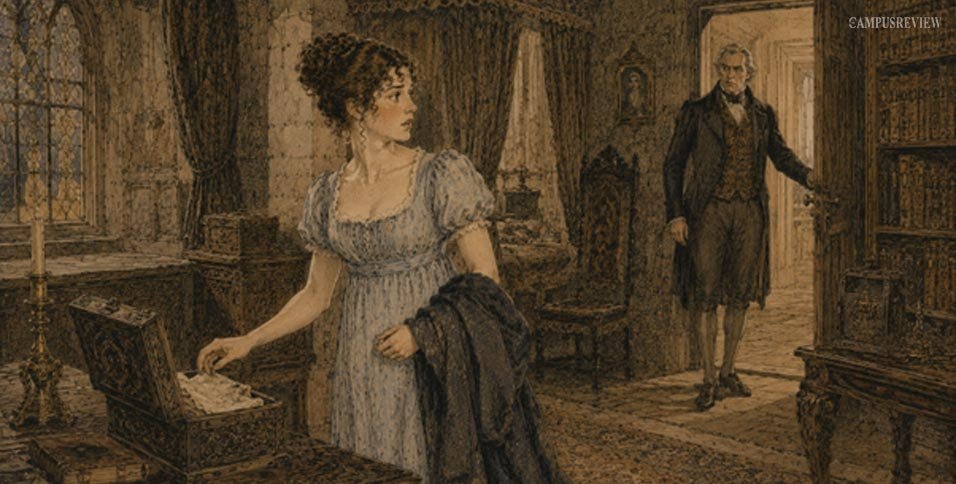
Henry’s father invites Catherine to stay at Northanger Abbey. Catherine, expecting a haunted castle, instead finds a modern, comfortable home. Still, she convinces herself that General Tilney murdered his late wife, and sneaks into his late wife’s old room looking for clues.
Henry catches her and gently tells her to grow up and see the world as it is, not as her novels describe it.
Meanwhile, Isabella’s true, money-hungry nature comes out when she ditches Catherine’s brother for a wealthier man, and gets dumped in return. General Tilney, who wrongly believed Catherine was rich, throws her out of his house once he learns the truth.
Henry, refusing to obey his father, follows Catherine home and proposes anyway. They marry, proving real character matters more than rumor or money.
Why Read Northanger Abbey?
You should read Northanger Abbey for its light-hearted humour and playful take on Gothic fiction. Its short, entertaining story makes it a good choice for readers who find classic novels difficult or slow to read.
6. Persuasion (1818)
Austen’s last completed novel, published in 1818 after her death. Set in Somerset and Bath, England.
Main Characters
- Anne Elliot – Twenty-seven, thoughtful, and quietly heartbroken.
- Captain Frederick Wentworth – Anne’s former love, now a successful naval officer.
- Sir Walter Elliot – Anne’s vain, financially careless father.
- Lady Russell – Anne’s well-meaning but overly cautious family friend.
- Mr. William Elliot – A charming but suspicious distant cousin.
Short Summary
Eight years before the story begins, Anne Elliot fell in love with a young naval officer, Frederick Wentworth. Her family talked her out of marrying him because he had no money or title.
Now twenty-seven, Anne watches from the sidelines as her vain father’s poor money habits force the family to rent out their home, right to a couple connected to Wentworth himself.
Wentworth returns, now wealthy and respected, and treats Anne with cool distance. He seems interested in a livelier, younger woman instead. During a group outing, an accident forces Wentworth to see Anne’s calm strength in a crisis, and his old feelings begin to stir again.
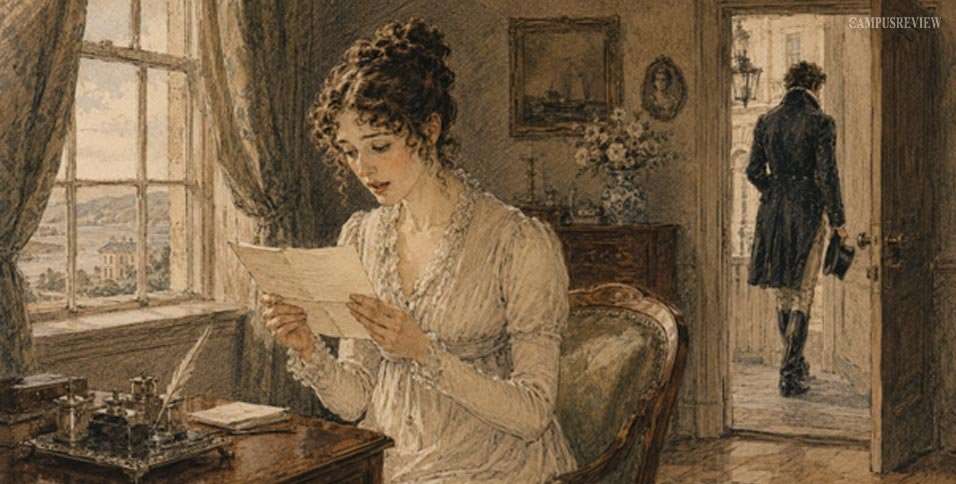
In Bath, a charming cousin starts courting Anne, but she stays loyal to her feelings for Wentworth. After overhearing Anne speak about how deeply and quietly women can love, Wentworth finally writes her an honest, heartfelt letter, admitting he never stopped loving her. Anne accepts him, and this time, her family does not object.
Why Read Persuasion?
You should read Persuasion for its mature exploration of lost love, heartbreak, and second chances. Anne Elliot’s emotional journey offers a quieter but deeply moving reading experience, especially for anyone who has ever wondered what might have been.
What Are Jane Austen’s Novels About?
Step back from the six individual stories, and clear patterns appear across novels by Jane Austen and their themes.
| Recurring Theme | What It Means in Austen’s Novels |
| Love and marriage | Characters must choose between love, money, and social status |
| Social class | Wealth and birth decide who gets respect, and who does not |
| Women’s financial dependence | Women could rarely earn their own money, which raised the stakes of marriage |
| Family relationships | Parents are often careless, absent, or unhelpful, forcing daughters to grow up fast |
| Reputation | One mistake, or one rumor, could ruin a woman’s future |
| Personal growth | Every heroine must see her own flaws clearly before she finds happiness |
Austen wrote at a time when a woman’s choices were limited, and marriage was often a matter of survival, not just romance.
Jane Austen’s novels often examine how people behave within the social rules of their time. This focus on human nature also connects her work with other classic writers, including Shakespeare, whose plays explore themes such as love, ambition, power, and social conflict.
Final Thought
Six novels, six very different heroines, and one writer who understood human nature better than almost anyone. The novels by Jane Austen offer something for every reader, from witty romance and comedy to moving stories about personal growth, heartbreak, and second chances.
Start with the novel that matches your reading taste, and let Austen’s wit do the rest.
FAQs
1. Which Jane Austen novel is best for beginners?
Pride and Prejudice is the easiest starting point. Northanger Abbey is a great second choice because it is short and playful.
2. Have Jane Austen’s novels been made into movies?
Yes, all six of Jane Austen’s novels have been adapted into film or television, with Pride and Prejudice and Emma receiving the most adaptations, including several major theatrical releases.
3. Are Jane Austen’s novels hard to read?
The language is older, but the sentences are shorter than most classic literature. Once you get used to her style, the stories move quickly and stay easy to follow.
4. Are Jane Austen’s novels based on true events?
No, Jane Austen’s novels are fictional. They are not based on real events or real people, though they closely reflect the manners, money problems, and marriage customs of the English gentry in her own lifetime.
5. What genre do Jane Austen’s novels belong to?
Jane Austen’s novels belong to the genre of social realism and romantic fiction, often called novels of manners. They focus on everyday life, courtship, and class rather than adventure or fantasy.