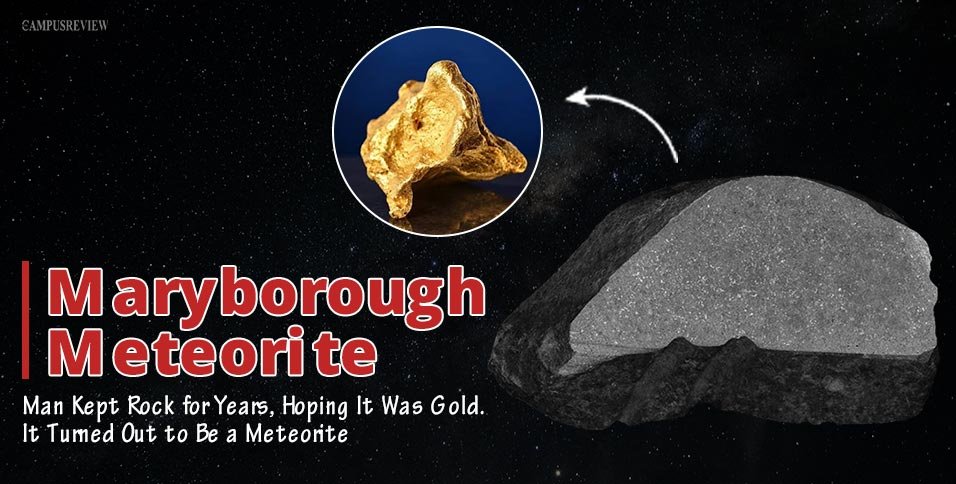
An Australian prospector named David Hole discovered a heavy, reddish rock in May 2015 while searching for gold in Maryborough Regional Park near Melbourne, Victoria, Australia. He kept the specimen at home for years and tried to crack it open, believing a gold nugget sat trapped inside.
Instead, geologists at Museums Victoria (which operates the Melbourne Museum) identified the 17-kilogram object as the Maryborough Meteorite, a rare 4.6-billion-year-old space rock far more valuable to science than gold.
This unexpected meteorite discovery gives researchers a direct window into how our early Solar System formed.
Key Facts About the Maryborough Meteorite
Named after the nearby town where David Hole found it, the Maryborough Meteorite stands out for both its weight and its extreme age.
| Feature | Details |
| Discoverer | David Hole (found in May 2015) |
| Location | Maryborough Regional Park, Victoria, Australia |
| Weight | 17 kilograms (37.5 pounds) |
| Age | Approximately 4.6 billion years old |
| Classification | H5 ordinary chondrite |
| Rarity | One of only 17 meteorites recorded in the Australian state of Victoria, according to the reported count |
How David Hole Found and Tested the Space Rock
In May 2015, David Hole used a metal detector in Maryborough Regional Park, an area famous for its 19th-century Australian gold rush history. His detector picked up a strong signal from a dense, reddish stone resting in yellow clay.
Convinced the rock held solid gold, Hole brought it home and spent years trying to break it open using common tools:
- Rock Saw and Angle Grinder: Neither blade could cut through the tough exterior.
- Heavy Drill and Sledgehammer: Both failed to fracture or dent the surface.
- Acid Treatment: Hole also soaked the specimen in acid, although researchers could not determine its effect on the meteorite’s original surface.
Hole could not break the rock because it was not a terrestrial stone from Earth. In 2018, after years of unsuccessful attempts, he finally brought the mysterious specimen to Museums Victoria for professional identification.
What Museums Victoria Geologists Discovered
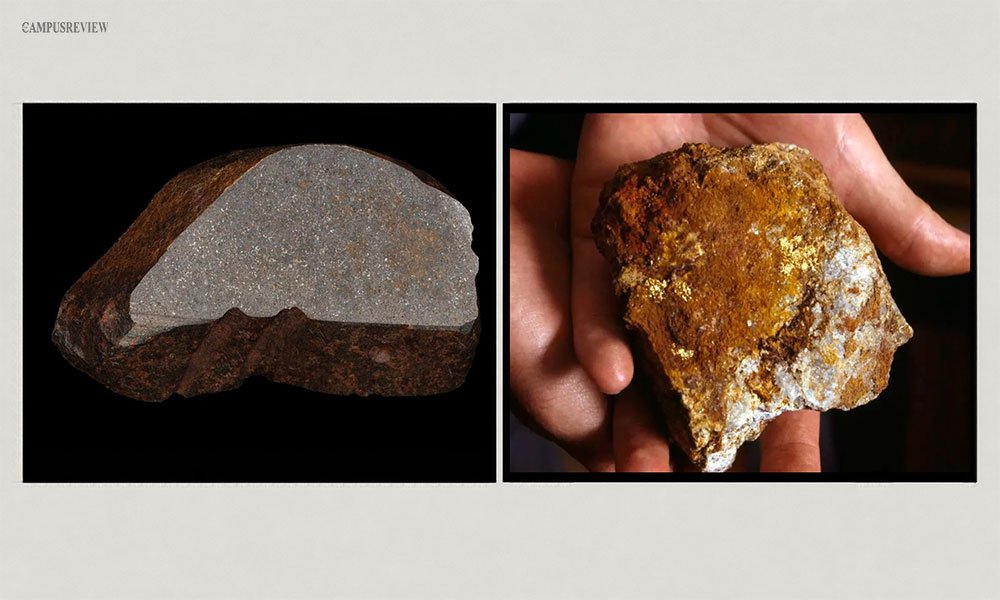
Melbourne Museum geologist Dermot Henry noticed the specimen’s unusual sculpted appearance and suspected it was a meteorite. Its reddish-brown iron-oxide surface and unusual weight prompted further examination.
“It had this sculpted, dimpled look,” Dermot Henry told The Sydney Morning Herald. “That’s formed when they come through the atmosphere. They are melting on the outside, and the atmosphere sculpts them.”
While some shallow depressions resembled atmospheric-entry features, researchers noted that most visible surface marks included holes drilled and grooves cut by Hole himself.
Researchers later cut a small section from the stone using a diamond saw to study its internal mineral composition. Inside, they found a high concentration of iron-nickel minerals alongside tiny, rounded mineral droplets called chondrules.
Fellow geologist Bill Birch noted the dramatic contrast between the rock’s mass and its size.
“If you saw a rock on Earth like this, and you picked it up, it shouldn’t be that heavy,” Bill Birch explained.
In 2019, Birch, Henry, and colleague Andrew Tomkins published their formal scientific findings in the Proceedings of the Royal Society of Victoria. Museums Victoria also purchased the specimen, adding it permanently to its collection.
Why This Ancient Space Rock Matters to Science
Scientists classify the Maryborough Meteorite as an H5 ordinary chondrite. Unlike Earth rocks, which undergo constant geological recycling through plate tectonics and volcanic activity, chondrites preserve original material from the birth of the planets.
- Asteroid Belt Hypothesis: Researchers believe the meteorite probably originated in the asteroid belt between Mars and Jupiter before an asteroid collision knocked it toward Earth.
- Terrestrial Age: Carbon-14 dating suggests the meteorite has been on Earth for less than 1,000 years. Researchers also examined historical meteor sightings reported in the Maryborough district between 1889 and 1951, but could not link any of them to the specimen.
- Exceptional Regional Rarity: While thousands of gold nuggets have been uncovered across Victoria, this specimen is one of only 17 meteorites ever officially recorded in the state.
Final Takeaways on the Maryborough Meteorite
David Hole’s search for a gold nugget ended with a scientific treasure that predates Earth itself. By bringing the unopened stone to experts instead of discarding it, he preserved a rare cosmic artifact for public research.
Today, the Maryborough Meteorite remains part of the Museums Victoria collection, helping scientists piece together the chemical history of our planetary neighborhood.
Also Read – Causes of the Industrial Revolution
Pranjal Kharche