The Campus Review
November 26, 2026
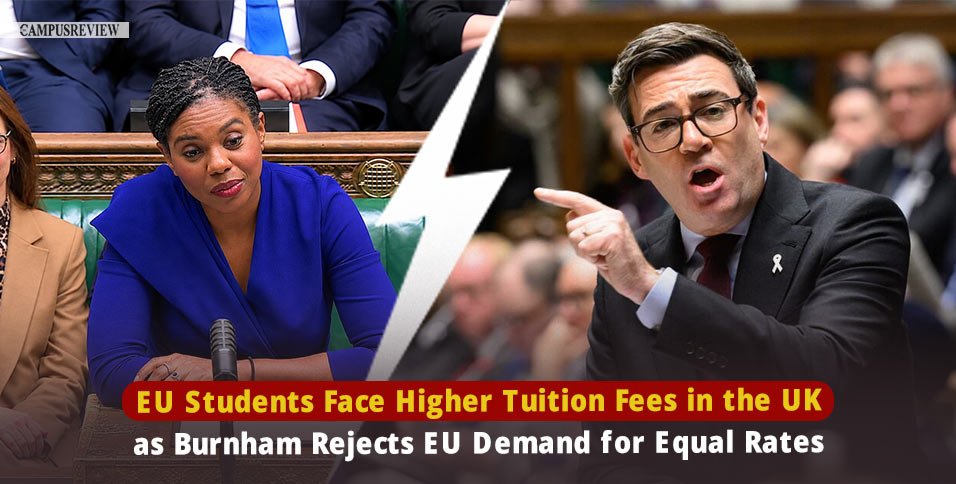
European Union students are likely to continue paying higher tuition fees than UK students at British universities. On November 25, 2026, Prime Minister Andy Burnham told the House of Commons that the UK would not accept the EU’s proposal to give European students access to domestic tuition rates.
His comments have raised concerns that EU students face higher tuition fees despite earlier discussions about reducing the cost of studying in the UK.
The UK had reportedly considered offering EU students lower fees during previous negotiations. However, both sides have yet to reach a final agreement and will continue discussions over the next six months.
Quick Facts About UK-EU Tuition Fee Negotiations
| Policy Area | Current Status |
| UK negotiating position | Rejects equal domestic tuition fees for EU students |
| Key figure | UK Prime Minister Andy Burnham |
| Current fee status | Most new EU students pay international tuition rates |
| England home fee cap (2026/27) | £9,790 per year for eligible standard full-time undergraduate courses |
| International tuition fees | Set by individual universities and can exceed £30,000 annually |
| Negotiation deadline | Within six months of the November 20, 2026 summit |
Why EU Students Face Higher Tuition Fees After Brexit
Before Brexit, eligible students from European Union countries generally paid the same tuition fees as UK students. They could also access UK student finance if they met the relevant eligibility requirements.
This changed after the Brexit transition period ended on December 31, 2020. Most new EU students lost their home-fee status and became subject to international tuition rates.
Some exceptions remain.
Irish citizens and certain EU nationals with protected residency rights may still qualify for domestic fees under separate eligibility rules.
The issue returned to Parliament on November 25, 2026. During Prime Minister’s Questions, Conservative leader Kemi Badenoch asked Burnham to rule out equal tuition rates for EU students.
Burnham rejected the proposal, saying:
“The right honourable lady is referring to the European negotiating position, which is not the British negotiating position. That has not been put on the table, and it will not be put on the table.”
He also described the tuition-fee discussions as “a separate piece of paper, a separate deal” from the wider agreements reached between the UK and EU in Brussels.
Why Is Burnham Opposing Equal Tuition Fees?
The disagreement centres on three main issues:
- University funding: UK universities rely on higher international tuition fees to support their budgets. Equal domestic rates for EU students could reduce this income.
- Earlier UK proposal: The UK reportedly considered a fee of around £12,000 a year for EU students. This would be lower than many international fees but higher than England’s £9,790 home fee cap.
- EU’s demand: The EU wants its students to pay the same domestic rates as UK students. Burnham has rejected this as the UK’s negotiating position and said any agreement must serve Britain’s national interest.
The UK had also considered a £450 million plan to lower EU student fees, which could bring eligible European students closer to domestic tuition rates. However, the proposal remained under discussion and was not a confirmed policy.
How Could the Decision Affect Universities and Students?
The outcome of the negotiations could affect both university finances and European applicants.
For universities, lower tuition fees could reduce income from EU students. Many institutions use international fee revenue to support teaching, research and other operations. A large reduction could put additional pressure on their budgets.
For European applicants, the cost of studying in the UK remains an important consideration. International fees can be several times higher than the domestic rate in England. This could influence students comparing British universities with lower-cost options elsewhere in Europe.
The UK and EU have also agreed on other student mobility arrangements:
- Erasmus+: The UK will rejoin the Erasmus+ programme from 2027, giving students access to education and exchange opportunities across participating countries.
- Youth Experience Scheme: The UK and EU have concluded negotiations on a scheme allowing up to 100,000 young people from each side to spend up to three years in the other territory, subject to the scheme’s conditions.
These arrangements are separate from the unresolved tuition-fee agreement.
What Comes Next for UK-EU Student Mobility?
The UK and EU agreed at their November 20, 2026 summit to continue discussions on tuition fees. Their joint statement commits both sides to negotiating a supplementary agreement covering EU students in UK universities and UK students in EU universities.
The outcome will determine whether EU students face higher tuition fees or receive reduced rates under a new arrangement.
The main points to watch are:
- Six-month deadline: Both sides aim to conclude negotiations within six months of the summit.
- Different negotiating positions: The EU has pushed for lower fees, including domestic-rate parity, while Burnham has ruled out equal home fees as the UK’s negotiating position.
- Final fee arrangement: No new tuition rate has been agreed. Students should check official government and university updates before making decisions about study costs.
Until the negotiations conclude, most new EU students should expect to pay international tuition fees at UK universities.
Pranjal Kharche